<h1>Leider kann Ihr Browser keine Frames darstellen!</h1>
<p>Verwenden Sie in diesem Fall die Noframes-Home-Seite für die Navigation. Den Link finden Sie auch am Ende jeder aufgerufenen Seite wieder.</p>
<hr>
<a href="../../noframes_home/noframes_home.html">Zur Noframes-Home-Seite</a><br>
<hr>
|
|
|
 |
|
 |
|
|
|
 |
|
|
|
|
 |
|
|
|
|
|
|
|
|
|
|
I would like to thank Mr. Detlev Vreisleben from Cologne, who provided me with all the information and extensive photographic material and assisted me in preparing this section.
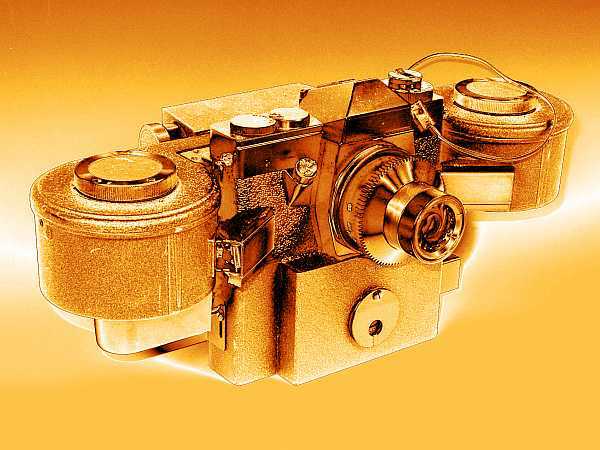
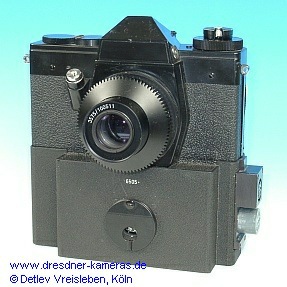
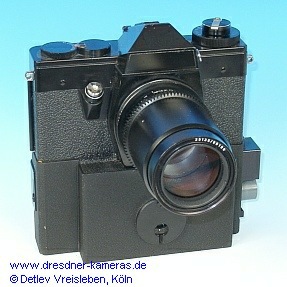
The quiet SLR camera SR 899 (GSK):
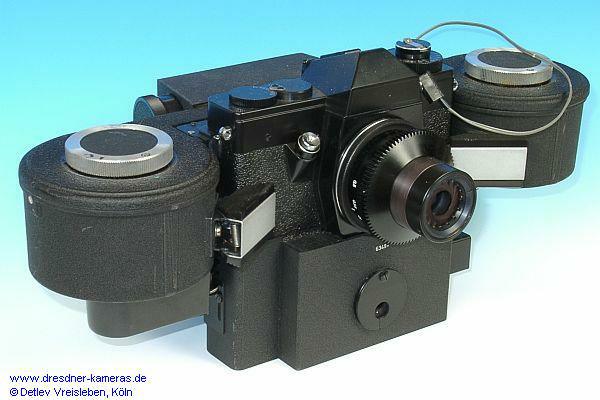
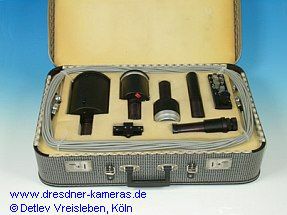
Development of the GSK (noise-free SLR camera SR 899 with the code number 14101) began at Pentacon in the early 1970s. The client was the Ministry for State Security (MfS), specifically Department 31 of its Operational Technical Sector (OTS). The goal was to produce a universally applicable 35mm camera for clandestine photography. To achieve this, it was necessary to optimize the camera, particularly with regard to noise reduction and remote control capabilities. Production of the GSK began around 1977 at Pentacon's "Object 8" facility in Dresden-Niedersedlitz. The maximum production run was likely around 2,000 cameras, with a body price of 12,900 East German Marks and 140 DM. The serial numbers range from approximately 5000 to 7000.
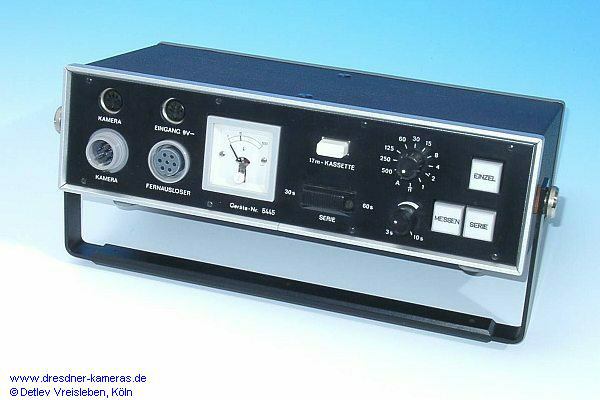
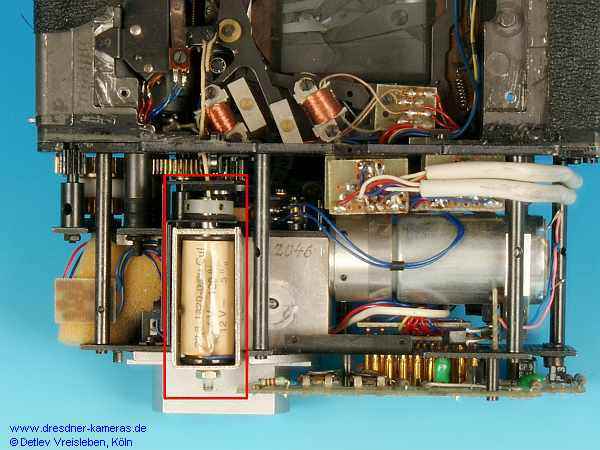
The basic unit was a further developed Praktica EE 2 with aperture-priority automatic exposure. Instead of the noisy reflex mirror, a fixed, semi-transparent foil mirror was used, the material of which had been developed in the late 1960s in cooperation with the Academy of Sciences. In the standard Praktica EE 2, the first shutter blade assembly is triggered mechanically, and the second electromagnetically. In the GSK, electromagnets were used for both shutter blade assemblies to enable remote release and remote control of exposure times. However, this requires a special control unit. A period after the serial number indicates that a corresponding control unit with the same number exists for the camera. This unit allows for setting single and continuous shooting at different frequencies, remote release, and individual control of exposure times. The camera's 9V power supply also came from the control unit; when this unit was not in use, an external power source was employed. The GSK features a noise-reduced motorized film advance mechanism, which was permanently mounted on the underside of the camera.
|
|
|
 |
|
 |
|
|
|
|
|
|
|
|
|
 |
|
|
|
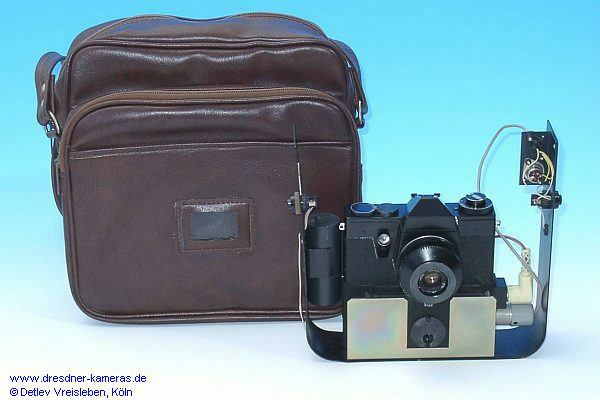
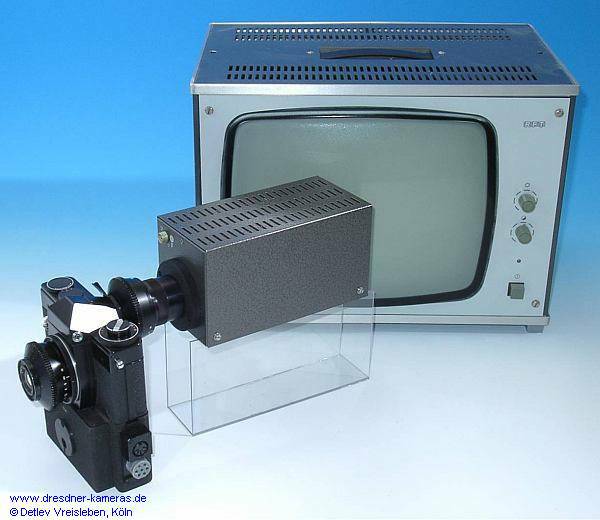
A television camera could be connected to the eyepiece of the GSK to transmit the viewfinder image to a monitor.
|
|
|
 |
|
|
|
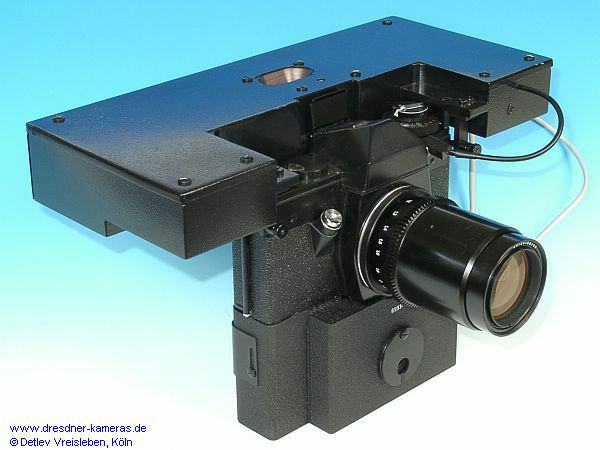
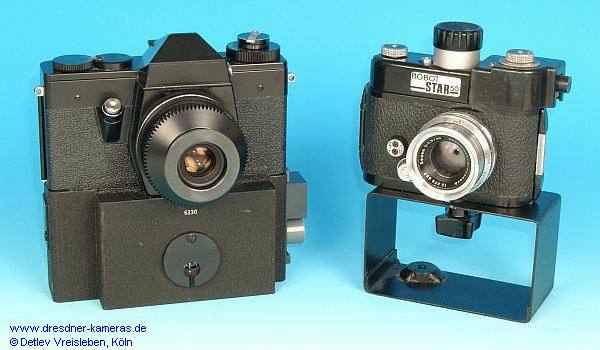
A GSK could be replaced by a robot using an auxiliary frame.
|
|
|
Objektive
Die bei Carl Zeiss Jena speziell
entwickelten Sonderoptiken (SO) wiesen eine vor dem Objektiv liegende Eintrittspupille auf, damit wurde selbst durch eine versteckte Montage hinter verschiedensten Tarnungen der Bildkreis der Optik nicht
beschnitten. Die Blendenebene liegt außerhalb des Objektivs. Zu jedem Objektiv gehörten eine vorschraubbare Irisblende und ein Satz vorschraubbarer Festblenden. Meist kamen die Sonderoptiken SO-3.1 (Flektogontyp
2,8/35), SO-3.2 (Biotartyp 2,8/50), SO-3.3 (Tessartyp 3,5/75), SO-3.4 (Sonnartyp 3,5/135) zum Einsatz. Sie besitzen kameraseitig einen M36x1-Anschluss und werden mit einem Adapter an die Kamera angeschlossen. Das
Auflagemaß der Optik betrug 48,0mm.
Das SO-2 (4/500) war ein manuell zu fokussierendes M42x1-Infrarotobjektiv, als Nachfolger wurden die Infrarot-Autofokus-Objektive SO-2.2A (2,8/300) und SO 2.2B (2,8/180)
konzipiert. Erst das SO-2.2B erfüllte die Anforderungen nach einer hohen Autofokusgeschwindigkeit. Allerdings hatte diese Technik ihren Preis, das SO-2.2 kostete beispielsweise 215000 Mark der DDR und band ungeheure
materielle und personelle Ressourcen beim Hersteller Carl Zeiss Jena. Nur 25 dieser Spezialoptiken wurden gefertigt. In einer Zeit in der die DDR-Produkte und damit auch die Objektive des VEB Carl Zeiss Jena nicht
mehr mit Weltmarktprodukten konkurrieren konnten, waren derartige massive Spezialinvestitionen nur dazu geeignet, vernünftige Investitionen in vermarktungsfähige innovative Produkte zu verhindern. Erschwerend kommt
hinzu, dass die Sonderoptiken ja auch nicht auf dem Weltmarkt angeboten werden konnten und durften, also ein Rücklauf der Gelder in keinem Falle zu erwarten war. (vgl. Jehmlich, Gerhard: Militärische Produktion,
LVO-Produktion, in: Der VEB Pentacon Dresden, S. 207 ff.)
|
|
|
 |
|
 |
|
|
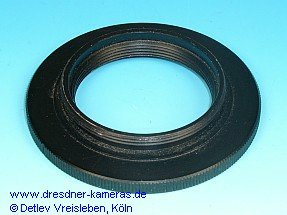
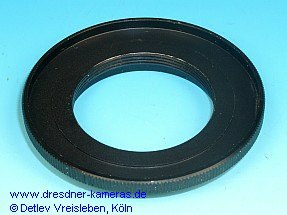
Adapterring zum Anschluss
der Sonderobjektive SO-3.1 bis 3.4 an die GSK (Adaptierung des Objektivanschlusses M36x1 auf den kameraseitigen Anschluss M42x1)
|
|
|
 |
|
|
|
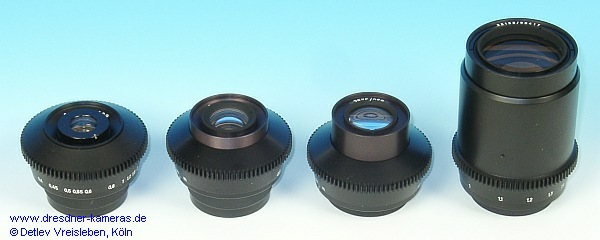
Die bei Carl Zeiss Jena
gefertigten Sonderobjektive SO-3.1 (Flektogontyp 2,8/35), SO-3.2 (Biotartyp 2,8/50), SO-3.3 (Tessartyp 3,5/75), SO-3.4 (Sonnartyp 3,5/135).
|
|
|
 |
|
|
|
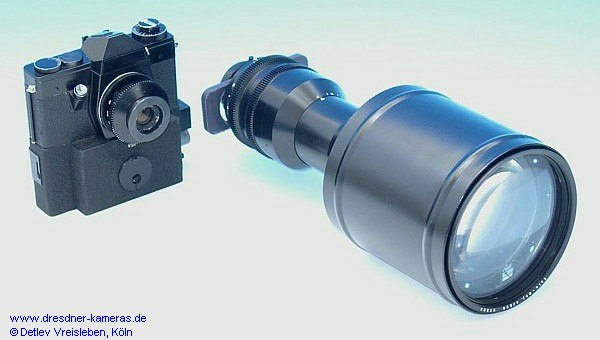
GSK mit SO-3.2 und einem
manuell zu fokussierenden M42x1-Infrarotobjektiv SO-2 (4/500). Hiermit war nur eine unzureichende Scharfstellung bei Dunkelheit möglich.
|
|
|
 |
|
 |
|
|
|
|
|
|
|
|
|
|
|
|
|
Varianten der GSK SR 899
Zur Vermeidung von
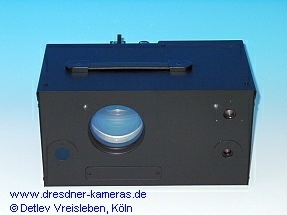
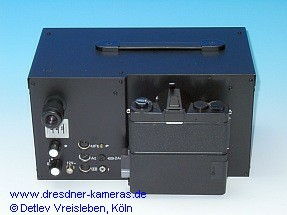
Lichtverlust wurde eine Variante der GSK für das SO-2.2B komplett ohne Spiegel gefertigt. Die Beobachtung und Anvisierung des Objekts erfolgte hier durch ein Zielfernrohr, die automatische Fokussierung der Optik
mittels Laserentfernungsmessung.
Eine Halbformat-GSK ohne Folienspiegel wurde für als ?Dokumentationsgerät für konspirative Durchsuchungen? (Repro-Kamera im Koffer) verwendet. Hierbei kamen Carl Zeiss Jena
Dokumare als Kameraoptiken zum Einsatz.
|
|
|
|
 |
|
|
|
|
Variante der GSK ohne
Folienspiegel am Infrarot-Autofokusobjektiv SO-2.2B (2,8/180), die Beobachtung und Anvisierung des Objekts erfolgte hier durch ein Zielfernrohr, die automatische Fokussierung der Optik mittels
Laserentfernungsmessung.
|
|
|
|
Projekt GSK II
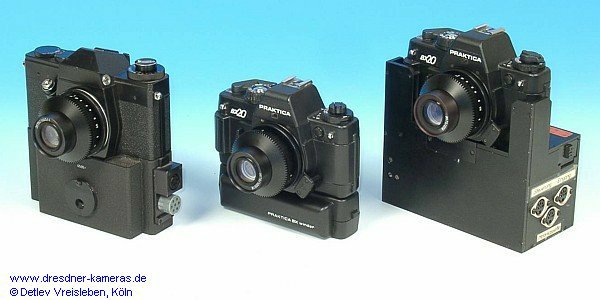
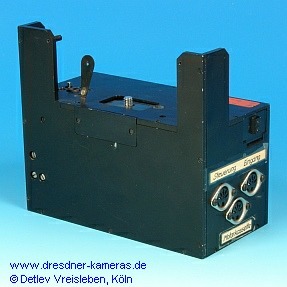
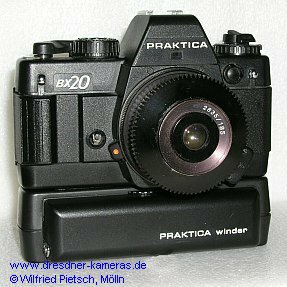
Das mehr als 3 Mio. Mark teure
Projekt GSK II lief beim OTS von 1984 bis 1989 und sollte die GSK durch eine geeignete Nachfolgekamera ersetzen. Die Verwendung der Praktica BX20 wurde wieder verworfen und das zukünftige Augenmerk stattdessen auf
die geplante Praktica-BY-Reihe gelegt.
|
|
|
|
 |
|
|
|
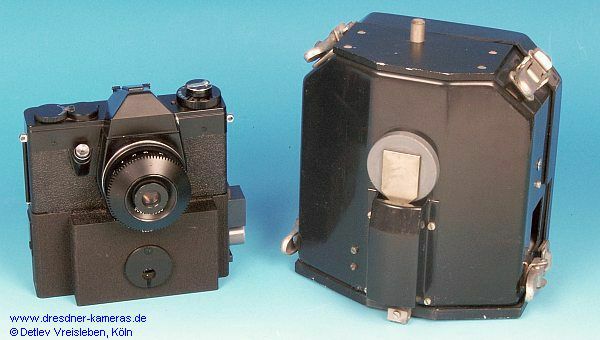
GSK (Abb. links) und ihre
Nachfolgestudien: BX 20 mit Motoraufzug und Auslösemagnet im unten angesetztem Gerät (Abb. rechts), BX 20 mit Winder und Auslösemagnet in der Kamera integriert (Abb. Mitte)
|
|
|
|
 |
|
 |
|
|
|
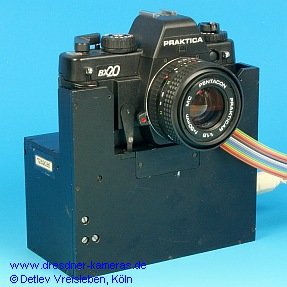
GSK-II-Studie auf der
Basis der BX 20 mit Auslösemagnet und Motoraufzug im separat angesetztem Gerät
|
|
|
|
 |
|
|
|
GSK-II-Studie auf der
Basis der BX 20 mit Praktica winder
|
|
|
|
Die Halbformatkamera HFK III
Von Pentacon wurden
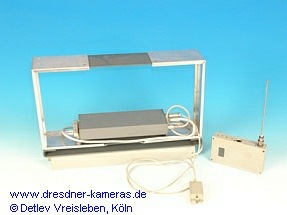
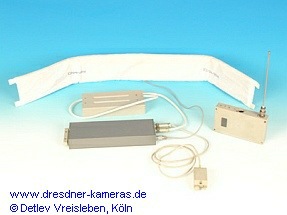
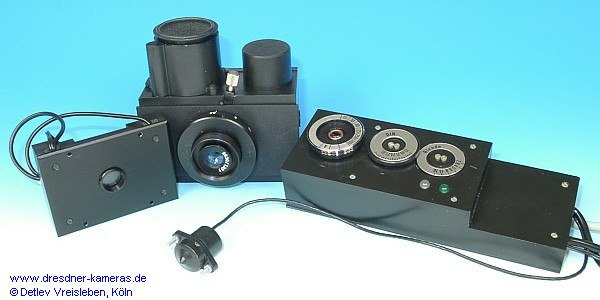
Steuergerät und Doppellamellenverschluss, später auch das Kameragehäuse, für eine weitere geräuscharme Kamera des MfS gefertigt, die HFK III. Hierbei handelte es sich um eine Halbformatkamera 24x24mm für
Tageslichtfotografie mit Belichtungssensor. Über das Steuergerät mit Belichtungsautomatik waren manuelle Zeiten von 1/15s bis 1/500s und automatische Zeiten von 1s bis 1/500s möglich. Für den Sensor wurde jedoch
eine zweite Öffnung in der Tarnung benötigt. Deshalb wurden ab 1983 bei Carl Zeiss Jena auch Objektive mit integrierter Belichtungsmessung und integriertem Verschluss entwickelt, diese standen aber erst 1988 bzw.
1989 zur Verfügung.
|
|
|
|
 |
|
|
|
HFK III mit
Doppellamellenverschluss, nebenstehendem Belichtungssensor und dem Steuergerät mit Belichtungsautomatik
|
|
|
|
Weiterführende Literatur
- Vreisleben, Detlev: Sonderobjektiv SO-2.2B. PhotoDeal I/2001.
- Vreisleben, Detlev: Die geräuscharme Spiegelreflexkamera (GSK). PhotoDeal II/2001.
- Vreisleben, Detlev: The half-frame camera (HFK). PhotoDeal III/2001.
- Vreisleben, Detlev: The observation complex I and II. PhotoDeal IV/2001.
- Vreisleben, Detlev: Spy cameras and their disguises. PhotoDeal III/2002.
- Vreisleben, Detlev: Documentation devices of the MfS. PhotoDeal IV/2002.
- Vreisleben, Detlev: New findings on spy cameras - The photographic technology of the MfS. PhotoDeal IV/2008.
- Schrauf, Heinz: Beware of love for handbags - The tricks of the GDR Stasi. PhotoDeal II/2004.
- Jehmlich, Gerhard: The VEB Pentacon Dresden. Sandstein Verlag Dresden 2009, ISBN 978-3-940319-75-3
|
|
|
|
|
|

|
Here is a personal, but of course purely subjective, recommendation from collector to collector for what I consider the best German-language magazine for photographic equipment and photographic history, PhotoDeal .
|
|
|
|
|
|
This website and all associated pages are protected by copyright. No content from these pages may be used in other electronic or printed publications without the express written consent of the respective authors.
This page and all dependent pages are copyrighted. No contents of these pages may be reproduced in whole or in part without the express written permission of the copyright holders.
|
|
|
.
|
|
|