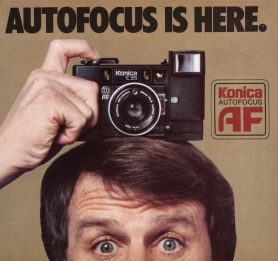
This installment of Keppler's Vault explores the long and winding road to automatic focus, framed by two vintage articles—one from August 1970 and another from June 1980—that bookend the transition of auto focus from speculative "hocus pocus" to a real feature in point-and-shoot cameras. The piece opens by tracing the broader history of "automatic" camera marketing, from Rolleiflex "Automats" that auto-advanced film, to LVS-coupled shutters marketed as early auto exposure, to auto-diaphragm SLR lenses like the Asahi Auto-Takumar, and finally to true "electric eye" auto exposure cameras of the late 1950s. Among all these innovations, the author notes that auto focus was by far the most technically demanding to achieve, tracing its conceptual roots back to Luther George Simjian's 1931 patent for a "Self Focusing Camera," which proposed using a photoelectric cell to detect areas of maximum contrast—an idea never built but foundational to later designs.
The article highlights several real-world attempts and prototypes that emerged in the following decades, including Canon's 1963 Photokina autofocus prototype, Nippon Kogaku's oversized 80mm f/4.5 auto focus lens for the Nikon F in 1971, and Leitz's Correphot autofocus SLR prototype from 1976. The 1970 article specifically covers pre-practical auto focus experiments, such as Bell & Howell's Focus-Matic system, which used a rolling ball-bearing "delta rangefinder" to calculate focus distance based on the camera's angle relative to the ground—a system the author notes was later used in the Bell & Howell Autoload 342 Instamatic, which he had previously reviewed and found to work well. Also discussed is Kalart's 1941 "Focuspot" add-on for Graflex press cameras, which projected two beams of light forward that converged when focus was achieved, effectively acting as a "reverse rangefinder." The 1970 article makes clear that true auto focus was still not yet achievable at the time, since neither Nippon Kogaku nor Leitz had released their systems.
The second article, from 1980, is described as more technical, detailing how early functioning auto focus systems—specifically the Honeywell Visitronic and Polaroid's Sonar systems—actually worked. Overall, the piece serves as a historical overview rather than a hands-on review, tracing how auto focus evolved from theoretical patents and quirky mechanical experiments into a functional technology by the end of the 1970s, underscoring just how much technical effort was required to bring auto focus from "hocus pocus" to reality.
AI-generated summary. May not capture every detail — read the full article below for the complete picture.
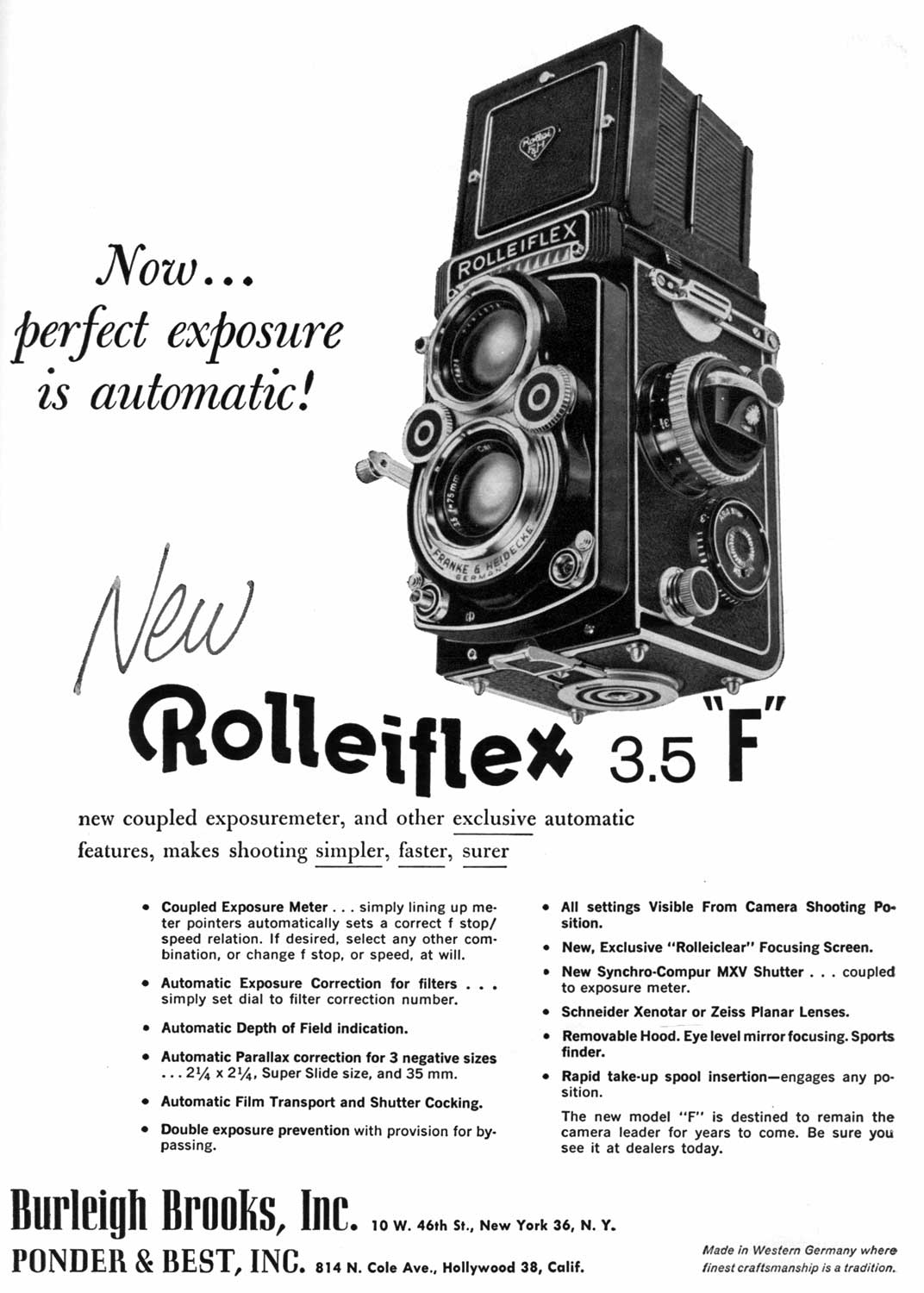
Camera makers throughout the 20th century happily threw the word “automatic” around to refer to some new feature of a camera that has now been automated. Early Rolleiflexes were often called “Automats” because they had the ability to automatically detect the start of a new roll of film and advance it to the correct position for each of the 12 exposures you’d get on a single roll of film without having to look at the numbers on the film’s paper backing.
In the mid 1950s when Deckel and Gauthier introduced the LVS system on their shutters which coupled the shutter speed and lens aperture together with Light Value numbers, some clever marketing people promoted this as an early form of auto exposure in that you could take an exposure reading with a meter, transfer whatever number it gave you to the shutter, and you’d automatically have the right exposure.
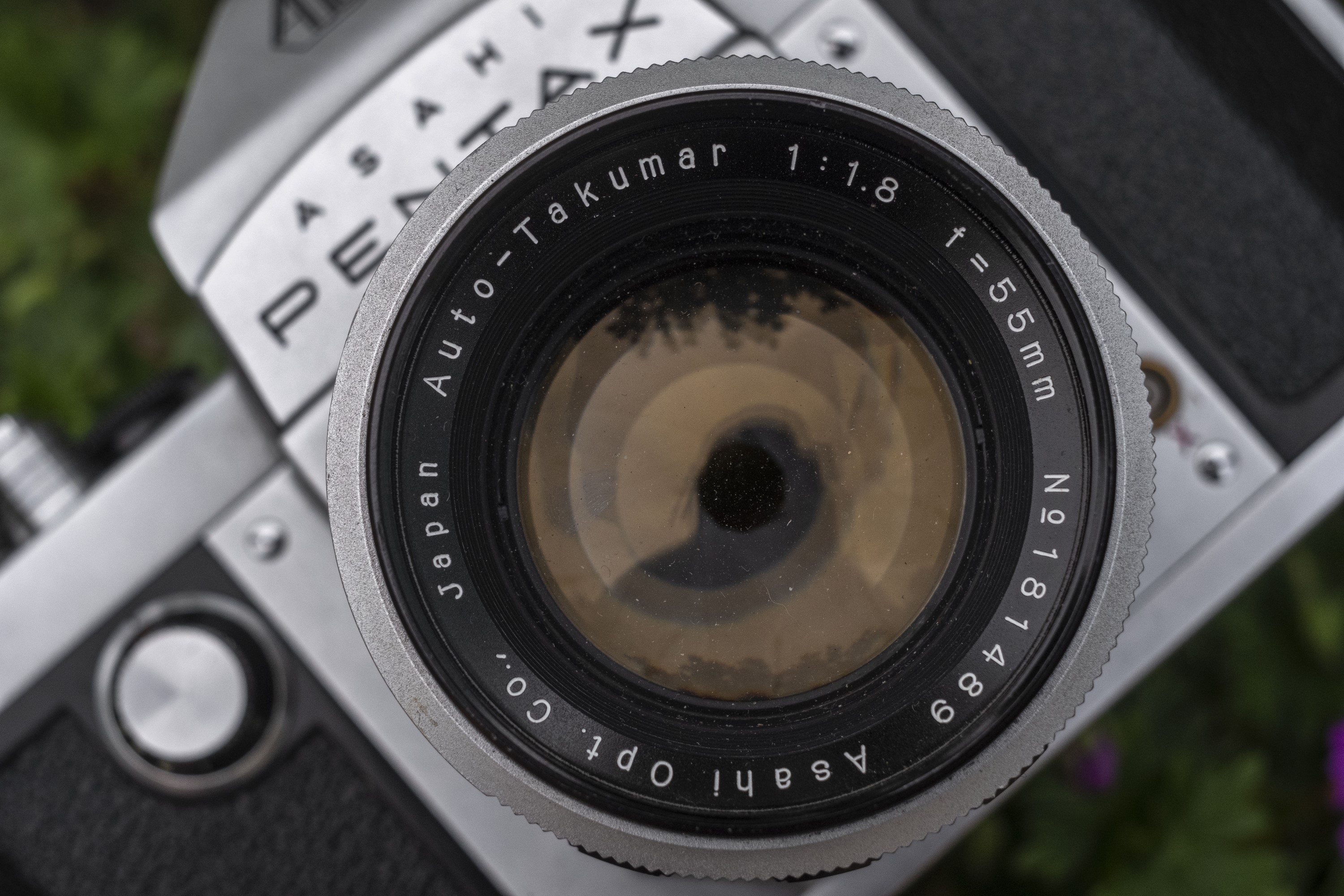
Around the same time, the rise of lenses with automatic diaphragms became extremely popular with SLRs, helping to overcome one of the earlier drawbacks of SLRs where the viewfinder got dark when the lens was stopped down. Lenses marked with the word “Auto” like the Asahi Auto-Takumar had a small pin inside of the lens mount that when pushed by a lever on the camera would allow the lens to stay wide open, maximizing brightness in the viewfinder when composing, only to stop down to the chosen f/stop at the exact moment of exposure.
Closing out the 1950s came cameras with actual automatic exposure in which some kind of coupled light meter would measure the available light and control some aspect of the camera, usually the iris, opening and closing it as needed to make the correct exposure. These “electric eye” cameras were incredibly popular as not having to understand exposure went a long way towards making photography accessible to the novice.
Of all these “auto” features, the one that took the longest to create and required the most technical effort to perfect was automatic focus. The ability for a camera to look at an image and judge it’s distance so that the lens be automatically focused on it was a significant technical challenge.
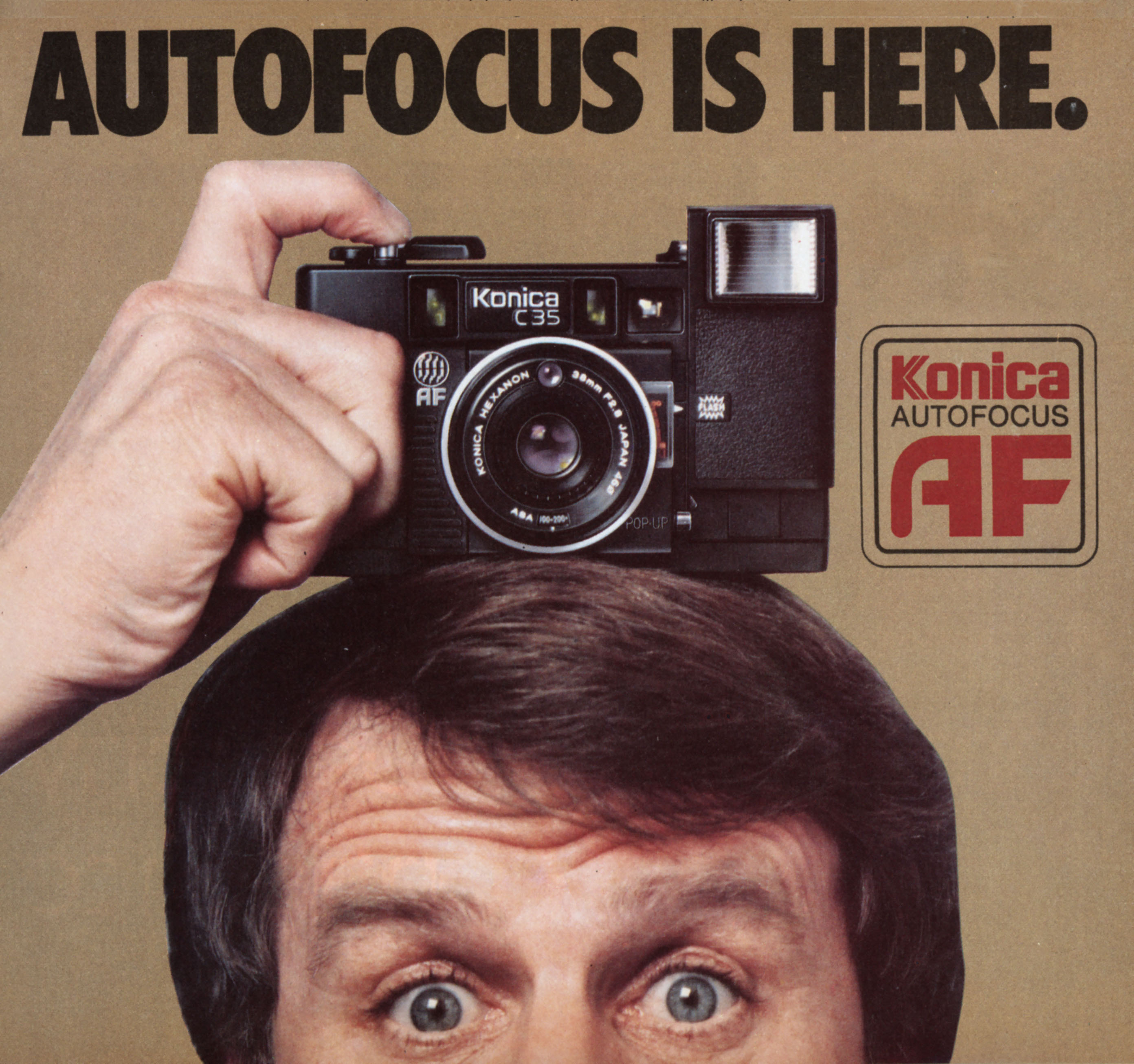
This week’s Keppler’s Vault brings you two articles, one from August 1970 when the idea of auto focus was still considered hocus pocus for prototype cameras shown at trade shows, and the second from June 1980 after auto focus was a reality in the compact point and shoot segment.
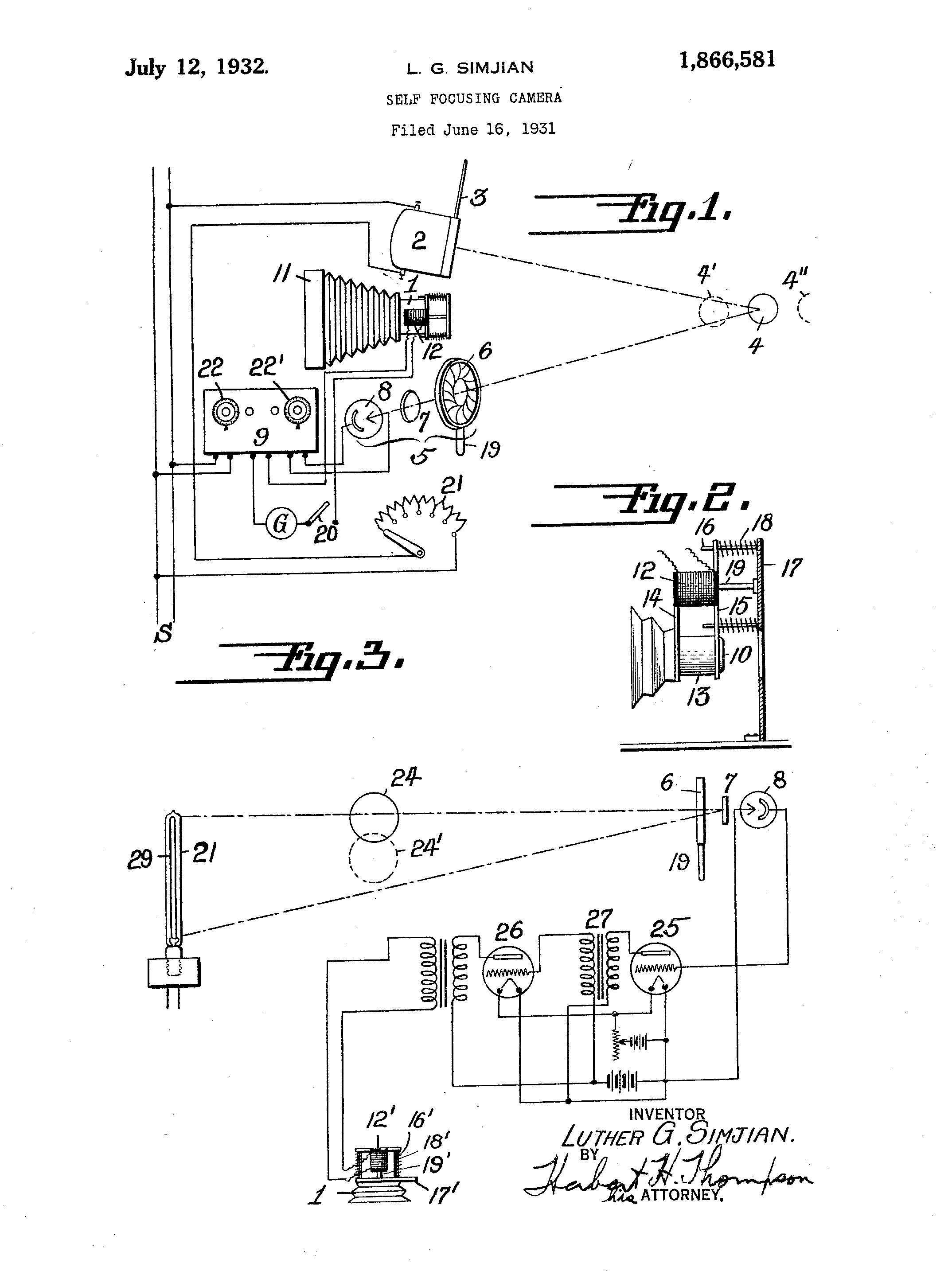
Although auto focus was cutting edge technology when these two articles were written, people had been working on the technology for many years prior. The oldest on record is US Patent 1,866,581, submitted on June 6, 1931 by an Armenian inventor named Luther George Simjian.
Simjian’s “Self Focusing Camera” was never built and only existed in patent paperwork, but pioneered the idea of using a type of photoelectric cell to determine maximum areas of contrast when an image was in focus. Whether the technology existed in 1931 to build such a device is anyone’s guess, but at the very least, it suggests that people were thinking about it, and the continued use of light sensing devices proves that Simjian was on the right track.
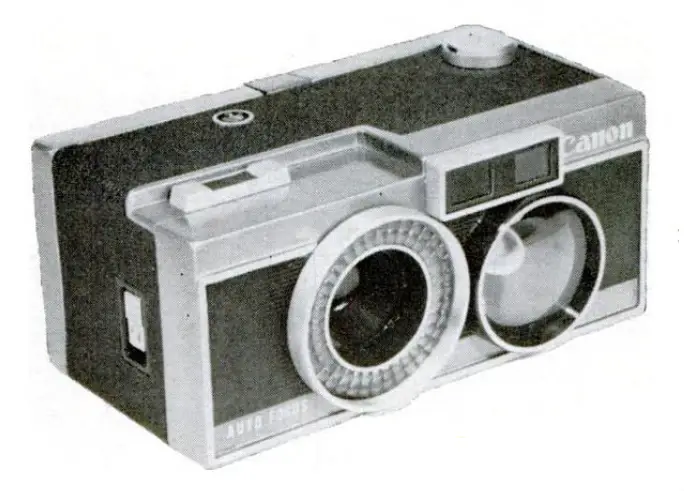
In the years that followed, many companies came up with innovative solutions to auto focus, some with prototypes shown in mock up form, and others that actually worked. Some more notable examples were the Canon Autofocus prototype shown at Photokina in 1963, a monster sized auto focus 80mm f/4.5 lens developed by Nippon Kogaku for the Nikon F in 1971, and Ernst Leitz’s Correphot autofocus SLR prototype from 1976.
The first article from 1970 was written in an era prior to any practical applications of auto focus in a still camera, but showed some of the creative ways in which companies were experimenting with the technology.
Bell & Howell’s Focus-Matic system was discussed which uses something called a delta rangefinder involving a rolling ball bearing that depending on it’s position as the camera is angled to the ground, can accurately calculate focus distance. Bell & Howell would implement this feature into their Autoload 342 Instamatic camera which I reviewed on this site and found to work quite well.
 Another interesting implementation was thought up by Kalart in 1941 as an add-on to their Graflex press camera rangefinders called the “Focuspot” in which a beam of light was projected forward at your subject through the rangefinder. When the camera was not focused correctly, two beams of light from each of the two rangefinder windows would be seen, but when the image was focused, the beams of light would converge on top of another. It was sort of like a “reverse rangefinder” in which the split image shoots out of the camera, rather than seen inside of a viewfinder.
It is clear that by the end of the 1970 article that the technology needed to make accurate automatic focus was still a ways away as neither Nippon Kogaku or Leitz had yet to release their contributions.
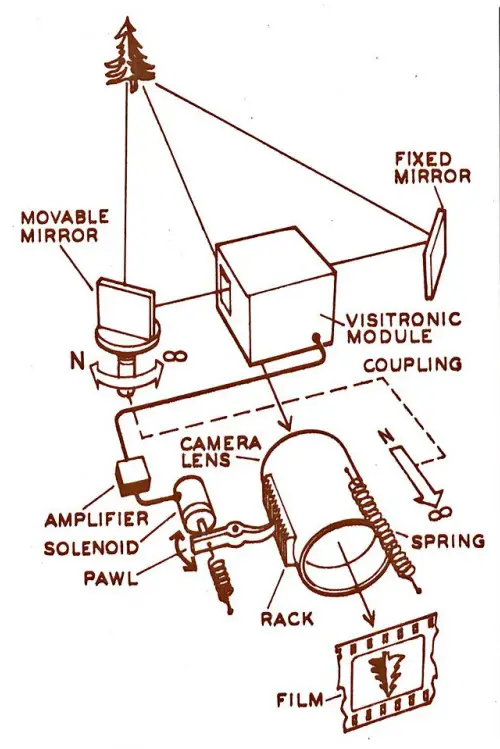
The second article is much more technical in nature as it describes in detail how some early auto focus systems like the Honeywell Visitronic and Polaroid’s Sonnar systems worked.
All scans used with permission by Marc Bergman, 2020.
Setting up fake worker failed: “Cannot load script at: https://mikeeckman.com/wp-content/plugins/PDFEmbedder-premium/js/pdfjs/pdf-4.4.1.min.js,qver=4.4.1.pagespeed.ce.JWXIrGgm2e.worker.js“.
Mike. I’m seeing this a little below the pic of the Konica AF. Then just below the above, appears “All scans used with permission by Marc Bergman, 2020.” No text below these.
Mike, seems to have corrected itself automatically, just after I posted above.
I use a plugin to display PDFs, and I’ve noticed that happens on occasion if you load the page really quickly after I post it! I am glad it went away on it’s own though.
Mike, great post. I’m old enough to remember the auto exposure debates at the time and was an early adopter of it. My second SLR was a Pentax ESII, a camera that served me well for many years. However, autofocus took a long time to get beyond the point and shoots into professional grade cameras. Today the technology is mature with things like eye detect and focus that really works and delivers a high number of shots properly focused and, more importantly, focused on the right element of the picture. I got real glimpse of just how far we’ve come when I started shooting my grandson’s soccer games. My Nikon D7500, not a professional camera but a quite capable one, delivered a high percentage of in focus shots in a sport that is anything but predictable. I compare that with my setup of 45 years ago that sat on a shoulder stock and used a lens with internal focusing for quick action, a new innovation at the time. As good as that rig was getting one shot per roll of film was considered good. Blazing away at 10 frames a second and picking the best wasn’t even in our dreams.
I got into photography much later than you, and when I started shooting film again, the thought of manually focusing seemed so intimidating as I had only known photography in the auto focus era. Now having gone back and shot so many classic cameras, I thoroughly it…as a hobby. If I did this for a living, you bet I’d have the latest and greatest state of the art auto focus lenses!