
This guide explores Japanese auctions—specifically Yahoo! Japan—as an alternative to eBay for camera collectors. Yahoo! Japan, now wholly owned by Softbank after separating from the original American Yahoo in 2018, runs a massive domestic auction marketplace, but registration requires Japanese residency, meaning international buyers must go through proxy services like Buyee or OneMap From Japan (FJ). The author outlines two main reasons to use these auctions: access to items rarely found outside Japan (like the Olympus M-1, the domestic-market predecessor to the OM-1, or obscure cameras like the Merica flex) and often significantly lower prices than eBay, though this isn't universal—Leicas, for instance, tend to cost more in Japan.
The article details how proxies work, allowing buyers to bid on JDirectItems Auctions/Fleamarket listings, consolidate multiple purchases into a single international shipment to save on shipping, and navigate quirks like "soft close" auctions (which extend when last-second bids come in, weakening traditional sniping), frequent 24-hour auction durations, sellers canceling auctions that don't meet hidden price expectations, and the near-total absence of exaggerated "EXC+++++" condition claims common on eBay. Downsides include far weaker buyer protections than eBay, no direct buyer-seller communication, no "Make an Offer" option, inconsistent site translations, and random item restrictions that vary between proxies. The author walks through Buyee's numerous fees—service fees, domestic shipping, optional insurance/packaging/photo fees, customs tariffs, international shipping, and even a roughly 5% hidden currency conversion markup—emphasizing that buyers must calculate all these costs before assuming they're getting a deal.
Despite the complexity and up to nine potential fees stacked onto a winning bid, the author's real-world comparisons (a Nikon F3AF and a Zeiss-Ikon Ikoflex III) showed substantial savings versus eBay sold prices, and most of the author's 50+ Buyee purchases arrived as described, with damaged-item claims successfully refunded when properly documented. Comparing Buyee and FJ, the author found them largely similar in fees and reliability, with FJ offering a cleaner interface and more frequent (if smaller) coupons. The overall verdict is cautiously positive: Japanese auctions can offer genuine savings and access to hard-to-find cameras, but only for buyers willing to learn the fee structures, accept higher risk due to weak buyer protections, and exercise discipline to avoid overbidding.
AI-generated summary. May not capture every detail — read the full article below for the complete picture.
For most camera collectors, there is no better source for your GAS needs than eBay. With over 200,000 active listings in both the Film Cameras and Vintage Cameras categories combined, it is difficult to think of a camera that doesn’t have at least one example for sale at any given time.
For as long as I’ve been collecting, I’ve been aware that eBay was not the only online source for buying old cameras, but the risks involved with other online marketplaces like Etsy, Facebook Marketplace, OfferUp, or (in its heyday) Craigslist seemed unappealing to me. Of all these alternatives to eBay, there was one I had always been curious about but lacked the courage to give it a go until recently.
Of course, I am talking about Japanese Auctions, specifically Yahoo! Japan. For those unaware, Yahoo! Japan is the domestic Japanese equivalent to eBay and offers products in both auction and retail formats from major retailers and private individuals. Despite having a similar name, Yahoo! Japan is a completely separate company from the Yahoo most Americans are familiar with.
 Launched in 1996, Yahoo! Japan was originally a joint venture between American Yahoo and the Japanese company Softbank. Yahoo! Japan worked just like the American Yanoo and offered the same services, just in Japanese. In the years that followed, Yahoo’s influence in the United States and other western countries declined, but Yahoo! Japan thrived. Yahoo! Japan wasn’t just a search engine, it became an ISP and partnered with companies to help establish broadband Internet in Japan and it invested in other online technologies, most notably their auction marketplace which became extremely popular. As the years passed, Yahoo! Japan separated itself from the original Yahoo company and by 2018, Softbank bought out all remaining interests of Yahoo! Japan from its American owners and the two companies became wholly unrelated, other than the name. In 2021, Yahoo! Japan purchased the familiar red logo from the original Yahoo company and continues to use it to this day.
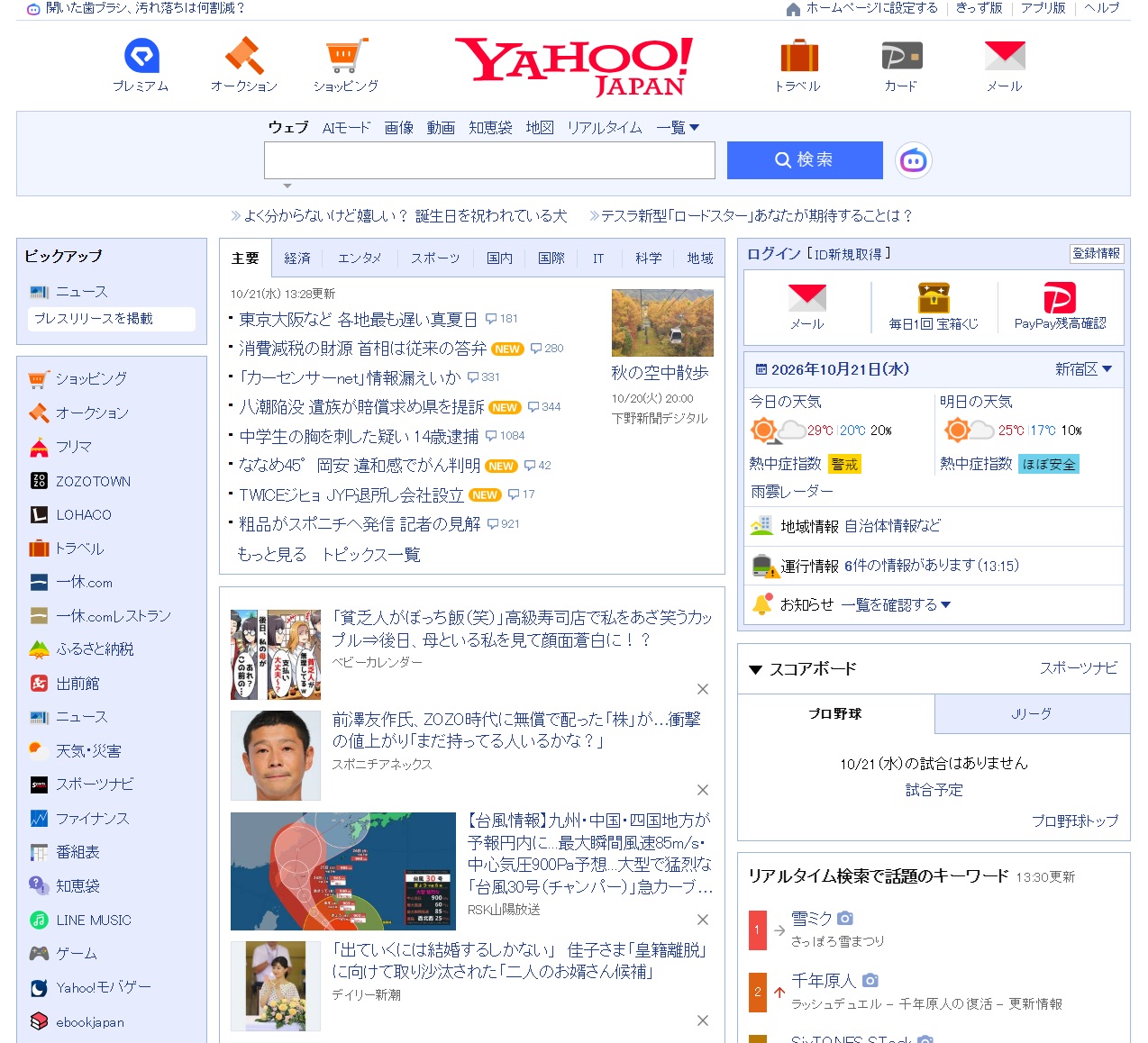 Today, Yahoo! Japan’s website is available to anyone in the world as a search engine and source of news information, but the ability to register as a user is only available to those living in Japan. To become a buyer or seller on its auction marketplace, you must prove Japanese residency by listing a Japanese address and phone number before they’ll let you in. This is bad news if you live outside of Japan as you are prohibited from buying anything there, at least not directly.
All was not lost for those outside of Japan as various proxy companies soon appeared which acted as a go between international customers and Yahoo! Japan’s auction marketplace. These proxies allow non-Japanese customers to buy things from Japanese merchants and then ship them internationally to most countries in the world…for a fee, but we’ll get to that later.
If you are interested in buying something through a Japanese auction, there are two primary reasons to do so. The first is that some items are much easier to find in Japan than anywhere else. A good example of this is the Olympus M-1 SLR. A quick bit of history for this camera is that when the M-1 was released, Olympus received a trademark complaint from Ernst Leitz of Germany as they already had a camera called the Leica M1. Olympus was asked to change the name of the camera and rather than take it to court, they complied and renamed it the Olympus OM-1. This change had little effect on the OM-1’s popularity as it would go on to become very successful, launching a whole lineup of OM-series cameras that remained in production for nearly two decades.
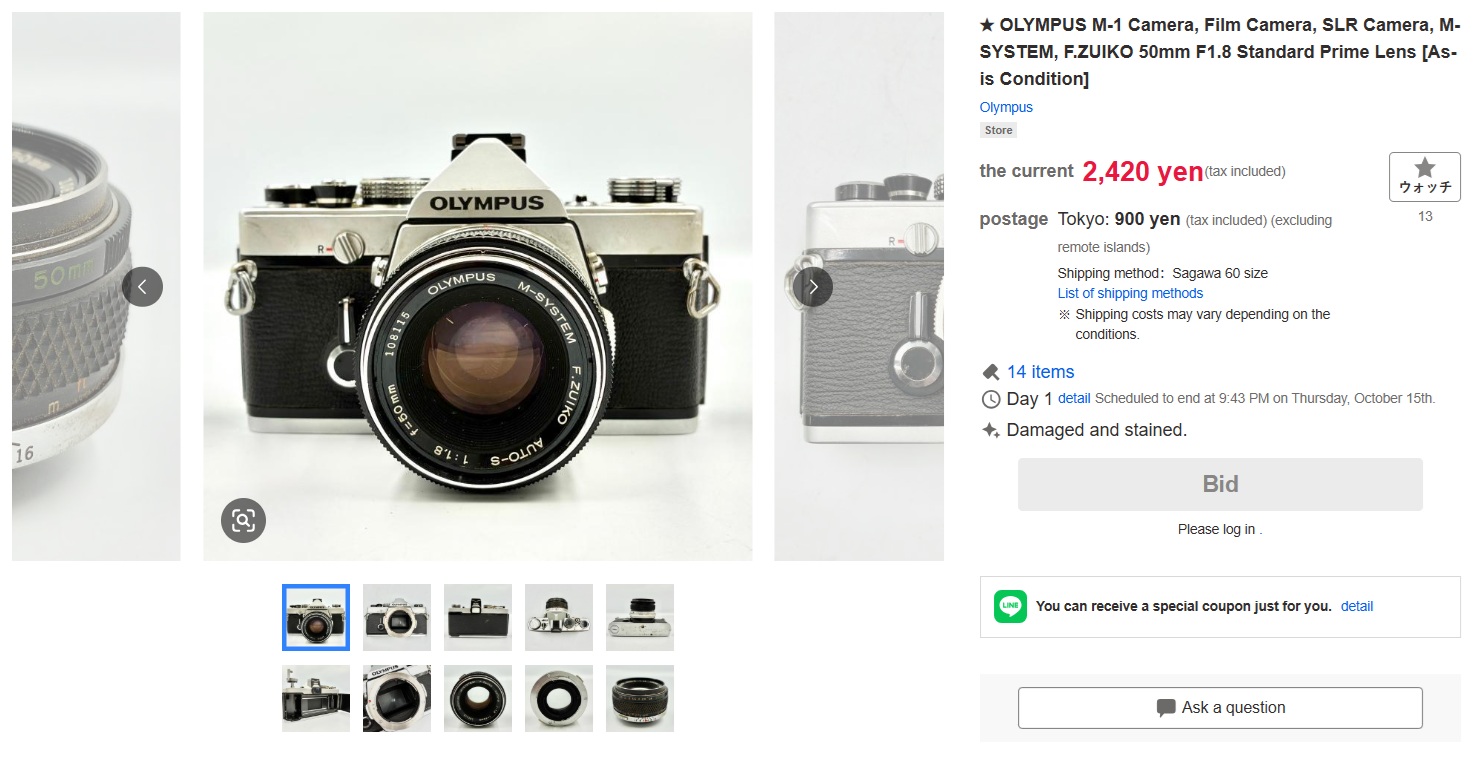
When Olympus renamed the M-1 to the OM-1, Leitz only required them to do so for cameras sold outside of Japan, however domestically sold cameras were still allowed to be called the M-1. This resulted in a little more than 50,000 Olympus M-1 cameras being sold inside of Japan between 1972 – 73. Today, the M-1 is very hard to find for sale outside of Japan and when you do, prices for it are accordingly high. As I write this, a quick eBay search for the Olympus M-1 in the United States returns only three results with prices ranging from $139.99 for a non working one to $329.99 for a confirmed working copy. At the same time, I searched for the same camera on Yahoo! Japan and found 46 for sale with prices ranging from 2,420 yen to 39,800 for a fully CLAd one with an f/1.4 lens.
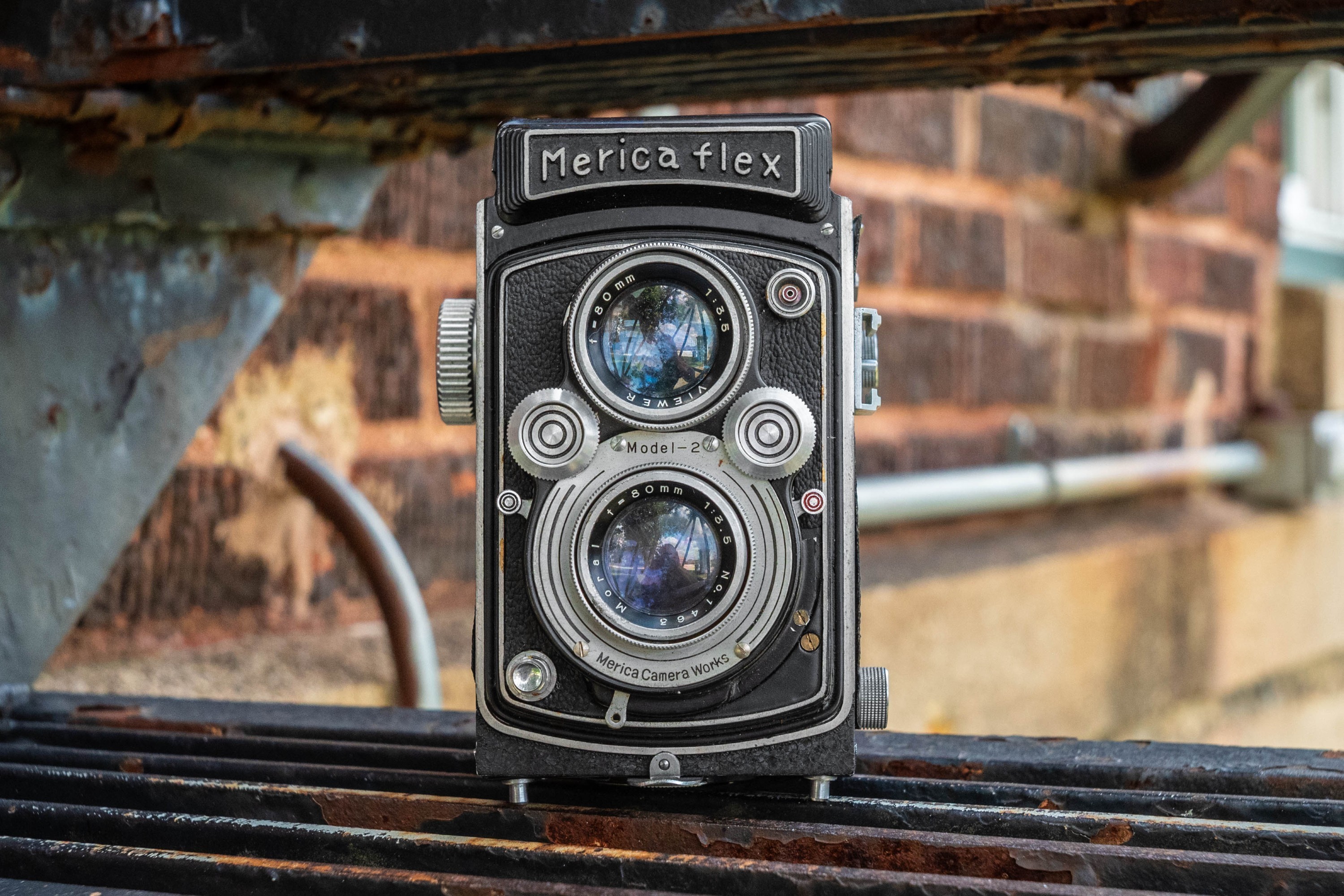
In addition to the Olympus M-1, there are many examples of uncommon or rare items that are unique to the Japanese market which rarely ever show up for sale outside of the country. A recent review on this site for the Merica flex Model 2 was the result of me seeing a camera for sale in Japan which I had never heard of before, and without the ability to resist, I ended up buying it. The Merica flex is a very obscure Japanese TLR which most collectors have never heard of before and rarely, if ever shows up for sale on US eBay.
The other reason for considering Japanese auctions is price. There are many items which can be bought for significantly cheaper through Japanese auctions than through eBay. Many of my best deals on cameras have been for common models I could have easily bought on eBay, but I picked up from Japan for much less. Strangely, there are many sellers who sell the exact same item on both eBay and through Yahoo! Japan and when this happens, the prices are wildly different. It is worth noting that things being cheaper in Japan is not universally true. There are plenty of cameras where after shipping and fees, eBay would still be cheaper and in the specific case of Leicas, you’ll find these cameras often sell for more in Japan than outside of it.
Buyee and OneMap From Japan Proxies
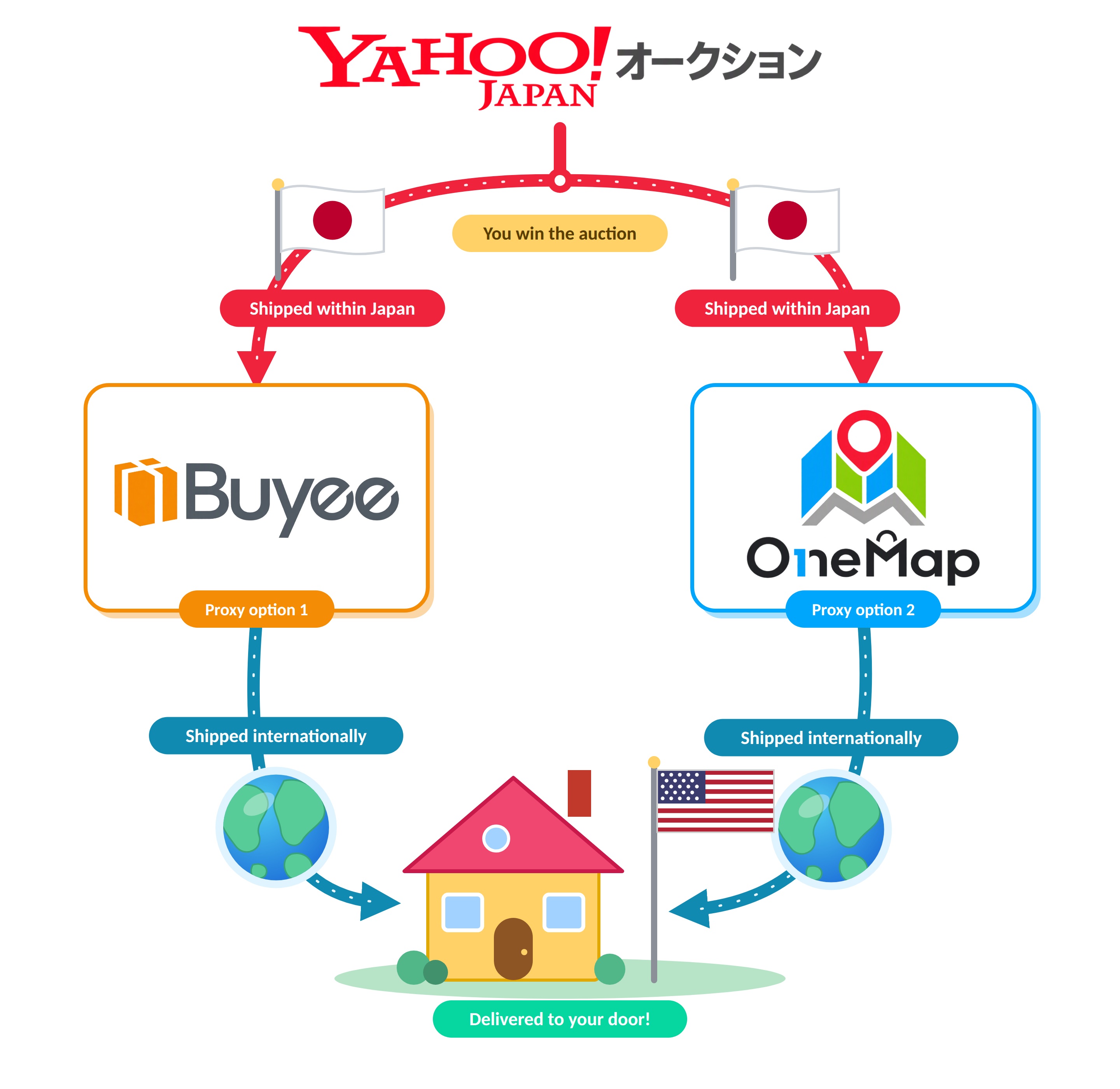 While there are several Japanese proxy services, this article will focus on two of the most common, Buyee, and OneMap From Japan. For the remainder of this article, I will refer to this second one as “FJ” for simplicity.
In both cases, Buyee and FJ are independent companies from Yahoo! Japan, but they are both considered integrated partners and Yahoo! Japan encourages their use. Between the two, the relationship with Buyee is stronger as Yahoo! Japan’s website will automatically detect non Japanese IP addresses and offer to redirect you to the same item on Buyee’s website. While the partnership with FJ isn’t quite as transparent, both work nearly the same way with only a few minor exceptions.
A proxy is essentially a third party middleman who is located within Japan and takes on the task of buying whatever you’re interested in on your behalf. Like anything, you need to create an account and go through some kind of basic authentication, but once you’re setup with either proxy, you are free to bid on most items which Yahoo! Japan offers.
You should know that Yahoo! Japan is not a single store or service, it is a massive online marketplace offering sales from a huge number of retail stores, small businesses, and even private sellers. For anyone interested in buying cameras from outside Japan, you’re almost exclusively interested in items from something called JDirectItems Auctions or JDirectItems Fleamarket. While writing this article, I actually had to look up why those names are only used by proxies and it turns out that both JDirectItems Auctions and Fleamarkets are simply branding names used for overseas sales through Yahoo! Japan Auctions and Yahoo! Japan Fleamarket. Think of JDirectItems Auctions like eBay and JDirectItems Fleamarket like an online merchant that sells used goods at a fixed price.
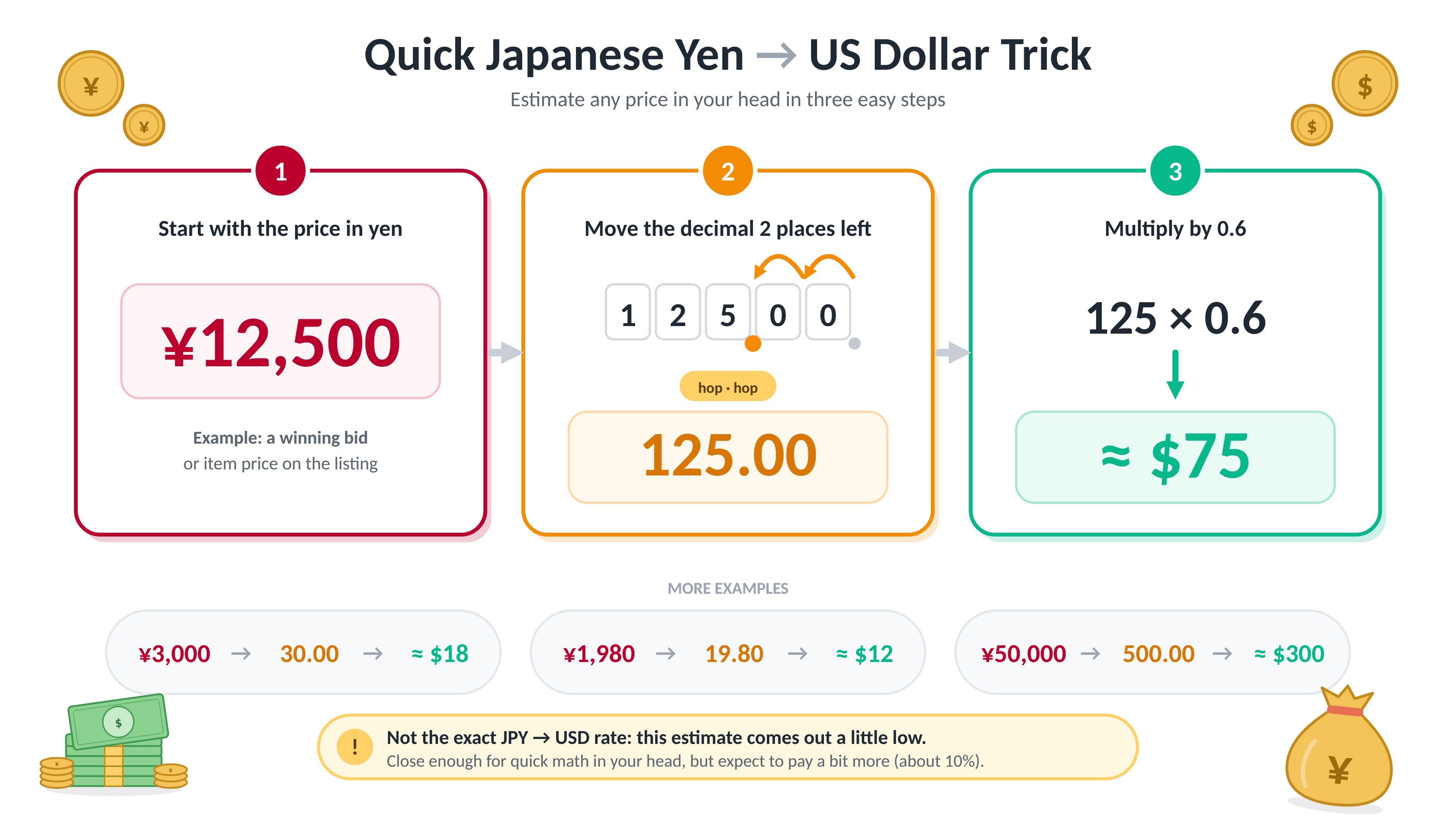
In terms of price, you should also know that all prices are always in Japanese Yen, which needs to be converted into your local currency, so get used to memorizing the conversion rate for on the fly calculations of what this will cost you in your own currency. For those in the United States, a rough estimate can be obtained by moving the decimal place two spots to the left and then calculating 60% of whatever that number is. So 10,000 Yen = 100 x .6 = approximately $60 USD. Since conversion rates constantly fluctuate, this trick comes out a bit low, so the actual price will be a little higher but for the purposes of an estimation, is close enough. If you wanted a more accurate conversion and are capable of more complicated math problems in your head, instead of multiplying by 0.6, subtract a third (~0.3333) and you’ll end up with a slightly more accurate estimate but for quick calculations, 0.6 is fine.
 Regardless of which proxy you use, the act of buying something from Japan involves you looking up something on Buyee or FJ’s website, entering a bid, and waiting until the end of the auction to see if you’ve won. Like eBay, some auctions have a “Buy Now” option which is determined by the seller, and if that is available, you have the option to win the auction immediately, usually for a price higher than the opening bid. In this regard, buying cameras through Buyee or FJ is very similar to eBay.
Assuming you win an item, the proxy you used will pay the seller for your item and handle all of the domestic shipping from the seller to their own warehouse. Once it is in their possession, they will hold onto it for you and tack on a small fee (usually 500 yen) for the convenience.
Consolidating Purchases
Here is where things get exciting, or depending on your lack of will power, dangerous. Both Buyee and FJ will allow you to accumulate multiple purchases from as many different sellers as you want and then they’ll repackage them all together into a single box and charge you for just one international shipment. This is distinctly different from eBay in which if you win multiple things from the same seller, they may combine shipping, but for unique sellers, everything you buy on eBay comes straight to you from that seller with a separate shipping fee each time. This is especially useful when you consider that international shipping is very expensive. If you were to buy one thing from Japan, it might cost $40 to ship it to you, but it might only cost $70 to ship 7 items. The more you buy, the more you save on international shipping.
Consolidation is not Infinite Both Buyee and JP have limitations on the number of items which can be shipped in the same box and they both have a 30 day limit for how long they’ll hold onto your stuff without charging extra. Although I’ve never waited that long, both services will allow you to hold items in their warehouse beyond 30 days, but they’ll start charging you penalties for each day past 30 days you don’t close out your shipment.
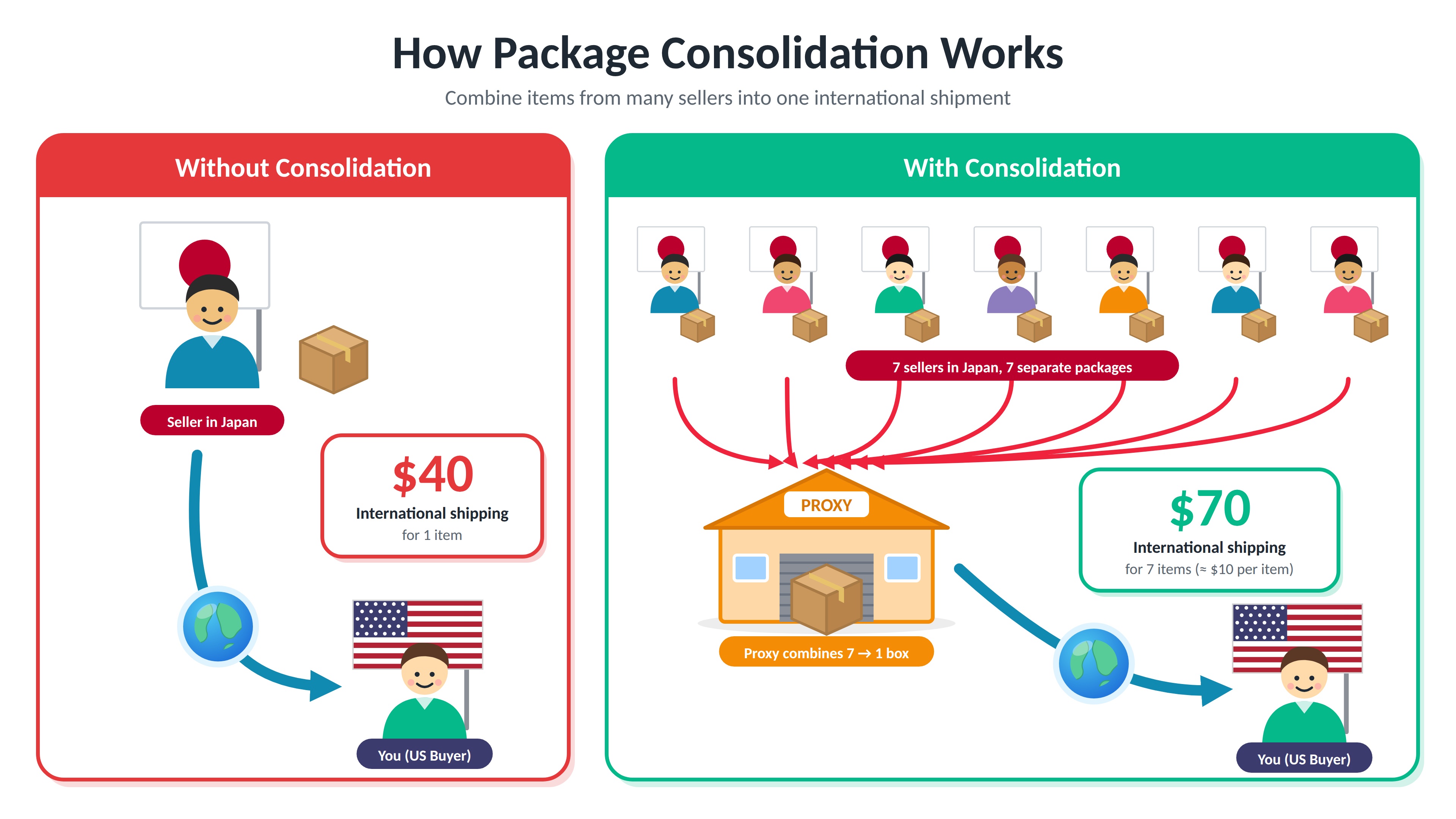
I would consider the option to save money on multiple international shipments to be one of the best advantages to using proxy services over eBay. There are several other differences, some not so beneficial however. I’ll start with the bad news first.
Lack of Buyer Protections
By far, the biggest risk of buying from a Japanese auction, whether you’re in Japan using Yahoo! Japan’s website or an international proxy is that none of these services give you the same level of buyer protection as eBay does. With eBay, they offer many different levels of satisfaction guarantees to buyers ensuring that whatever you receive is exactly what you purchased. If you buy a used camera on eBay and the seller claims it is in good working order, but you receive it and the rangefinder is off or the shutter speeds seem sluggish, you can return it no questions asked and the buyer has to accept your return and not only give you a full refund of your purchase price, but also what you paid for shipping. The buyer protection on eBay is so buyer friendly that it can actually be used by scammers who will buy a camera to try out and once they get it, just change their mind and send it back without having to prove anything is wrong, eBay will force the seller to take it back with little recourse for the seller.
While Buyee and FJ don’t leave you completely without options, their buyer protections are nowhere near as universal as eBay’s, plus they put a huge burden of proof on you to photograph the item from multiple angles, describe the damage or issue in extreme detail, wait up to a week for an investigation to be conducted with no guarantee they’ll decide in your favor, and even if they do, they will refund you your purchase price and some of the fees, but not all of them.
In addition to offering far fewer buyer protections, neither Buyee nor FJ offer you any way to contact sellers directly to ask questions. Maybe an honest Japanese seller describes a camera well but omits something you are curious about and you want to ask if they can add an additional photograph of the battery compartment or ask a clarifying question about a camera’s operation. There is no direct buyer to seller communication using the proxies. Both Buyee and FJ offer to pass along questions or requests, but you do it through them and not only are there limitation in what you can ask, there is almost no incentive for sellers to respond, so most questions go unanswered.
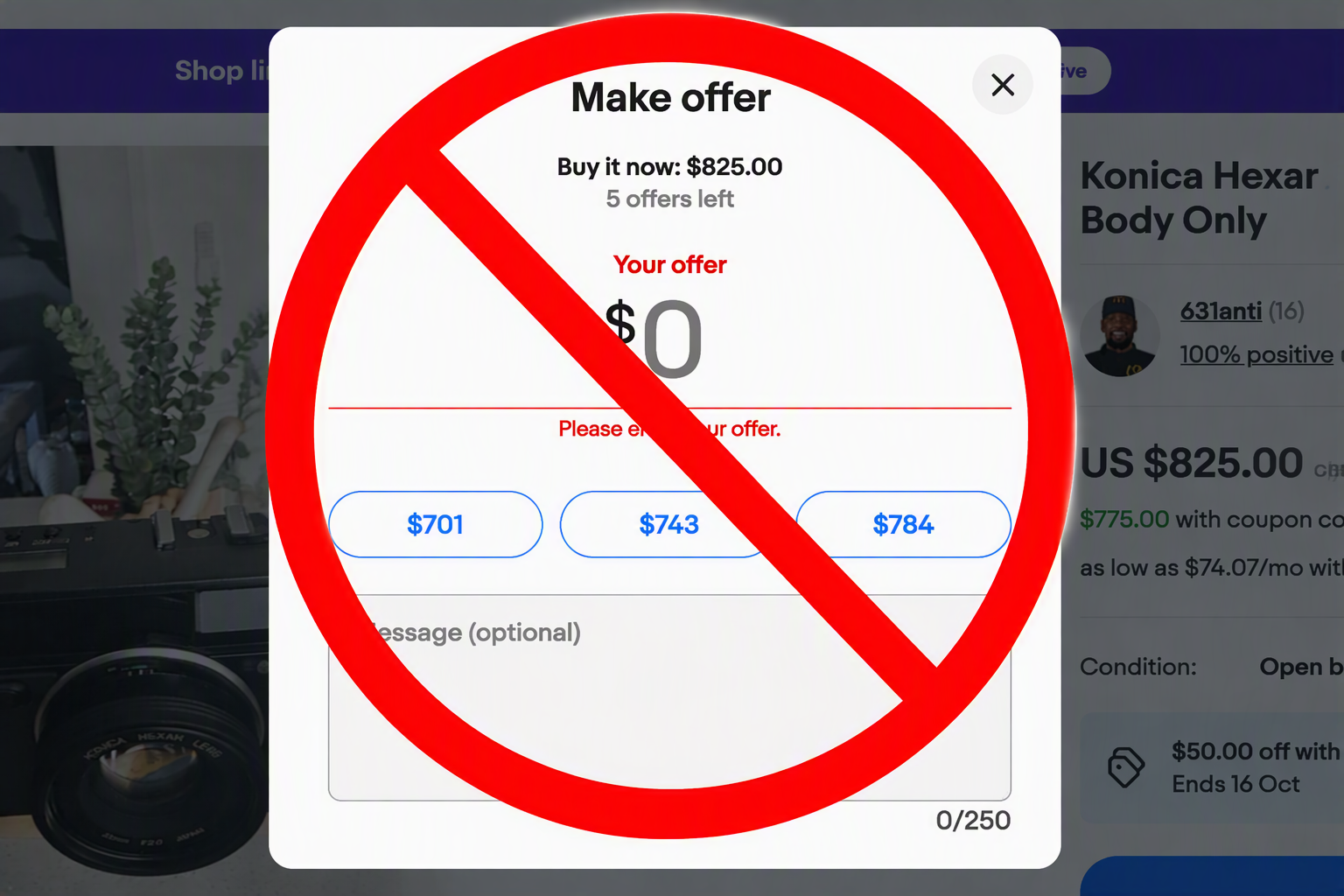 In addition, none of these services allow a “Make an Offer” option like eBay does. If a camera is listed for weeks at a time and never sells, you have no ability to ask the seller directly if they’ll consider a lower price. In the case of Buyee, they do offer a price negotiation service, but there are many limitations on which items you can attempt to negotiate and by how much you can ask off the price. If you do a price negotiation, they do it on your behalf so you still have no ability to talk to the customer to explain your reasoning for the reduced price. In my personal experience, I have made several attempts at a price negotiation and have never been successful.
With so little in the way of buyer protection, no way to contact the seller directly to ask a question or to offer a lower price, the risk is significantly higher than eBay when buying a camera through these services and that is something you should definitely factor in before making a purchase. You should never attempt to buy something unless you can accept the possibility that it will arrive broken or in worse condition than you expected. Thankfully, many Japanese sellers are honest and in many cases, they under rate the condition of stuff, so more times than not, cameras arrive in good condition, but in the times where they don’t you have little recourse.
Why is everything described as Junk? Compared to Japanese sellers on eBay and on Yahoo! Japan, you’ll notice a significantly higher percentage of items listed as being in Junk condition. This is the result of both a cultural and legal loophole in which a seller is absolved of any responsibility for a warranty or any claim made against them for selling an item regardless of its condition. They can sell a beautiful condition Leica M3 in excellent physical and operational condition and still describe it as “Junk” and if you have any issues with it of any kind, they are not obligated to honor a return, refund, or any kind of support for the item.
Challenges with Site UI
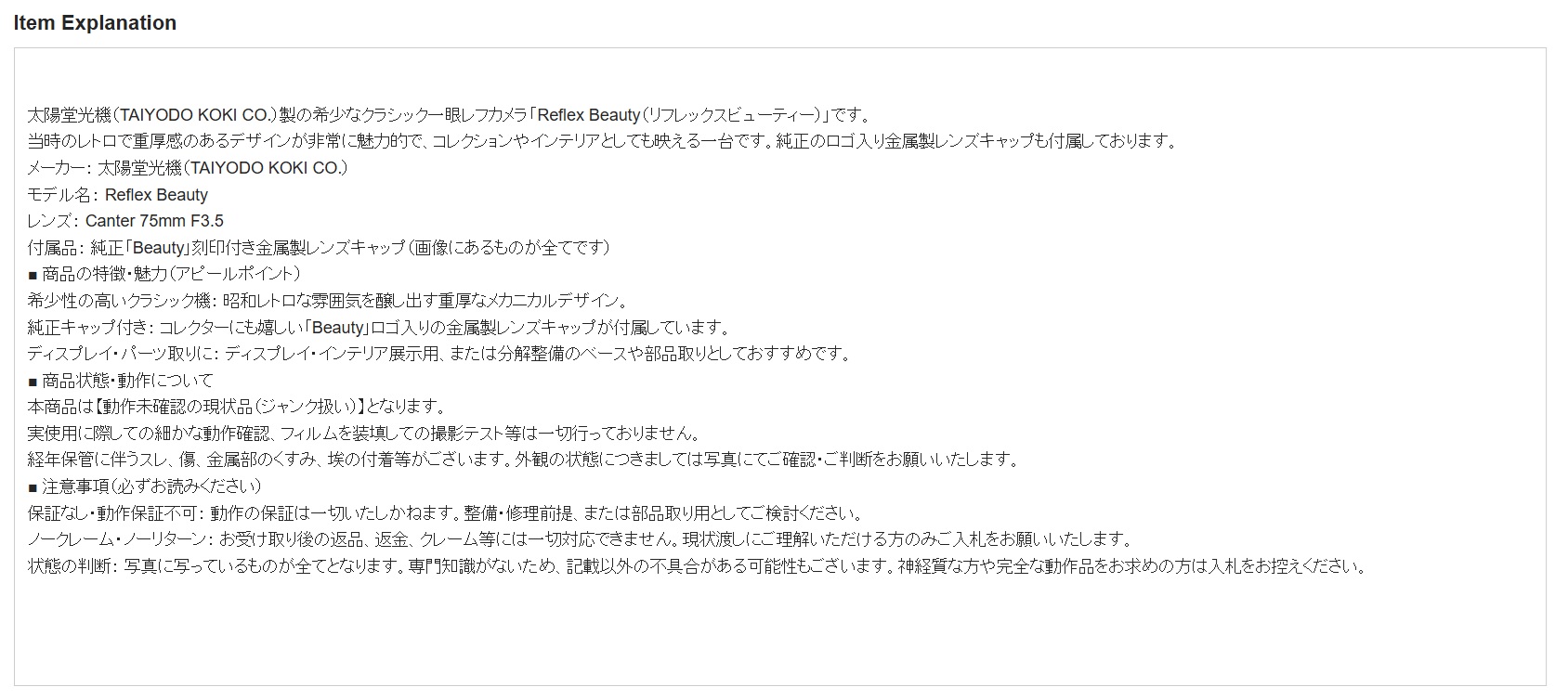
Other challenges you’ll encounter have to do with the actual buying experience itself, namely the site’s UI. Despite catering to non Japanese customers, both Buyee and FJ’s site still pass along a large amount of Japanese text to your browser, especially product listings. Thankfully, most modern browsers like Google Chrome have built in translation services which will change the Japanese text to English or whatever language you use, but the translation is never perfect. Lenses or cameras with mold or fungus will often be described as having ‘spiders’ or ‘chili’. In addition, other parts of both sites, even though they’re written in English, can sometimes be poorly translated. I often laugh when I see Buyee describe my packages in their warehouse as being ‘In Winter’. Most of these language snafus are minor and don’t take away from the buying experience, but it is still something to be aware of, especially when buying a high dollar item in which you want to know exactly what might be wrong with it.
In addition to oddball translations, the overall UI of both sites is far from perfect. An area that I specifically struggle with is the ability to simply browse a category for sale without specifying a search filter. It is possible to do, but the interface is clunky and it varies from desktop to mobile. This is one area in which FJ is a bit better than Buyee as their overall user interface is cleaner and a bit easier to navigate than Buyee’s, however neither are as clean as eBay’s.
Soft Close Auctions vs What eBay Does
If you’re still with me and wanting to learn more about buying through Buyee or FJ, the good news is that the bad news is over but there are still some differences you should be aware of.
The biggest is that when compared to eBay, all JDirectItems Auctions, whether listed through Yahoo! Japan or one of the proxies use what is called a “soft close”. This is an auction term in which the ending time of an auction is not firm. With eBay, if an item is listed at 8pm on a Friday evening for 7 days, it will close at exactly 8pm the next Friday evening, no matter how many bids it has. With a soft close, an auction will have a closing time, but any bids received within the last 5 minutes of the auction closing time will extend the end time of the auction until people stop bidding.
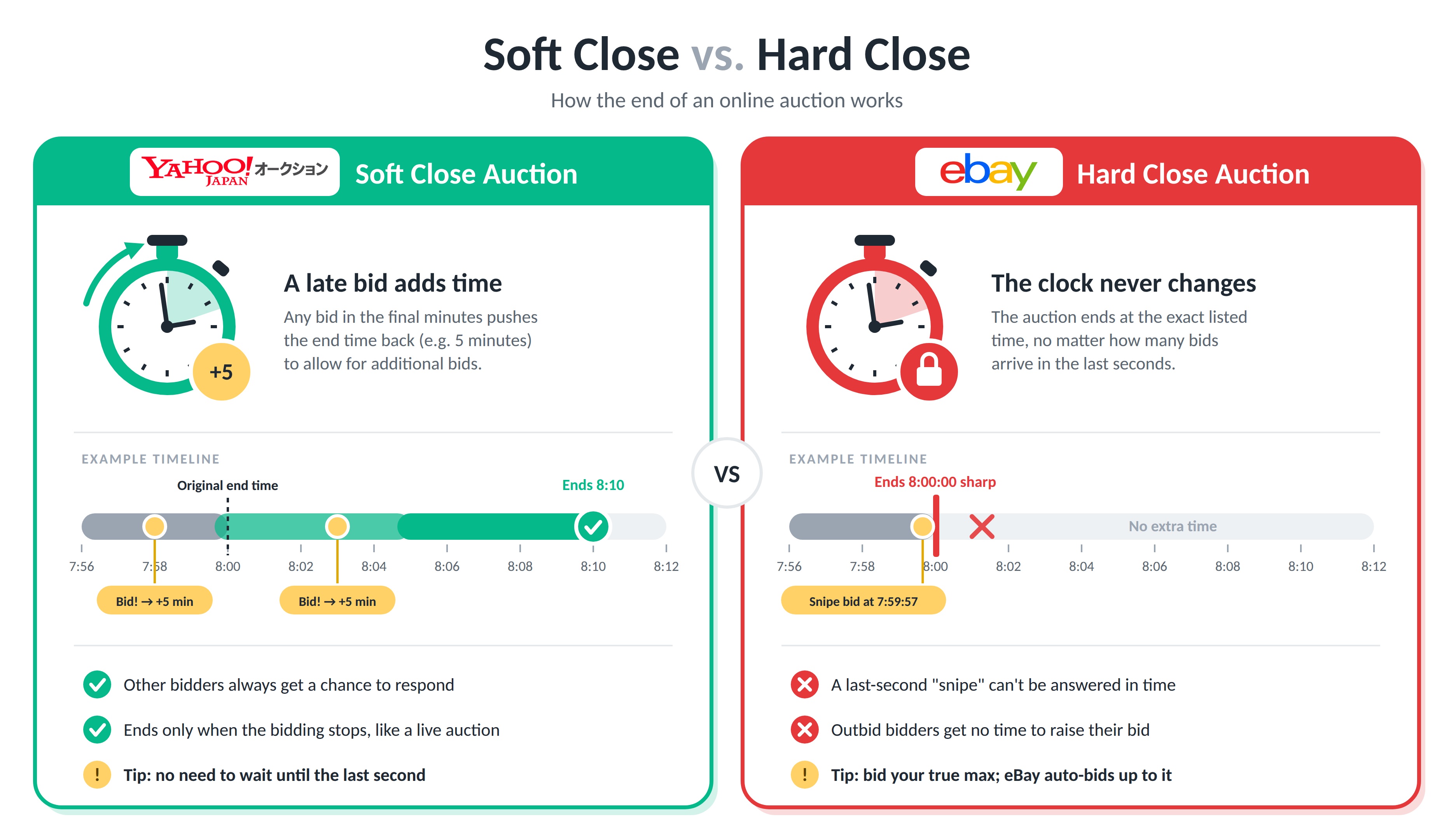
This is especially important to know for people who like to snipe. Sniping is a term that originated on eBay in which third party companies offered services where they will submit your bid with seconds to go on a auction in the hope that they can get your bid in before anyone else has a chance to counter your bid. If an auction is about to close in 3 seconds and you become the high bidder, it is unlikely anyone else will be able to respond quick enough.
With a soft close, entering a snipe bid will accomplish the task of getting a last minute bid in, except it will extend the listing time, giving several minutes for someone to counter your bid. While a soft close doesn’t guarantee a snipe bid won’t be successful, it takes away the element of surprise, which is the primary benefit to doing it in the first place. Where it becomes a big problem is if multiple people keep doing this and the auction end time keeps getting pushed back. I have seen several auctions which received so many last minute bids that the auction was still open an hour after it was supposed to close.
Sniping is Less Effective on Japanese Auctions
Unlike eBay which offers no built in bid sniping options, all Japanese auctions allow it on almost every auction. Along with the option to place a normal bid, there is a separate button to enter a snipe bid. Despite losing out on the ability to enter a truly last second bid, there are still some advantages to using them. For one, snipe bids can be cancelled before the auction closes, whereas regular bids can’t. Perhaps you are on the fence about an item but don’t want to risk forgetting about it and not entering a bid before it closes, enter a snipe bid and as long as there’s more than 5 minutes remaining, you can cancel it.
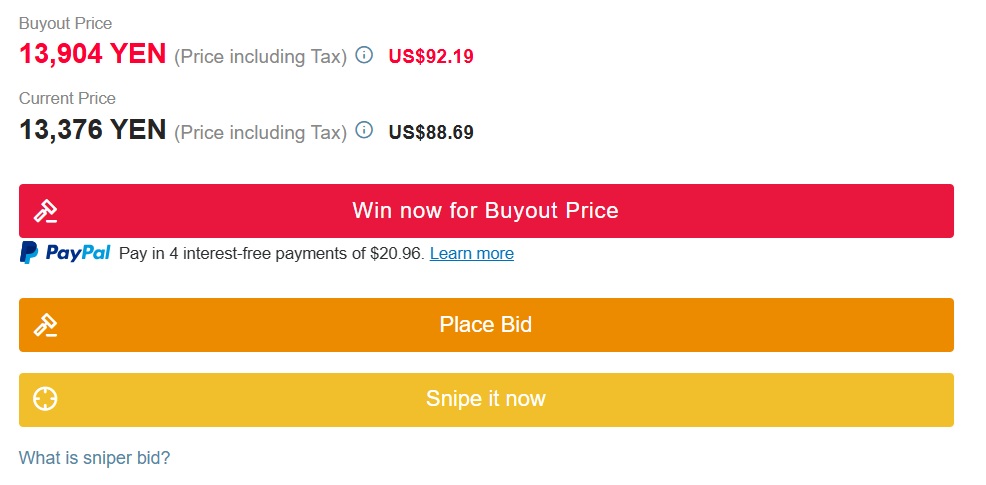
A common belief from pro-sniper bidders is that since regular bids immediately raise the price of an item, the less likely the items will sell for a low price. However, if you only used snipe bids, the price would remain low throughout the auction, potentially resulting in a lower selling price (this can’t be proved, but some people think this is true). One last benefit is that both Buyee and FJ sometimes offer coupon codes which can give discounts on items, but these coupons can only be redeemed upon entering a bid, so if you think a coupon might be coming, you could use snipes as a way to back out of your bid to use a later coupon if one appears before the item closes.
One final oddity of these auctions is that compared to eBay where an overwhelming majority of eBay auctions run for 7 days, many Yahoo! Japan auctions run for only 24 hours. Some last for 3 days with only a small number lasting a week. This results in quicker turnarounds so if you see something that was just listed today, you won’t have to wait a week to find out if you won, you might know as early as tomorrow.
Other Quirks of Sellers
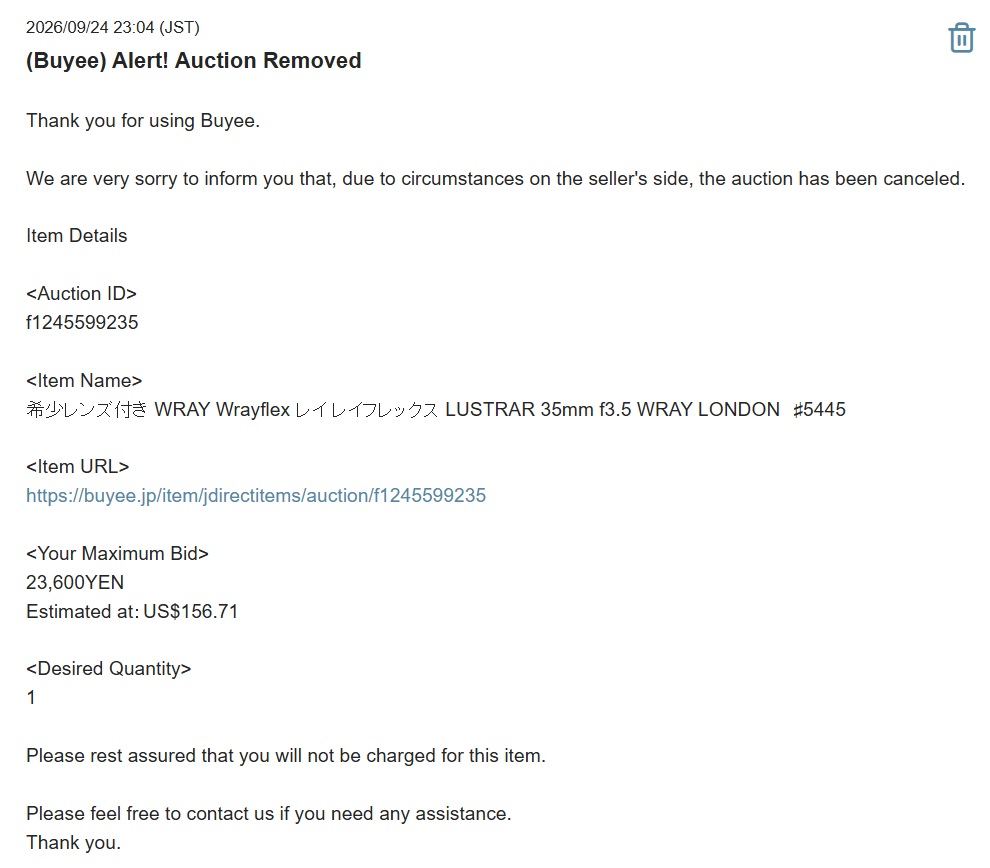
In the realm of “not good or bad, but annoying” there are a couple strange behaviors I’ve noticed from some sellers. One of them is the tendency for sellers to cancel an auction moments before it closes if the price doesn’t reach an amount they are hoping to get. I have been involved in a variety of auctions in which I was certain I was going to get a camera for significantly below value, only to see it get to the last minute and suddenly disappear. Technically, this can happen on eBay too, however eBay has rules around how often a seller can pull a listing with active bids and if they do it too many times, their account can be restricted, or in some cases suspended. Neither Yahoo! Japan, Buyee, or FJ have such a policy so some sellers do this all the time.
The good news is that these situations are often easy to predict. If you see an item with an extremely low opening bid but an unrealistically high Buy Now price, there is a very good chance that the seller has no intention of letting it go for less than their desired price. I’ve spoken to other experienced Japanese auction buyers and the theory is that these sellers are doing this to gauge interest. They want to know what the market is willing to pay for something with the intent of selling it in a retail store for higher. Supporting this theory is that in many instances when this happens, the exact same item will often be relisted with a much higher opening bid price, often multiple times higher than whatever it received the first time.
EXC+++++ and TOP MINT If you are an eBay veteran, you’ve certainly seen countless cameras sold by Japanese sellers with ridiculous claims that the camera is in excellent or “top mint” condition followed by a line of plus signs, despite many of these cameras often showing signs of heavy use or even damage. Thankfully, this practice does not occur in Japan as you’ll almost never see these claims.
Restricted Items
A strange behavior of both Buyee and FJ is that some auctions get flagged as being a restricted and that it cannot be purchased through their proxy. Strangely, it is rarely obvious why one auction might get flagged and another not, but even stranger is that when this does happens, it almost always happens for one proxy but not the other. An item might be restricted on Buyee, but open for purchase on FJ and vice versa. I have never seen an item be restricted on both services, however.

If you encounter a restricted item, it is worth contacting that proxy’s support and asking them if they’d consider lifting the restriction. I have done this about a dozen times on Buyee and a majority of times they will lift the restriction and let you bid, but not always. When they don’t their explanation rarely makes sense. In the case where a proxy will not lift the restriction, your only recourse is to try a different proxy.
Coupons
Earlier when talking about snipe bids, I mentioned that sometimes Buyee and FJ will offer coupons. When this happens, this can be a great way to get a 10% to 20% discount on whatever you want to buy. As is the case with any coupon, there are restrictions. Some coupons will work on JDirectItems Fleamarket but not Auctions or vice versa. Some coupons have a price requirement. The 20% coupons almost always apply only to items with a winning bid of 50,000 yen or higher. The smaller coupons usually have lower price requirements as low as 3,000 yen. Most coupons can be used more than once but they’re always time bound and they must be applied at the moment you place a bid, whether its a regular or a snipe bid. If you enter a qualifying coupon onto your bid and it is accepted and the coupon expires while the auction is still open, it will still count, but you cannot retroactively apply coupons to things you’ve already bid on.

While both Buyee and FJ run coupons, Buyee’s are less common and usually for higher percentages and often last for several weeks or even a month, whereas FJ’s coupons are smaller but appear more frequently and usually are only good for a day or two. One last behavior of coupons is that they are not universally applied to all users. Some coupons only appear for new users and some for more experienced users so it is a good idea to regularly check back to see what might be available for you. There have been many occasions where I heard about a coupon from someone else only to find out it wasn’t available for me.
Fees, Fees, and More Fees
Now that you have a good understanding of what the different types of Japanese auctions are, how the proxies work, and what’s good or bad about them, the last thing you need to consider are the fees, of which there are many. Getting a deal on the total price for an item purchased through a Japanese auction is the primary reason for buying it there so you need to make sure you actually are getting a deal. Earlier I mentioned how certain items can be bought more easily and for a lower price than through eBay or some other non-Japanese market place but before you haphazardly start throwing out bids, you need to fully understand how the fees work.
Although I have purchased things through FJ, I have much more experience with Buyee, so I’ll cover their fees below, but generally, FJ’s are similar. Some of the fees below are per item, so you’ll pay them more than once depending on how many things you buy, and the rest are one time fees that apply to the entire shipment.
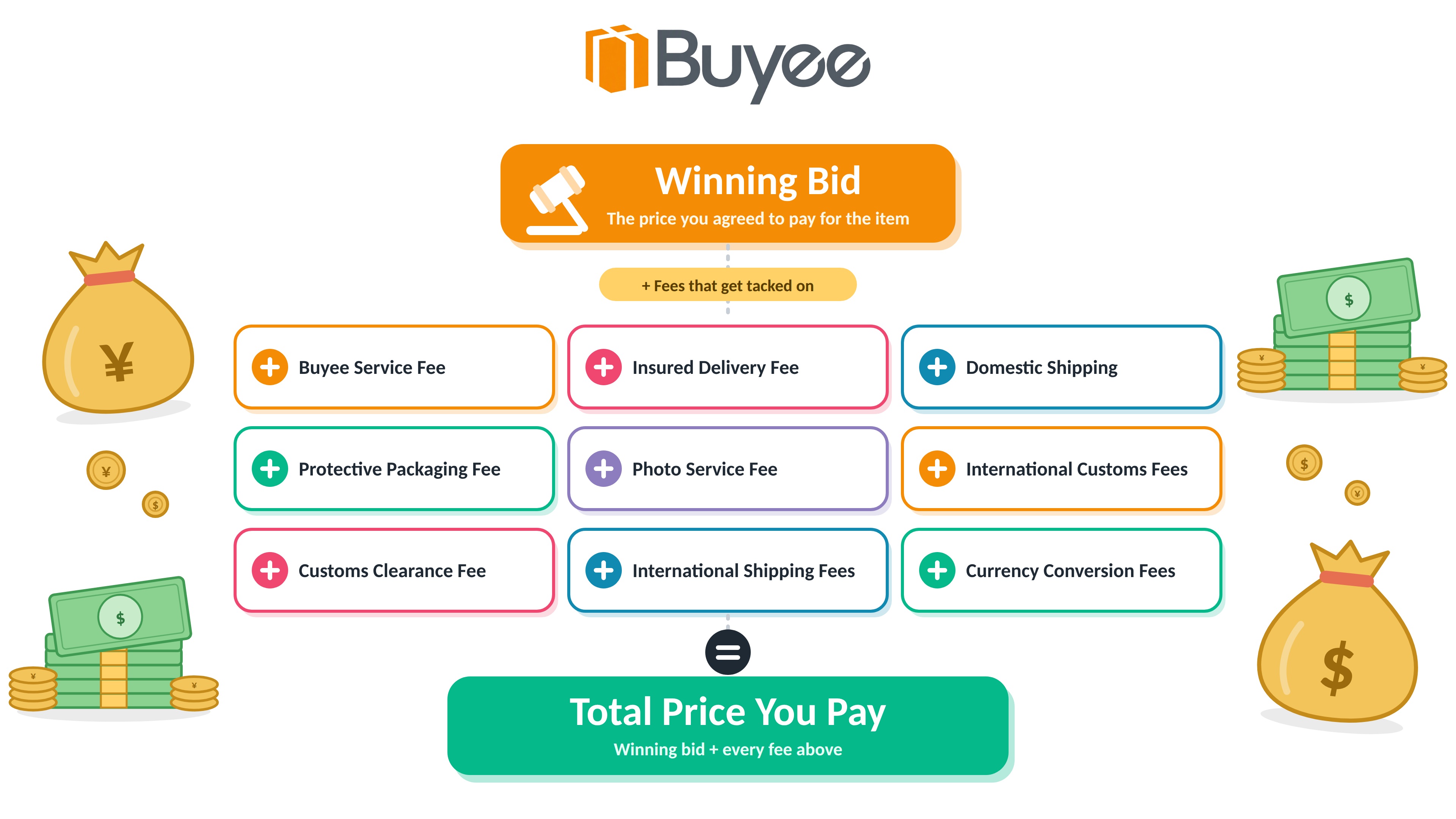
- Winning Bid – Whether you win the auction through a traditional or sniper bid or agree to a Buy Now price, you are committed to the price you agreed to pay. Since the proxies require you to enter payment information before they let you bid, there is no way to back out of paying for an item after you agree to pay it.
- Buyee Service Fee – Buyee always charges a 500 yen fee for every item you buy, no exceptions. FJ has similar generic fees, but as I write this, I am unsure of what they are.
- Insured Delivery – This fee ranges from 0 to 500 yen to insure your delivery to Buyee’s warehouse. If you do not get insurance they will not check the item when they receive it from the seller and this will seriously limit your options if the item you receive is incorrect or damaged. For the low price of 500 yen per item, you really should not skip this optional fee.
- Domestic Shipping – Anything you buy through Buyee or FJ must be shipped twice, once from the seller to their warehouse and the second internationally to you. Although some sellers do offer free domestic shipping, most charge for it and when you make the purchase, Buyee initially covers it but they pass on that cost to you at the end. For most small to medium rangefinders or SLRs, domestic shipping is usually between 500 – 1500 yen, but it can be higher for larger cameras. It is important to remember that domestic shipping is per item, so if you make 8 purchases and ask Buyee to consolidate them into one international shipment, you are still on the hook for 8 individual domestic shipments to them. If each of those 8 items had an average cost of 1000 yen, that’s 8000 yen total just for them to get your packages for you.
- Protective Packaging Fee – This is another optional fee of 1500 yen which tells Buyee to do a better job of repackaging your items into a new box. The more items you buy, the more important this becomes as the more items in a box, the heavier it is and the greater chance that things can bang around on an international shipment to you. Things can still happen of course, but if they do, your chances of receiving compensation for a damaged shipment are higher if you pay for the additional packaging fee. This fee applies to the whole shipment, not per item, so the more items you buy, the more you can average this one out.
- Photo Service Fee – Yet another optional fee where you can request Buyee to individually photograph an item and send you the images before they ship it. If you suspect that an item may not be in the condition the seller claims, this optional fee allows you to see an image of what you bought before it is shipped. I have personally never used this option as I never saw a need for it.
- International Customs (Tariffs) Fees – For buyers in the United States, the tariff on items from Japan is currently 12.5% to 15%. This has changed wildly in the past year and will be different to countries other than the US, but for now, expect to pay this up front if you buy anything from Japan. FJ offers you the option of them not charging you the fee, instead putting the burden on the shipping company to collect it, but this isn’t always a good option as there is no guarantee it will be cheaper. I’ve heard from some buyers that this can actually delay your shipment as getting the paperwork filled out correctly by the shipping company can cause additional delays. As unfortunate as tariffs are, this isn’t something you can avoid so you must factor it into your decision when buying something.
- Customs Clearance Fee – This is a flat 1200 yen fee which applies to the entire shipment for Buyee to fill out the US Customs paperwork for you so that you don’t have to.
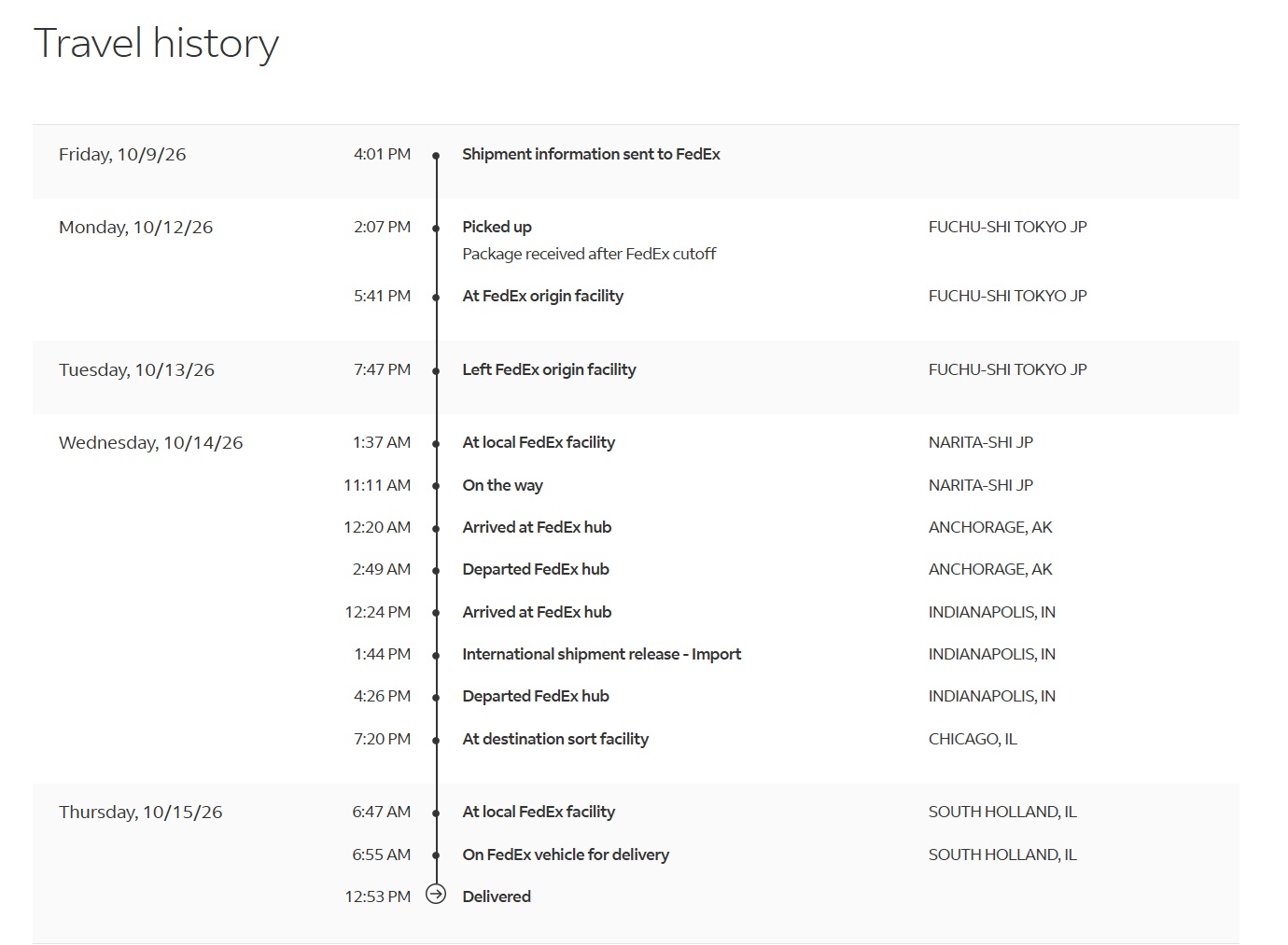
This is the tracking detail for a package shipped using Buyee Air through FedEx. It left the warehouse on a Monday and was delivered on a Thursday. ECMS would have taken much longer. - International Shipping Fees – This is another one that varies wildly depending on which country you are in. Currently, for someone in the US, both Buyee and FJ only offer you two shipping options. One uses a Japanese service called ECMS and the other is Air mail, which for Buyee, usually means Fedex Air. The odd thing is that when you choose a shipping option, you will not find out who will actually handle the shipping until after it ships. In my experience, the price for ECMS is about 25% cheaper but takes significantly longer to receive. In my first four shipments using ECMS, the fastest shipment I ever got took 11 days to get to me and the slowest was 14. Using Buyee Air, I usually receive my packages within 3-4 days after it leaves the Japanese warehouse. As for the cost, this varies wildly depending on the weight and size of your consolidated shipment and a variety of other industry factors. A recent Buyee shipment containing 9 cameras, in a box weighing 7.8kgs cost 12,918 yen to ship.
- Currency Conversion Fees – This last one isn’t anything Buyee or FJ will itemize on your invoice but it is something I’ve noticed on every item I’ve bought through their service as Buyee tacks on hidden fees whenever they convert a price from Japanese yen into something else. As an example, as I write this, I looked up the price for a Nikon F5 body in good condition and it had an opening bid of 50,000 yen. Next to it, it showed a price in USD for $331.50. However, if I went to Google and asked it to convert 50,000 yen to USD, it tells me it should cost $315.99, a difference of $15.51 or about 5%. This 5% discrepancy is consistent with nearly every price you look up, and the fact that it always never works in your favor suggests it is not due to “varying market conditions”. While 5% might not seem like a big deal, this unfavorable conversion applies to every item and every fee you pay for. Whatever your grand total is for everything you’ve bought will be 5% higher than what a bank would give you if you tried to convert JPY to USD. I asked a friend of mine in Canada who routinely buys from Buyee to check if there was a similar discrepancy in Canadian dollars and he concluded that there was, so this does not appear to be specific to USD currency conversions.
With up to 9 potential fees on top of your winning bid, you might be wondering why anyone would do this. As scary as these fees sound, I can assure you that in many cases it is still worth it to buy things through a Japanese auction, but as I’ve said a number of times, you need to factor all these fees and compare the total price to what a similar item might cost through eBay or a domestic US seller before making the decision to buy it.
If seeing a real world example helps, I looked up two recent purchases I made through Buyee, one of a Nikon F3AF SLR with the AF Nikkor 80mm f/2.8 lens which was cosmetically excellent and in confirmed working condition, and a Zeiss-Ikon Ikoflex III TLR with the 8cm f/2.8 Tessar taking lens in cosmetically excellent but unconfirmed working condition.
In both cases, I broke down what I actually paid for the cameras including all fees, dividing up charges that applied to more than one item, and then also factoring in the 5% fee when Buyee converts JPY to USD. I then looked up eBay sold prices for the same camera in similar condition and gave examples of what real people actually paid for similar cameras. Of course, no two used cameras are ever truly the same and in the case of the Ikoflex, the camera wasn’t in confirmed working condition, but neither were the eBay cameras.
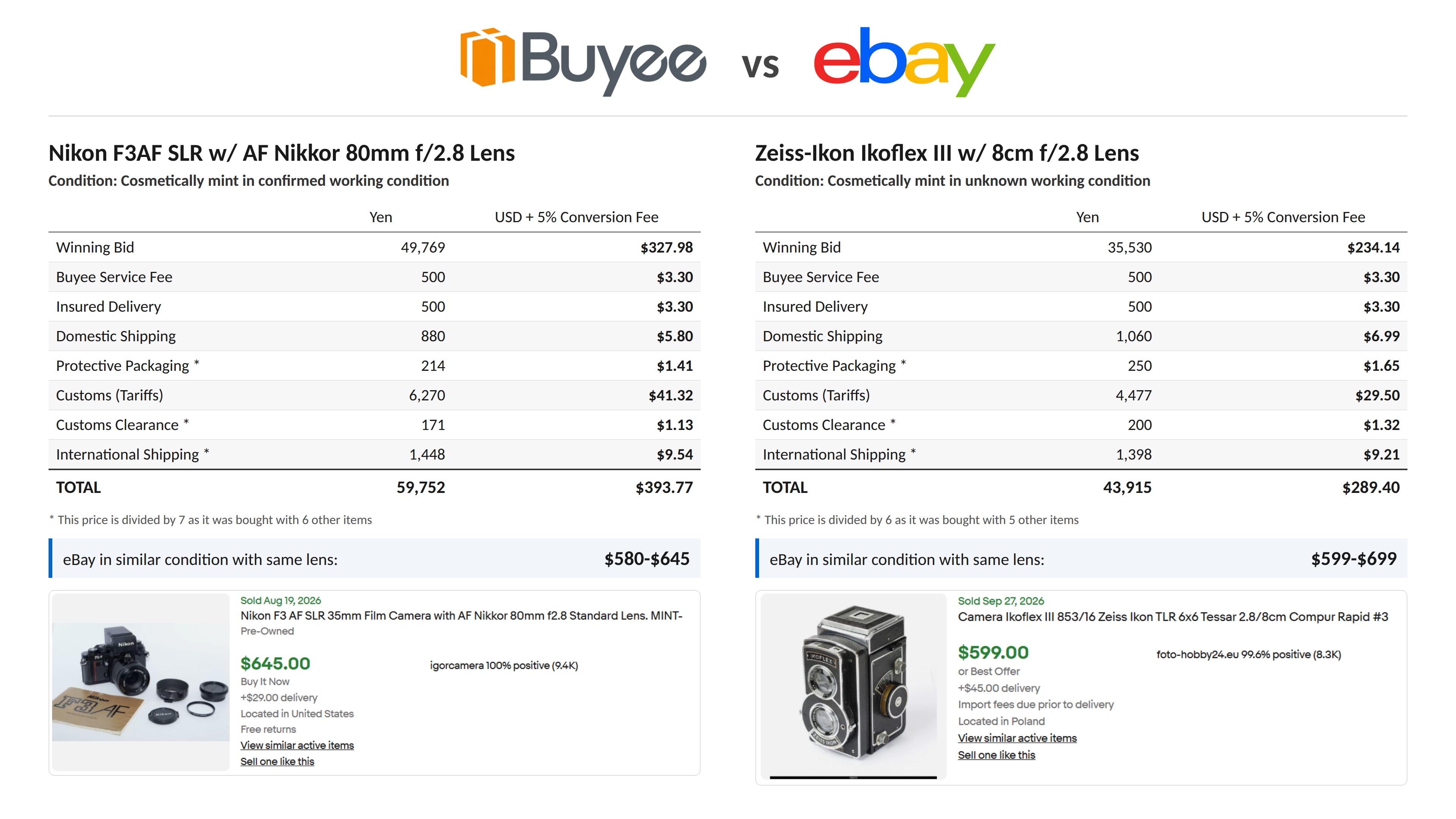
After the cameras arrived, I could confirm that the Nikon F3AF indeed was in perfect working order and I’ve already shot a roll through it, but the Ikoflex III did have some issues. It definitely is cosmetically excellent and could still be used with some compromises, but I feel that’s a likely outcome of any nearly 90 year old TLR without recent service history.
As you can see, despite the many fees and additional charges, the total cost savings for both examples was significant. I may not have ever paid the going rate for the eBay sold items I found, but the likelihood of anyone finding either camera on eBay at the exact price I did through Buyee is extremely low. It is worth noting that everything I’ve bought through Buyee or FJ had a similar savings, but not everything listed is a deal. I have the experience of knowing what something is worth and I have the will power to stop bidding once a price gets uncomfortably high. Despite all the differences between eBay and Japanese auctions, knowing when to stop bidding is still a very important skill to have as you can very easily overpay on something.
Protect Yourself
Earlier in this guide, I talked about how you have less buyer protection than when buying something through a service like eBay. While that is true, Buyee and FJ both offer some level of guarantee that you will receive your packages in good condition. If you paid for the extra insurance and packaging material, the odds of you being able to file a claim in the event something arrives damaged increases, however you can’t simply email them and ask for a refund as they will ask you for a lot of evidence.
One tip that was given to me when I was new to this and has already benefitted me twice is to photograph your package from all sides before you open it and as you open it up. Some people go as far as to record a video of them unpacking their box, but I haven’t had to go this far. If you take good, high quality images of your box, along with any damage it sustained in shipping, this will dramatically improve your chances of receiving compensation if something is damaged.
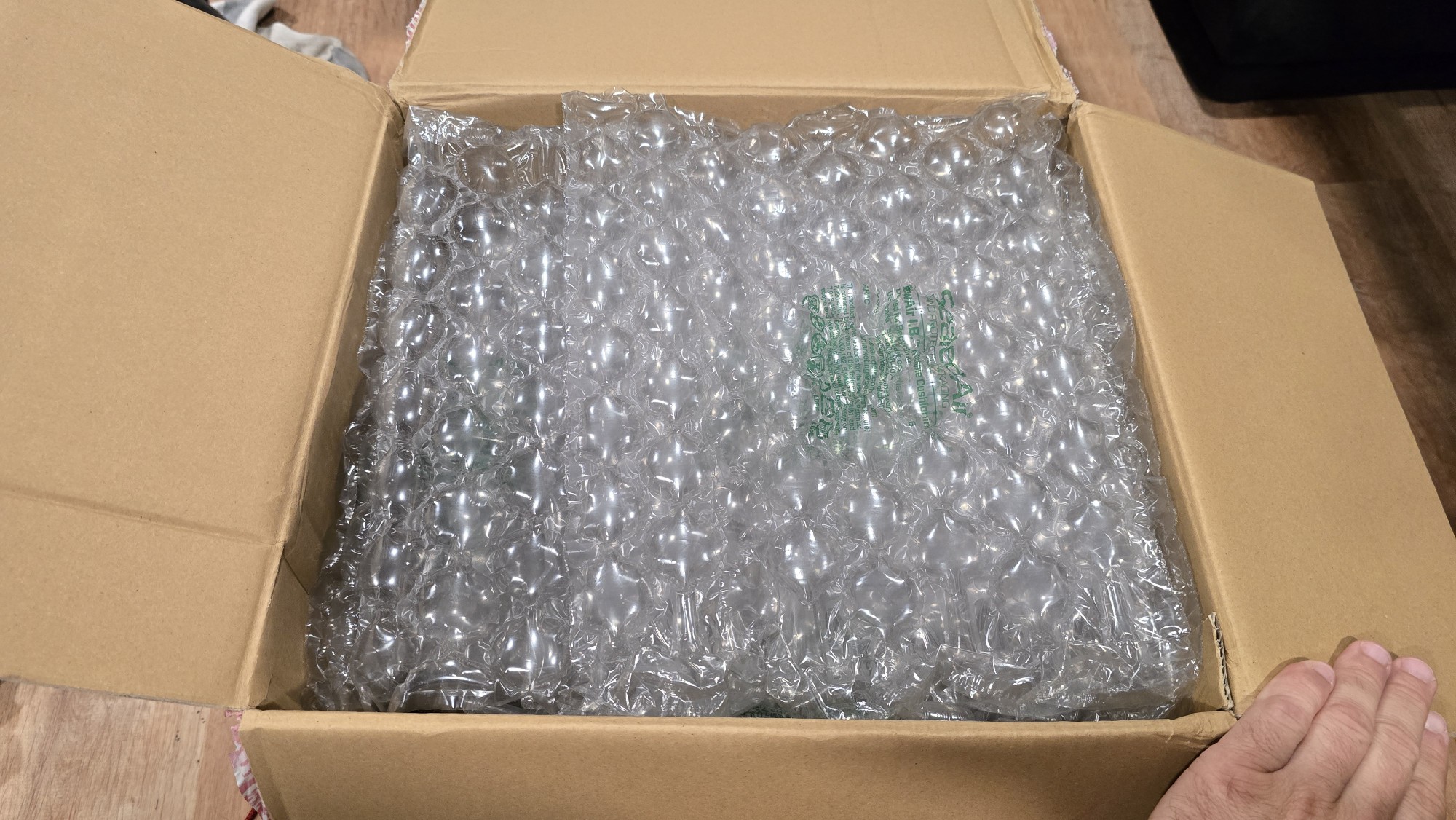
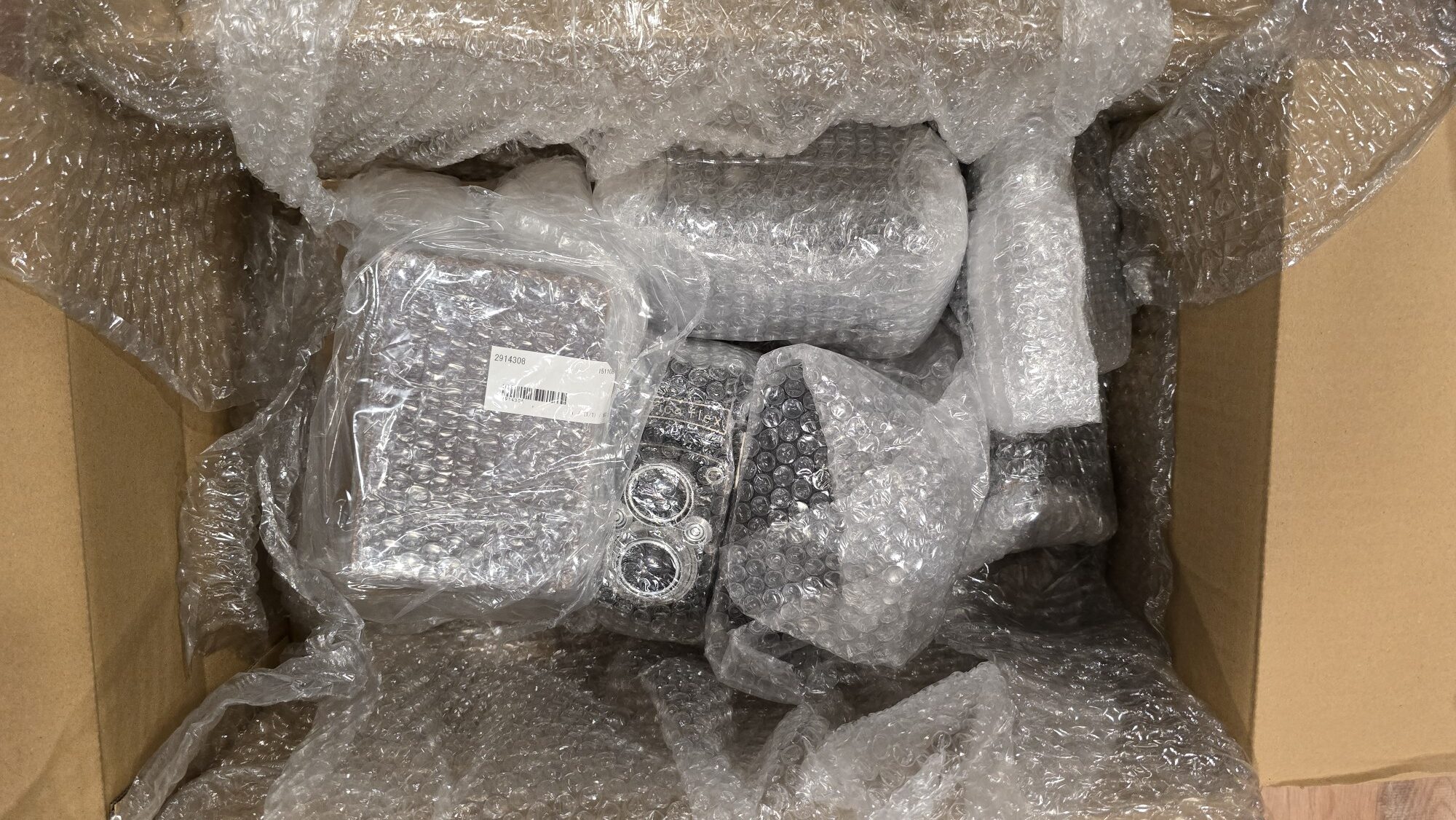
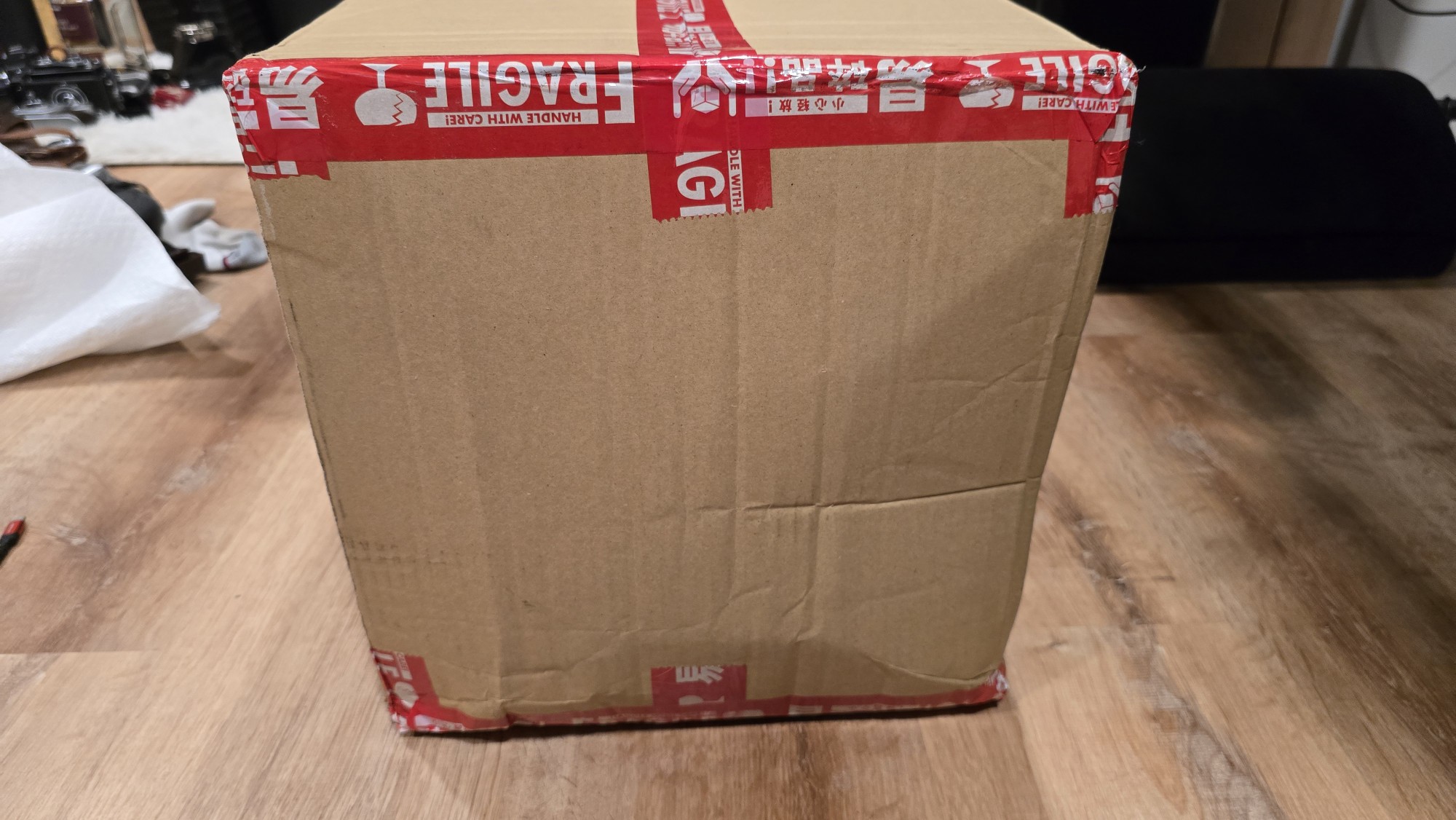
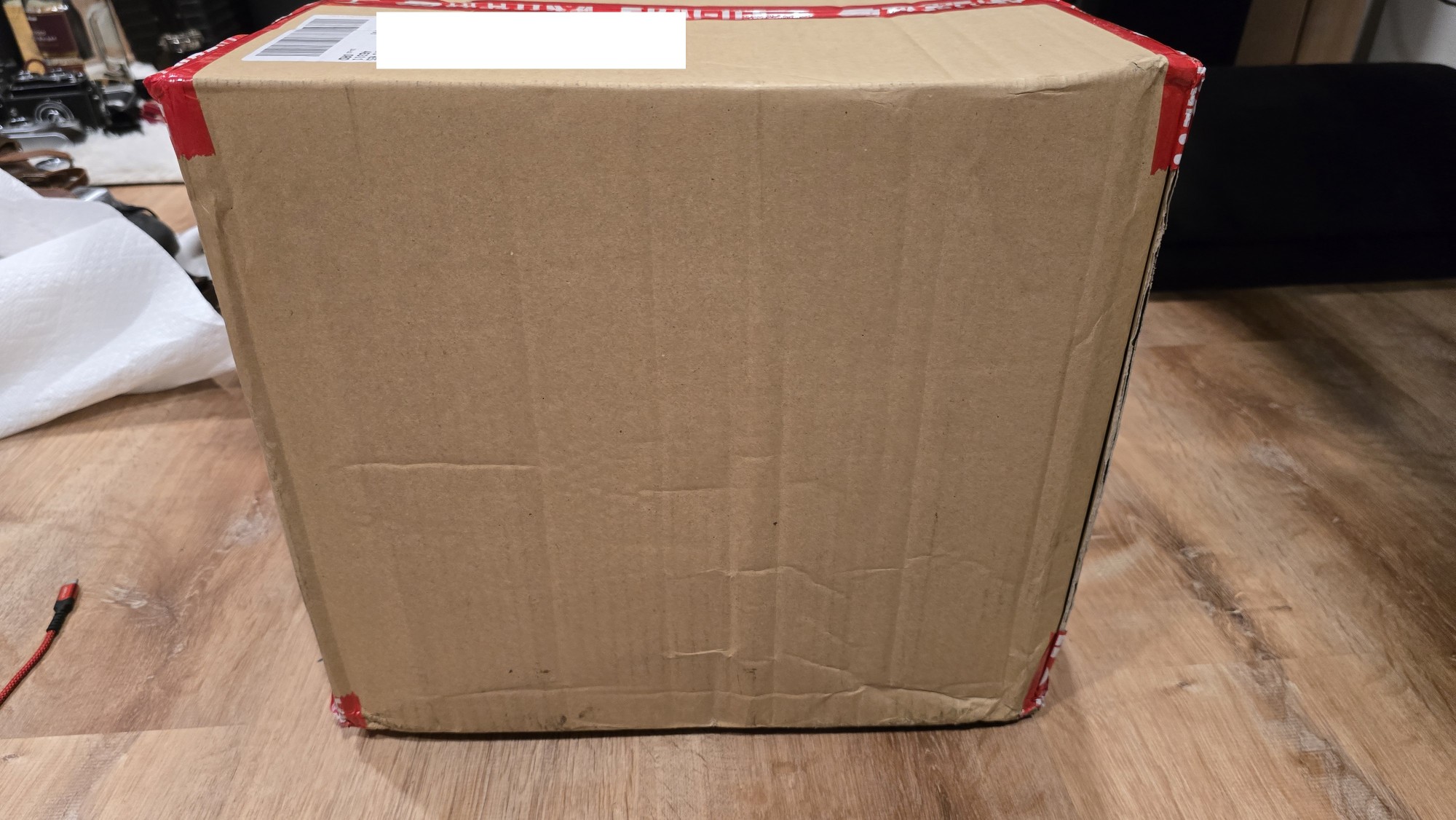
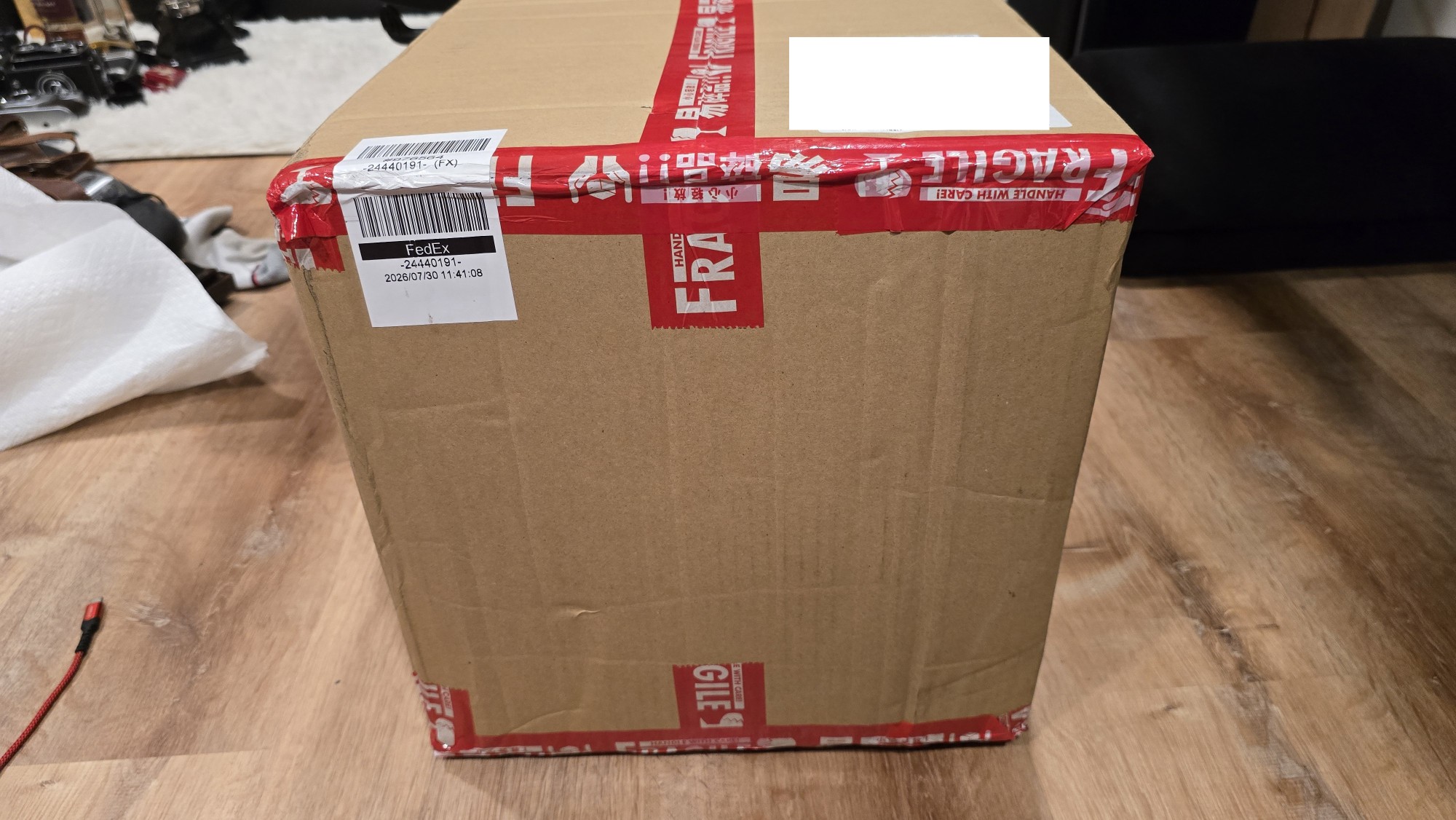
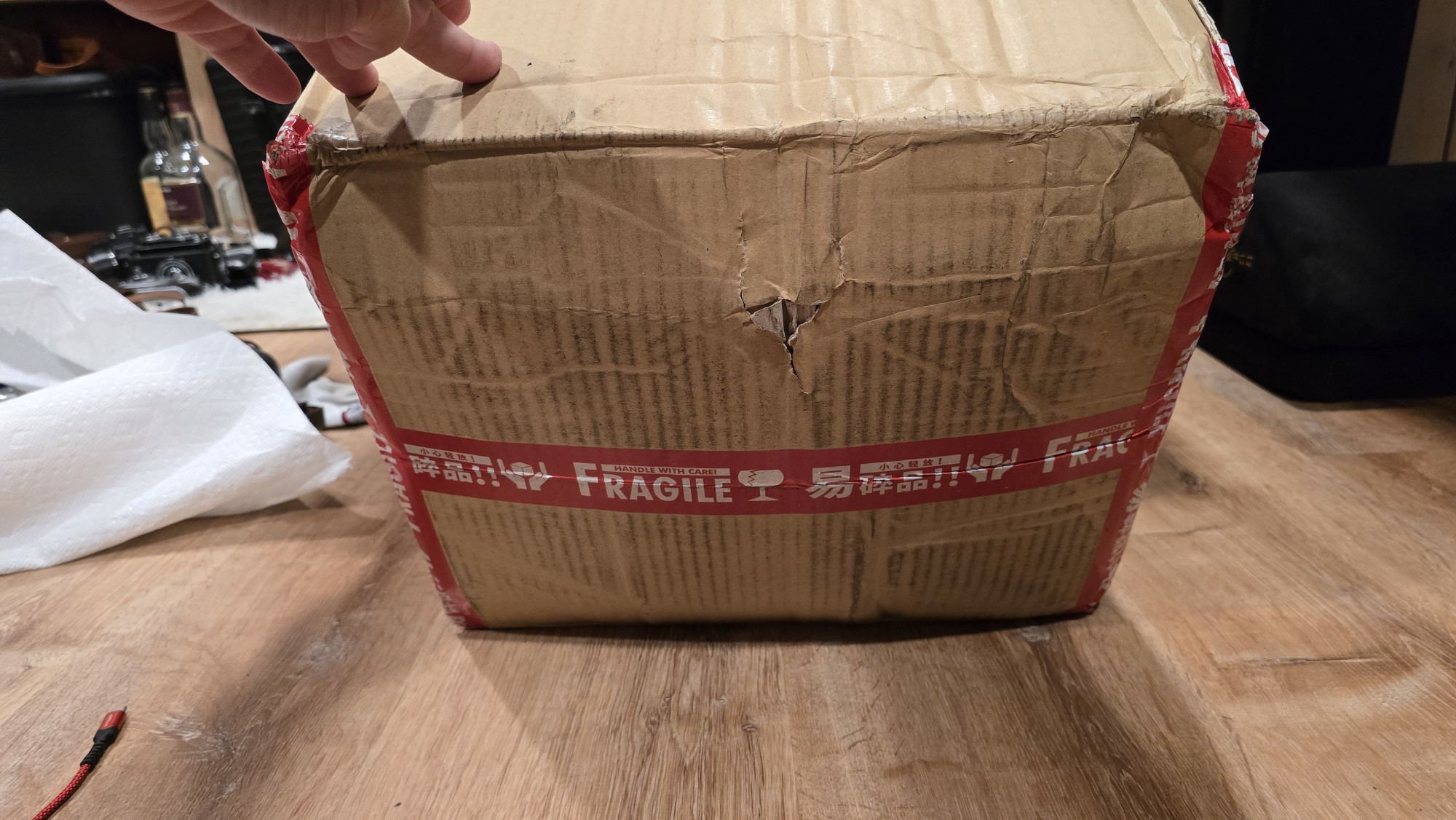
In the event you need to file a claim, you’ll need photos from the original auction showing the camera was not damaged before it was shipped, but you’ll also need your own photos of your camera showing the damage in as close to the same orientation and angle as the images from the auction. Buyee customer service is very specific in what they need and will warn you that not complying with their request can cause additional delays and possibly a denial of your claim.
In every instance where I had to file a claim, it took a while, but they eventually issued me a full refund for each item I purchased, plus the 500 yen Buyee service fee, the domestic shipping amount, and whatever portion the Customs Fee applied to that item. Understandably, they will not refund other, non-damaged items from your shipment, nor will they refund any portion of the international shipping. On the plus side, you keep the damaged item and do not need to return it.
If you’re interested in seeing an unboxing video of me opening a shipment I received from Buyee, check out this short article with accompanying video as it shows a less than perfect, but very realistic experience.
Is Buyee or FJ Better?
A final question worth tackling is which proxy, Buyee or FJ is better. I’ll start by saying there are more similarities between the two than differences. Both services work largely the same way, feature the same items from Yahoo! Japan, and have nearly the same fees. Both services randomly flag some items as being unable to bid, but there never appears to be a pattern. I’ve seen them both do it and never for the same items so this is neither a pro or a con.
Obvious differences between the two is that FJ’s website is a bit cleaner and easier to use, and they run coupons more frequently, although at a lower percentage. FJ also has an option when shipping to not collect Customs and require whoever handles the shipping to do it. This may or may not work in your favor as it is possible some smaller items may get through customs without any fees at all, but it could also backfire and cause additional delays. While writing this review, I attempted to research which option was better, and everything I’ve read suggests it is inconclusive. If you are risk averse and want to avoid potential delays, my best advice is to pay the Customs fees in advance.
While speaking to two different collectors prior to writing this article, one of them has used Buyee exclusively for years with over 40+ shipments without a single problem, while the other has had several pretty significant problems with Buyee and says he has better luck with FJ. I’ve used both, and haven’t noticed a significant difference between the two. Out of 50+ cameras I’ve purchased through Buyee, a couple of them have arrived damaged, but in every case, I was able to submit a claim to get my money back. In my experience, the quality of the packaging was the same between the two, my fees were the same, and shipping times were the same.
Conclusion
So there you have it, everything I know about buying cameras through Japanese auctions, the good, the bad, and the ugly. I realize all of this is a lot to absorb, and for many people, it just might not be worth the risk and that’s totally okay! That means less competition for me!
In all seriousness, I am interested to hear your stories about buying cameras this way. Whether you have been doing it for years, months, or if this article inspired you to make your first purchase, please let me know in the comments what you got, and how it went!