
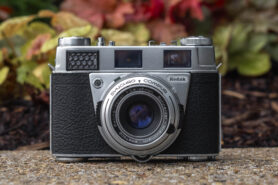
This is a Kodak Retina IIS – Type 024, a 35mm rangefinder camera made by Kodak AG in Stuttgart, West Germany between the years 1959 and 1960. The Retina IIS was the little brother to the very similar Retina IIIS – Type 027, lacking that model’s interchangeable lens mount and having a slightly smaller body. The Retina IIS was a short lived model, produced near the end of the Retina rangefinder era. What it lacked in production length, it made up for with excellent performance, a huge and very easy to use viewfinder, a coupled selenium exposure meter, and Kodak AG’s typically high build quality.

Film Type: 135 (35mm)
Lens: 45mm f/2.8 Schneider-Kreuznach Retina-Xenar coated 4-elements in 3-groups
Focus: 3.5 feet to Infinity
Viewfinder: Coincident Image Coupled Rangefinder, 0.8x Magnification
Shutter: Synchro-Compur Leaf
Speeds: B, 1 – 1/500 seconds
Exposure Meter: Coupled Selenium Cell w/ top plate match needle
Battery: None
Flash Mount: Cold shoe and PC Port M and X Flash Sync
Weight: 622 grams
Manual: https://www.flickr.com/photos/mrmorodo/albums/72157673581089156/
I’ve written many articles about Kodak Retinas over the years on mikeeckman.com. The history of these cameras is quite fascinating and if by chance, this is the first of my Retina reviews you’ve come across, I strongly recommend checking out my other reviews, especially this one which goes over the early history and development of the line in great detail.
The TL;DR for Kodak Retina history is that in the early 1930s, Eastman Kodak had wanted to partner with a German camera makers so that they could offer a more upscale camera product. Around that same time, they were developing three new film formats, 620, 616, and an unnamed 35mm film which would eventually be known as the type 135 daylight loading cassette.

In 1931, Kodak acquired the Nagel-werke company in Stuttgart, Germany. Nagel-werke was founded in 1928 by Dr. August Nagel who had previously worked for Zeiss-Ikon, and had many years of experience building cameras. This new German subsidiary was given the name Kodak AG, and this was where future lines of cameras would be built with German expertise and precision, but sold under the Kodak name.
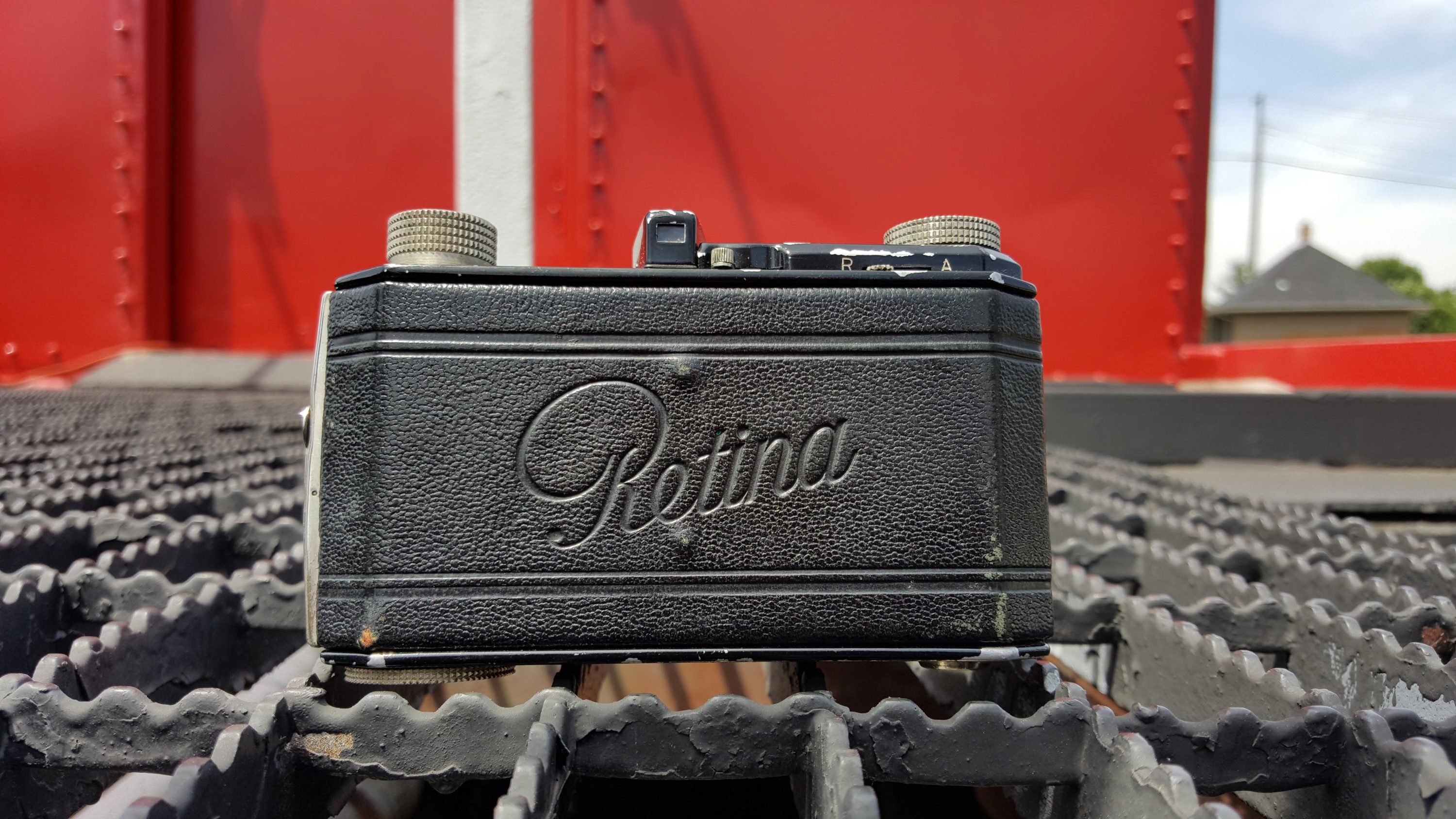
The first products released by Kodak AG were rebranded versions of earlier Nagel models such as the Vollenda and Pupille, but the first all new camera would debut in 1934 as the Kodak Retina. The Kodak Retina was not just the first new Kodak AG model, it was the first camera released specifically to use the new 35mm cassettes which Kodak had designed. Although cameras like the Leitz Leica, Zeiss-Ikon Contax, and G. A. Krauss Peggy predated the Retina in using 35mm film, there wasn’t a unified agreement between all camera makers for how 35mm film would be packaged.
Competing with Kodak was AGFA with their Karat daylight loading cassette along with a few other proprietary options. It wouldn’t take long however, for Kodak’s design to win out due to a combination of success with the Retina but also the massive amount of resources Eastman Kodak had to throw at it. It also didn’t hurt that World War II basically brought all German camera and film development to a screeching halt, giving Eastman Kodak a near monopoly during and immediately after the war.
 The Kodak Retina would survive this early era of competing 35mm film formats and by the early 1950s would become one of the best selling 35mm camera lines in the world. A large number of Kodak Retina models would be released, the first ones with just a simple scale focus viewfinder and later ones offering rangefinders, selenium exposure meters, and eventually Retina branded SLRs.
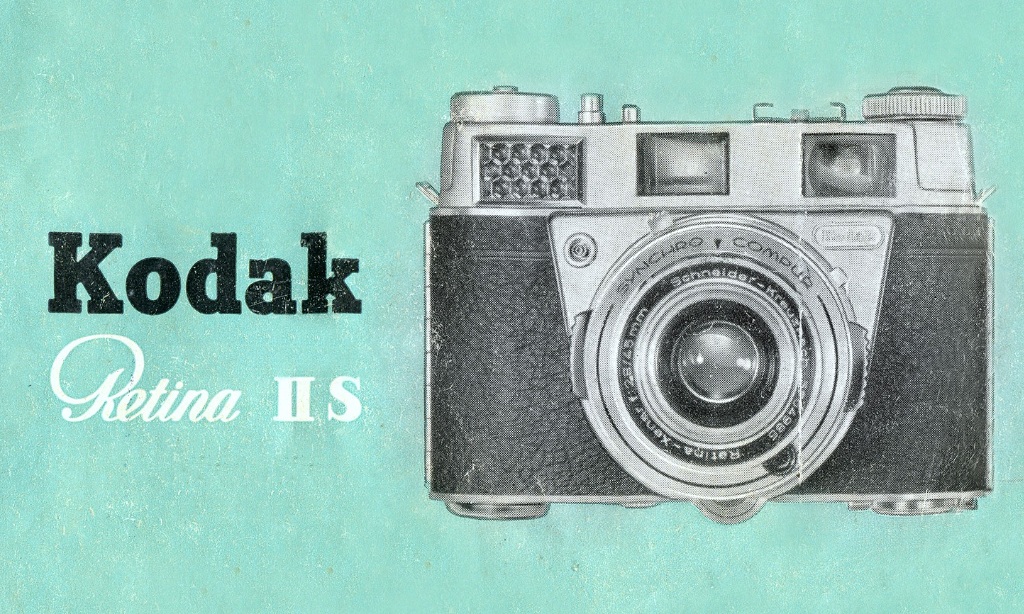
With a huge (and confusing) lineup of Kodak Retinas to choose from, some were more successful than others, and one such model which was produced in low numbers and flies under the radar of collectors today is the Kodak Retina IIS or Type 024 Retina as is often used to refer to the different Retina models.
Prior to the late 1950s, all Retina cameras were folding clamshell designs, and while this style of camera body was great for portability, it had fragile bellows inside and a hinged mechanism which could easily be damaged by some careless user who didn’t know the proper way to open and close the camera. The industry as a whole had moved away from folding bellows cameras, and in 1958, Kodak AG took notice and released the first non-folding Retina called the Retina IIIS or Type 027 Retina.
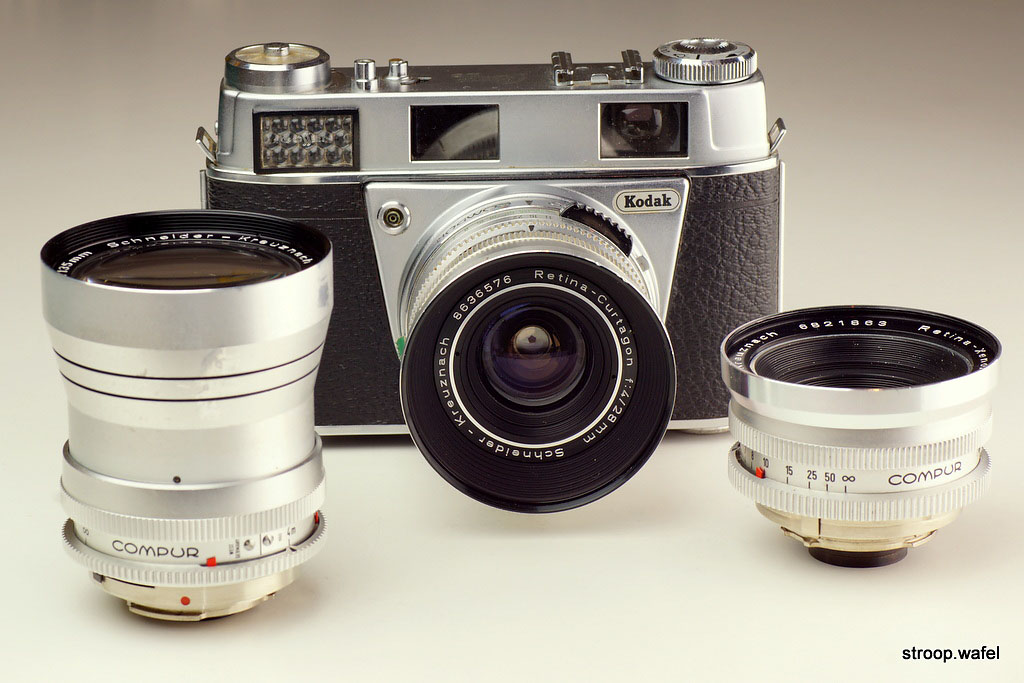
The Retina IIIS was a well equipped rangefinder model with a coupled selenium exposure meter and a large and bright viewfinder with frame lines offering automatic parallax correction. The camera also featured an interchangeable lens mount which allowed use of a range of high quality Schneider and Rodenstock lenses with focal lengths from 28mm to 200mm. The Retina IIIS was a premium camera with a premium price tag. In a 1960 catalog for Olden Camera in New York, the Retina IIIS sold with f/2.8 Schneider-Xenar for $157.50 and with f/1.9 Schneider-Xenon for $193, which when adjusted for inflation, compares to $1800 and $2200 today.
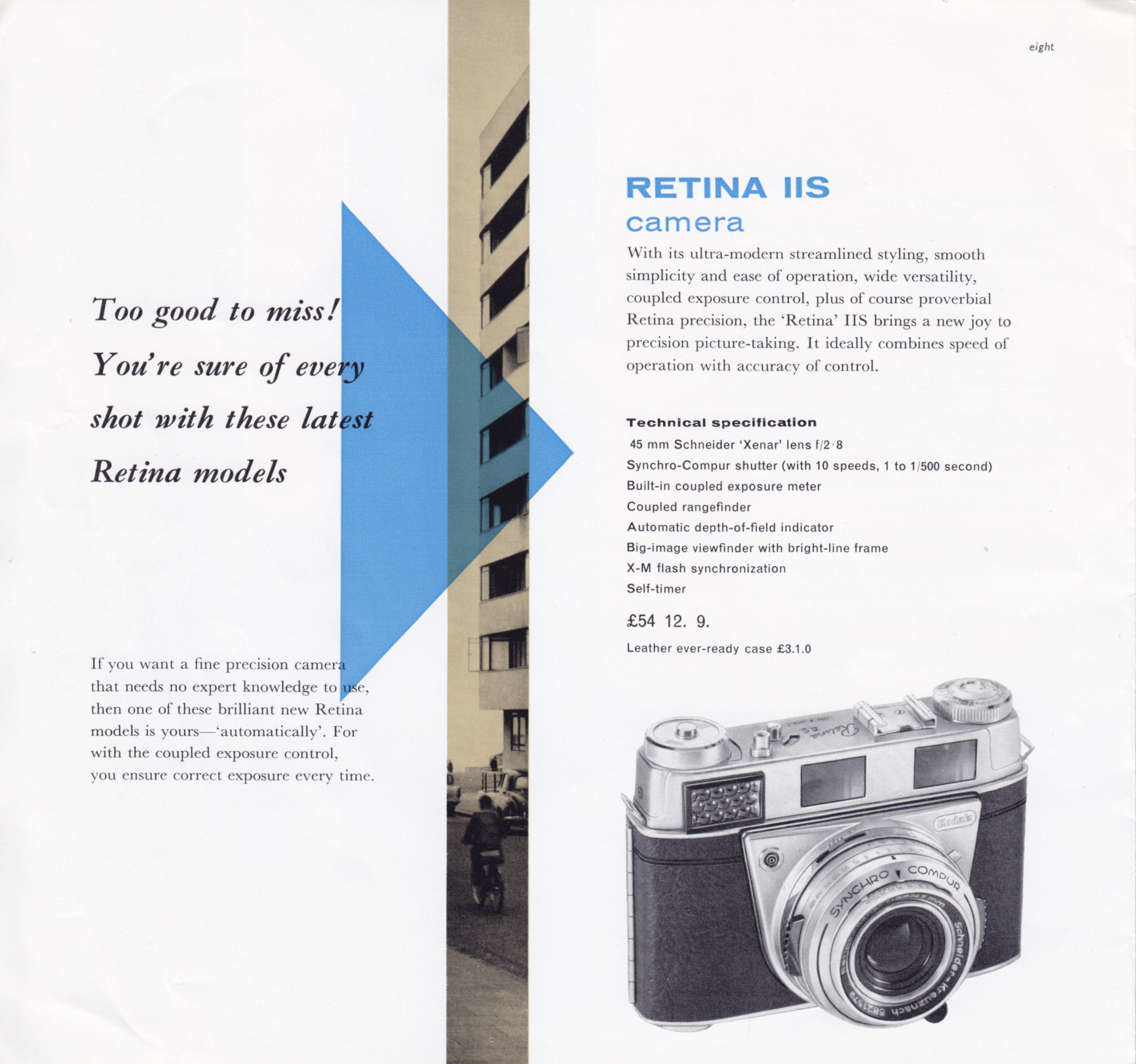
Perhaps realizing that some markets may not want such a high priced camera, in May 1959, Kodak AG released the Retina IIS, a more economically priced model with a fixed f/2.8 Schneider Retina-Xenar lens, a slightly smaller body, and a lack of automatic parallax correction in the viewfinder. This new model was called the Retina IIS and wasn’t marketed in the US, but instead sold in Europe and other countries. According to Retina historian David Jentz, production of the Retina IIS is estimated to be between 19,000 and 20,000 units making it one of the less common Retina models to find. In the UK, the camera once sold for about £54.
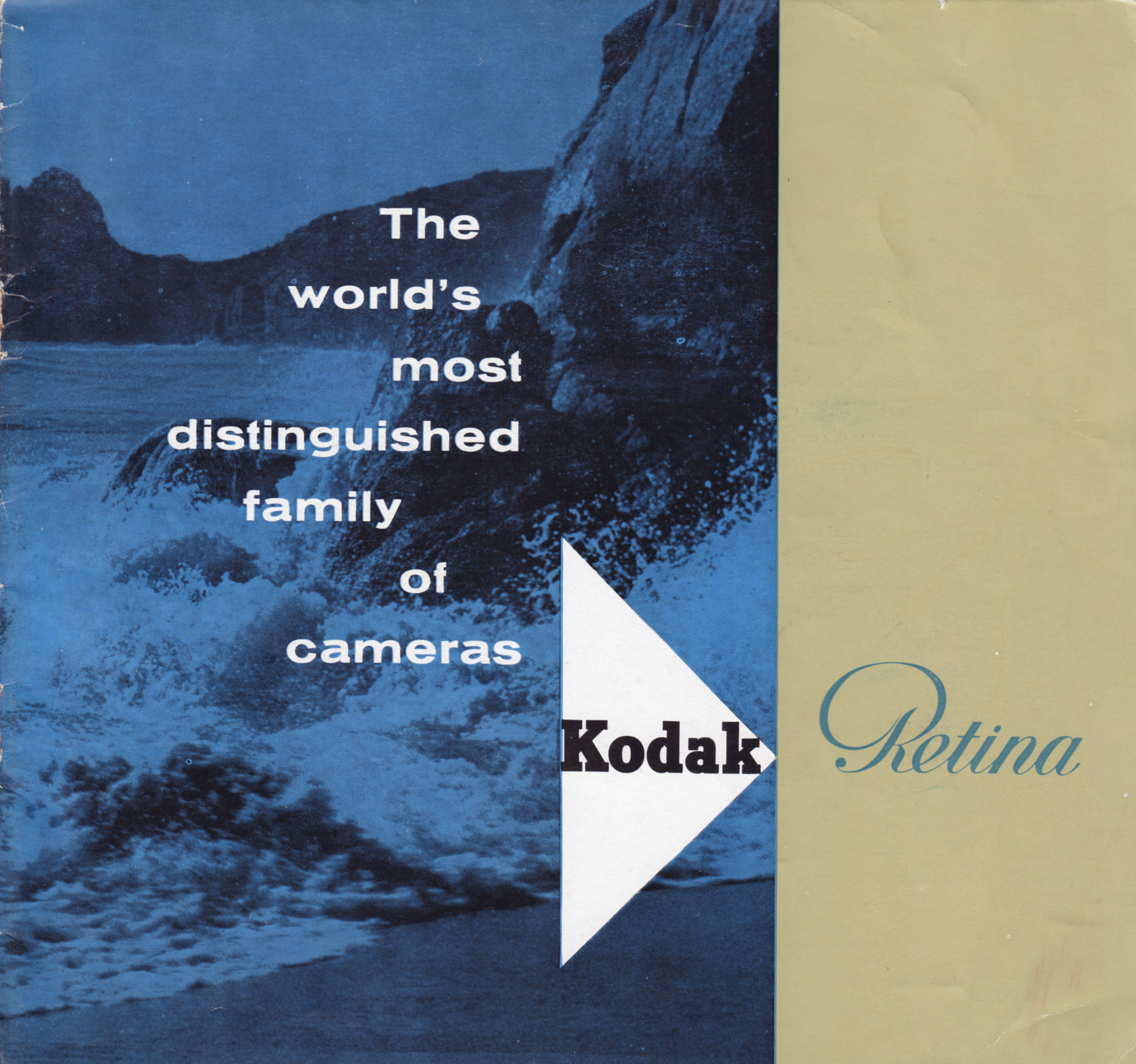
Automatic Exposure Control? Kodak’s advertisement for the Kodak Retina IIS specifies that the camera can ensure correct exposure every time. This is further stated on page 9 of the Retina IIS manual where it describes it as having “Automatic Exposure Control”. It should be noted that at the time this camera was produced, what manufacturers called “Auto Exposure” is not what we call it today and that this is not what the Kodak Retina IIS is capable of.
Cameras of this era with coupled exposure meters were seen as being able to automatically calculate the correct aperture and shutter speed settings to give correct exposure, but they still required the user to physically choose those settings. Although more automatic than a fully manual, unmetered camera, this is distinctly different from modern AE in which the camera not only calculates the correct exposure but also makes the correct settings to achieve it. Think of it like driving a modern car with an AI powered GPS system where it can give you step by step directions on what route to take and where to turn, including live traffic information, to get you to your destination as quickly as possible, but you still need to physically drive the car.
The two images below come from a 1960 Kodak Retina catalog released in the UK showing the Retina IIS for sale at a price of £54.12.9. Both images are used with permission from David Jentz, from the Historical Society for Retina Cameras.
The Kodak Retina IIS is only the second non-folding Retina rangefinder I’ve used. My only other experience comes from the ill-fated Retina Automatic III which I spent time with and reviewed nine years ago. While I’ve generally enjoyed all of my other folding Retina and Retina SLR experiences, the Automatic III was by far my least favorite Retina experience.
I’ve had this Retina IIS in my collection for a number of years and while I thought it was a good looking camera that seemed to work fine, it wasn’t until early 2026 when Chris Sherlock came on the Camerosity Podcast where he revealed that the Retinas IIS and IIIS are two of his favorite user cameras. Between the two, the major difference is that the IIS has a fixed lens, whereas the IIIS has interchangeable lenses and a slightly larger body.
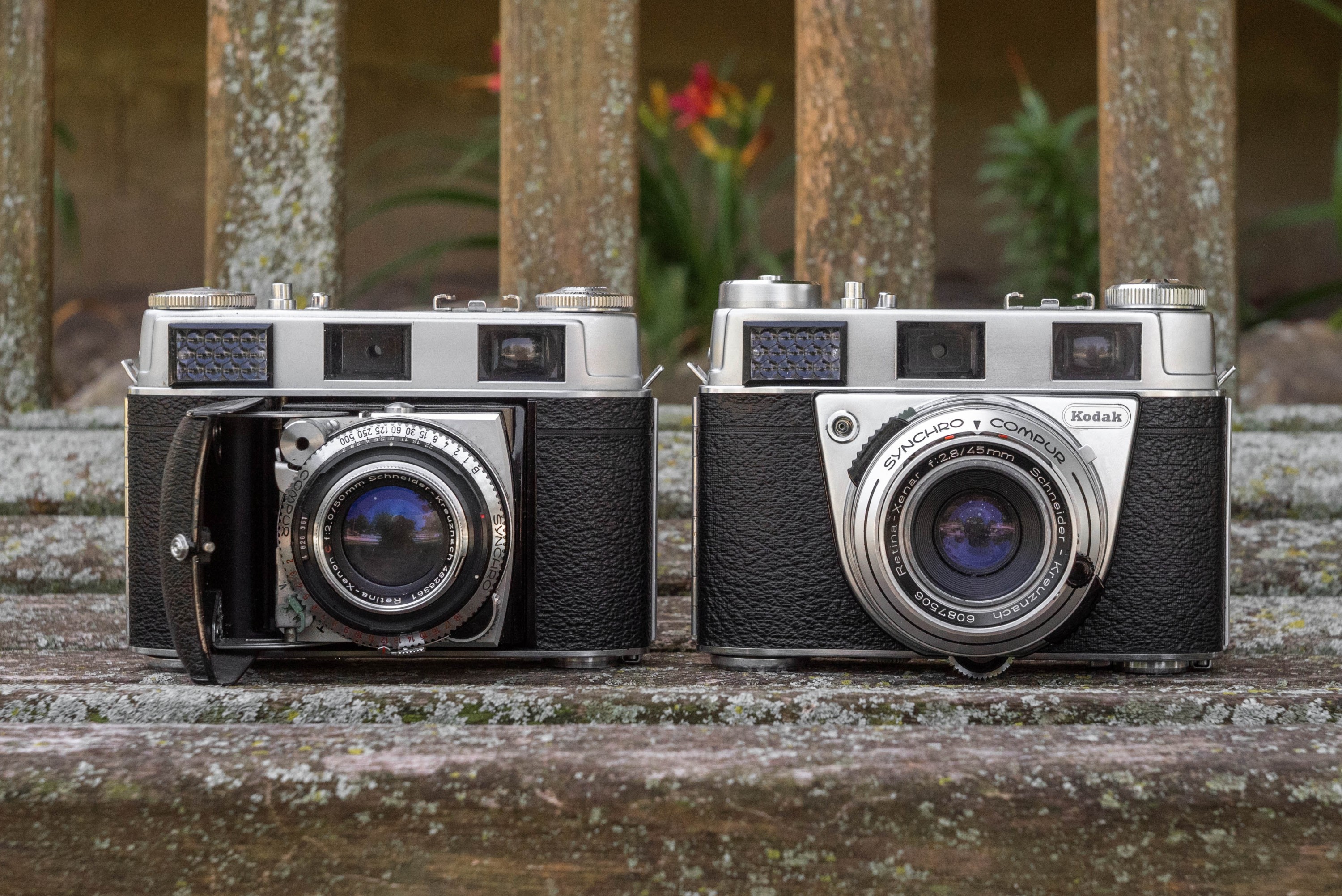
The Retina IIS was produced at the same time as the Retina IIIC (big C) folding rangefinder. The body, viewfinder windows, and top plate all look very similar. It really appears as if someone removed the door and the bellows mechanism of the folding camera and replaced it with a slightly larger Synchro-Compur shutter and Schneider-Kreuznach Retina-Xenar 45mm f/2.8 lens. Build quality of the camera is as good as anything from the era. This is a finely built precision instrument, and even now, 67 years after it was built, it still feels that way.
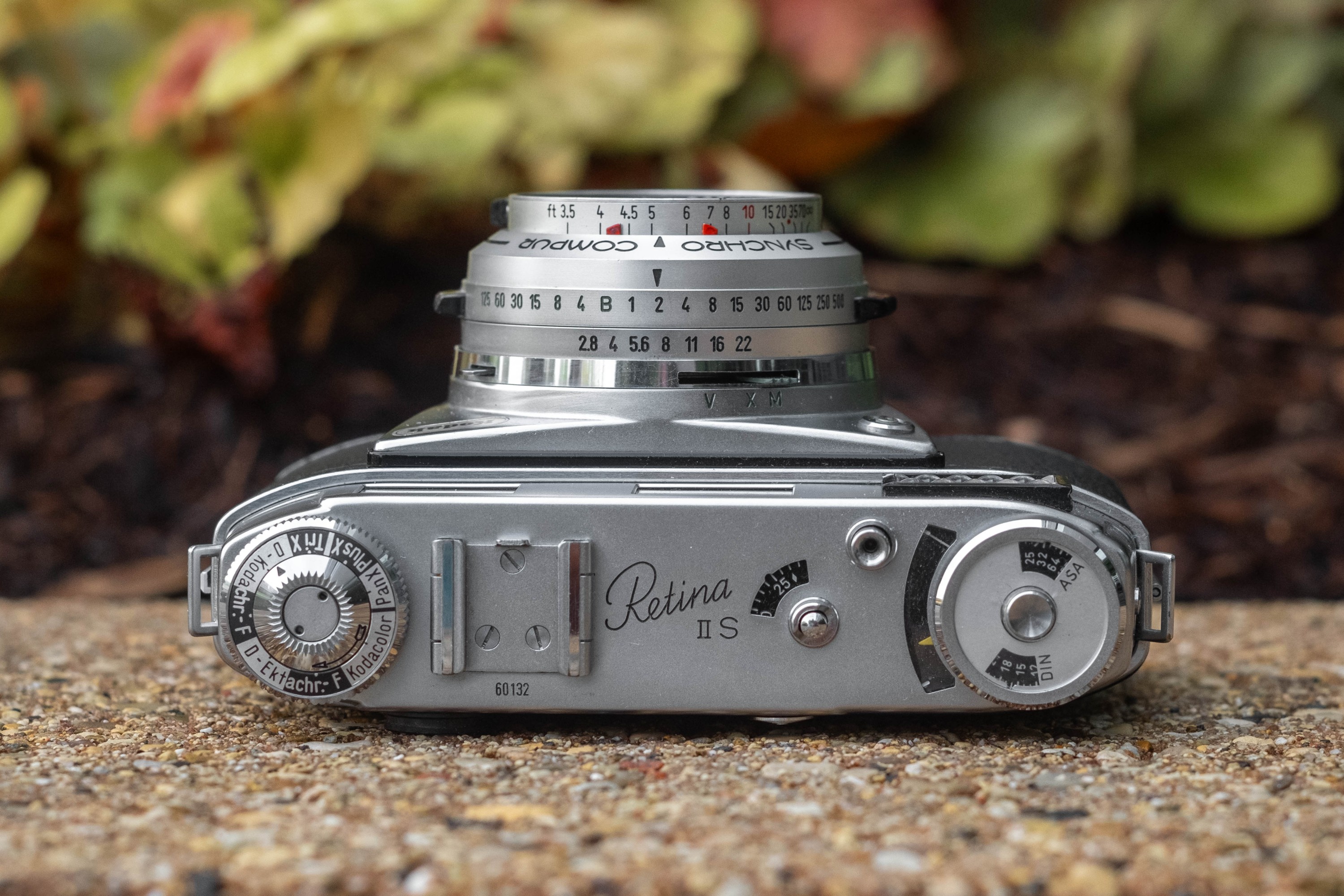
Up top, the control layout is familiar to anyone who has handled a late 1950s Retina, and if you haven’t, everything is logically laid out and clearly labeled. A large diameter film rewind knob with integrated film reminder disc is on the left. Lift up on the dial when loading in a new cassette of film to pull the fork out of the way. Next is the accessory show and engraved Retina logo.
Next is the subtractive exposure counter. Like all Retinas of this era, the counter counts backwards, showing how many exposures are left on a roll and upon reaching the number 1, the shutter release becomes locked, preventing you from trying to shoot another frame. This characteristic is the number one reason many Retinas are listed as being inoperable because the owner does not know that you must reset the counter to use it again. To reset it, press and hold a small chrome button next to the counter display, while simultaneously sliding a little switch on the back of the camera in the direction of the arrow. Small diamonds are on the counter beyond the 36th exposure and on the 23rd exposure to indicate the starting point for 36 and 20 exposure cassettes. This camera predates the use of 24 exposure cassettes, so for those, you’d want to start at the 27th exposure to give you three frames for the leader.
Above and to the right of the exposure counter is the cable threaded shutter release button and to its right is the exposure meter readout. The Retina IIS has a single range exposure meter on the front which reflects a white needle in the display. The exposure meter also has a yellow arrow which is controlled by an exposure setting wheel below the lens, which I’ll explain later. But to quickly summarize here, when the white needle lines up with the yellow arrow in the display, proper exposure can be obtained. Finally, to the right of the meter readout is the DIN and ASA film speed control. To calibrate the meter to your film speed, press and hold a chrome button in the center of the dial while turning the exposure wheel until notches line up with whatever you have loaded.
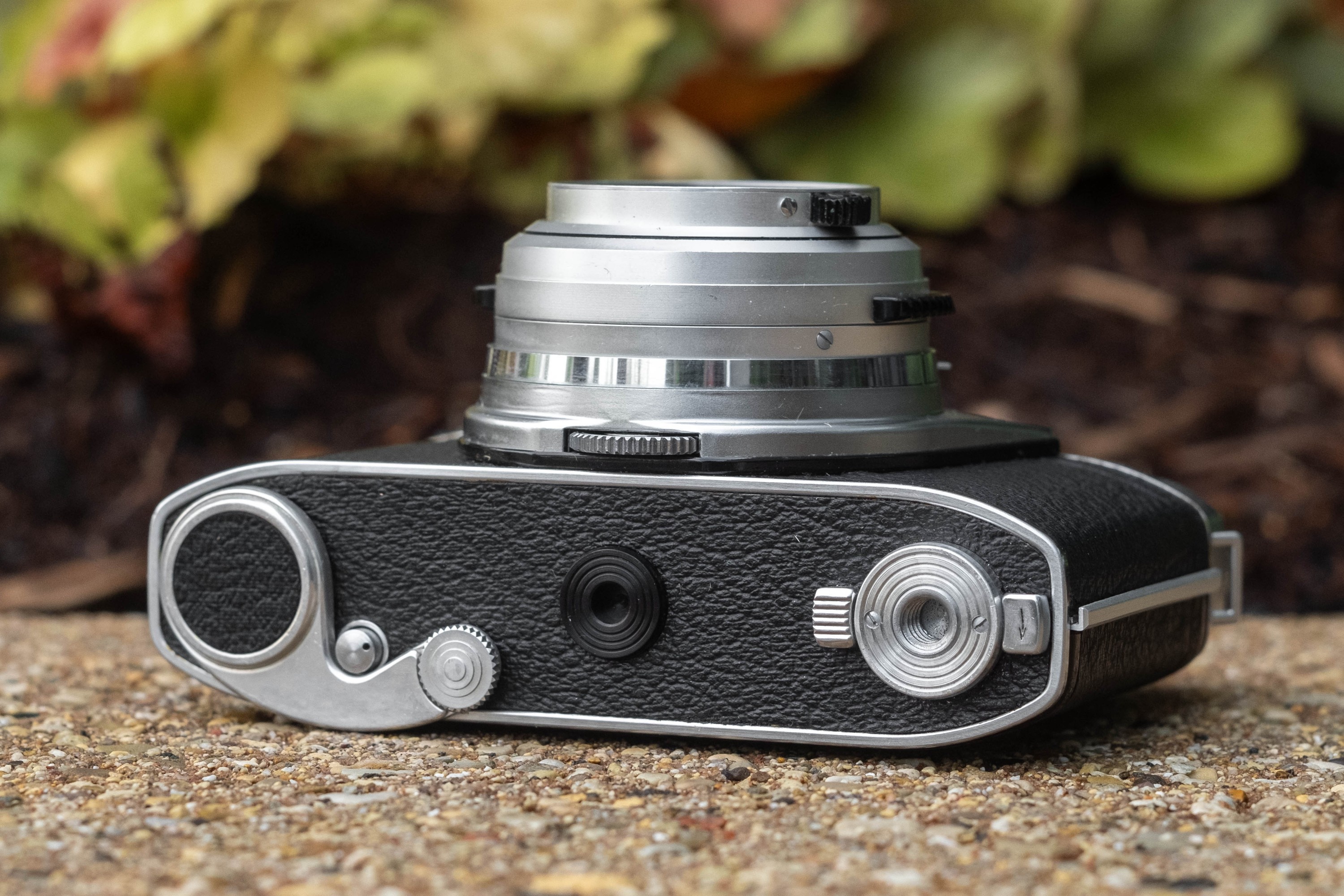
The bottom of the camera has the film advance lever, which was typical of all Retinas starting with the IIc and IIIc models. Tucked in close to the lever is the rewind release button and in the center is a 1/4″ threaded tripod socket. On the side opposite the advance lever is a hidden film door release button, which is beneath two swiveling tabs. To access the bottom, rotate the tabs in the direction of the arrow and press the tiny button beneath it.
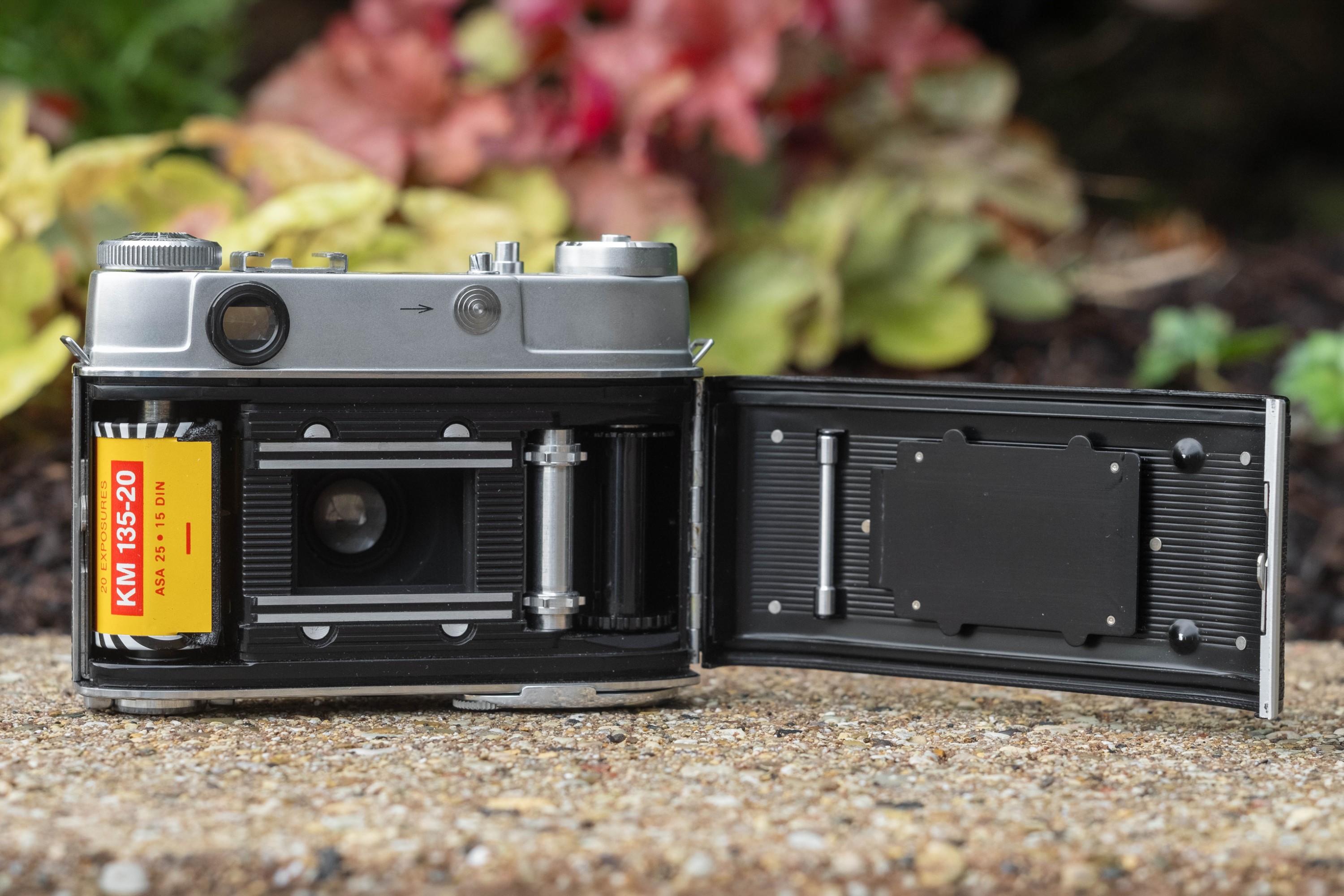
With the rear of the camera open, the film compartment looks the same as most cameras of the era. Film transports from left to right onto an integrated take up spool. Threading the leader into the center slot is very easy and it is just a matter of a couple quick rotations of the spool to ensure the leader is securely attached and you can close the door. The inside of the film door has a large pressure plate covered in divots to reduce friction as film passes over it. The Kodak Retina IIS lacks any sort of foam of fabric light seals which would need replacement.
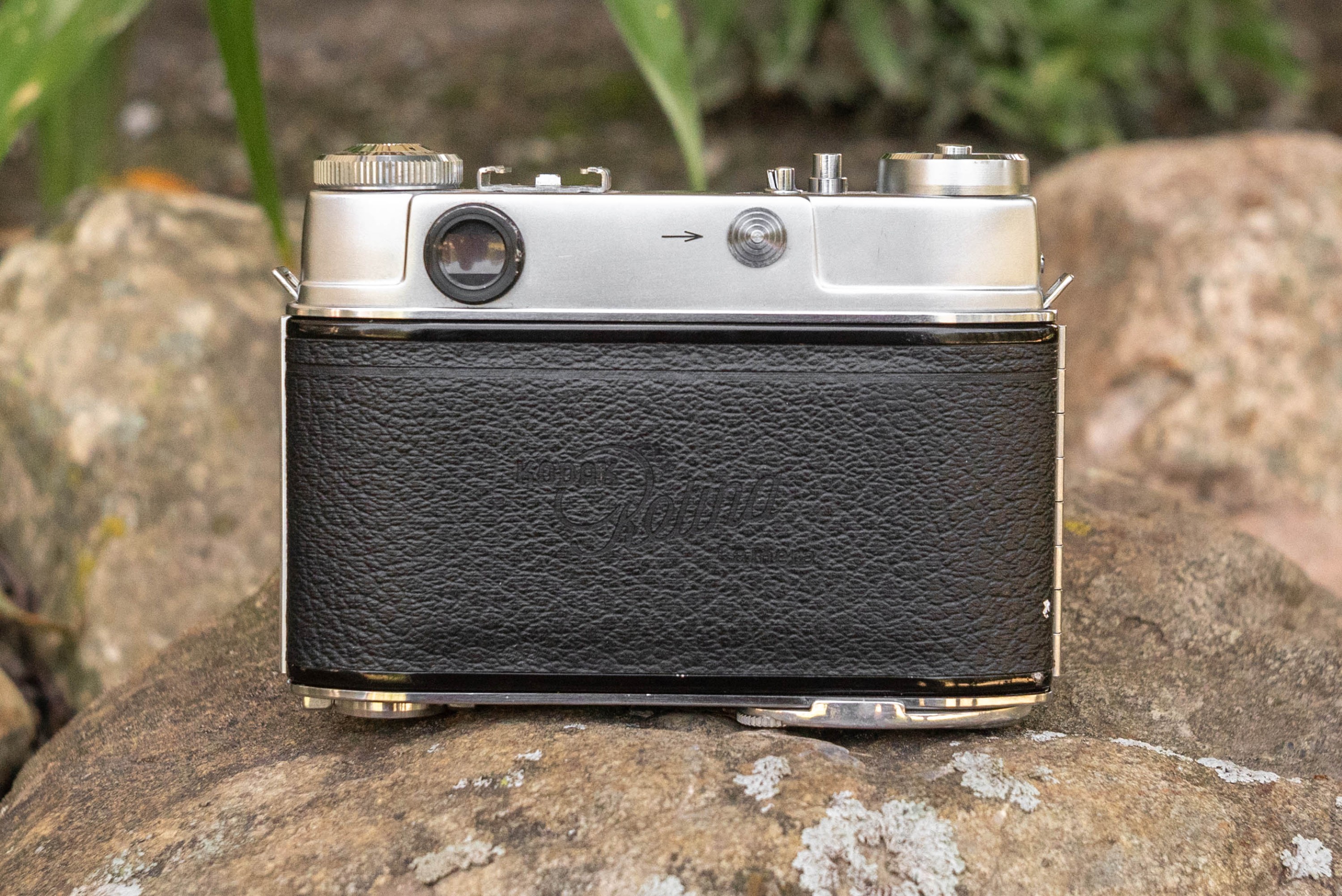
Around back, there’s little to see other than the round viewfinder eyepiece, the little slider for resetting the exposure counter, and the typical script Kodak Retina logo embossed in the camera leather. I have always enjoyed cameras where the name of the camera is embossed into the rear of the camera. It always feels like a touch of class to me.
The sides of the camera show little to see other than metal strap loops for connecting a neck strap to the camera.
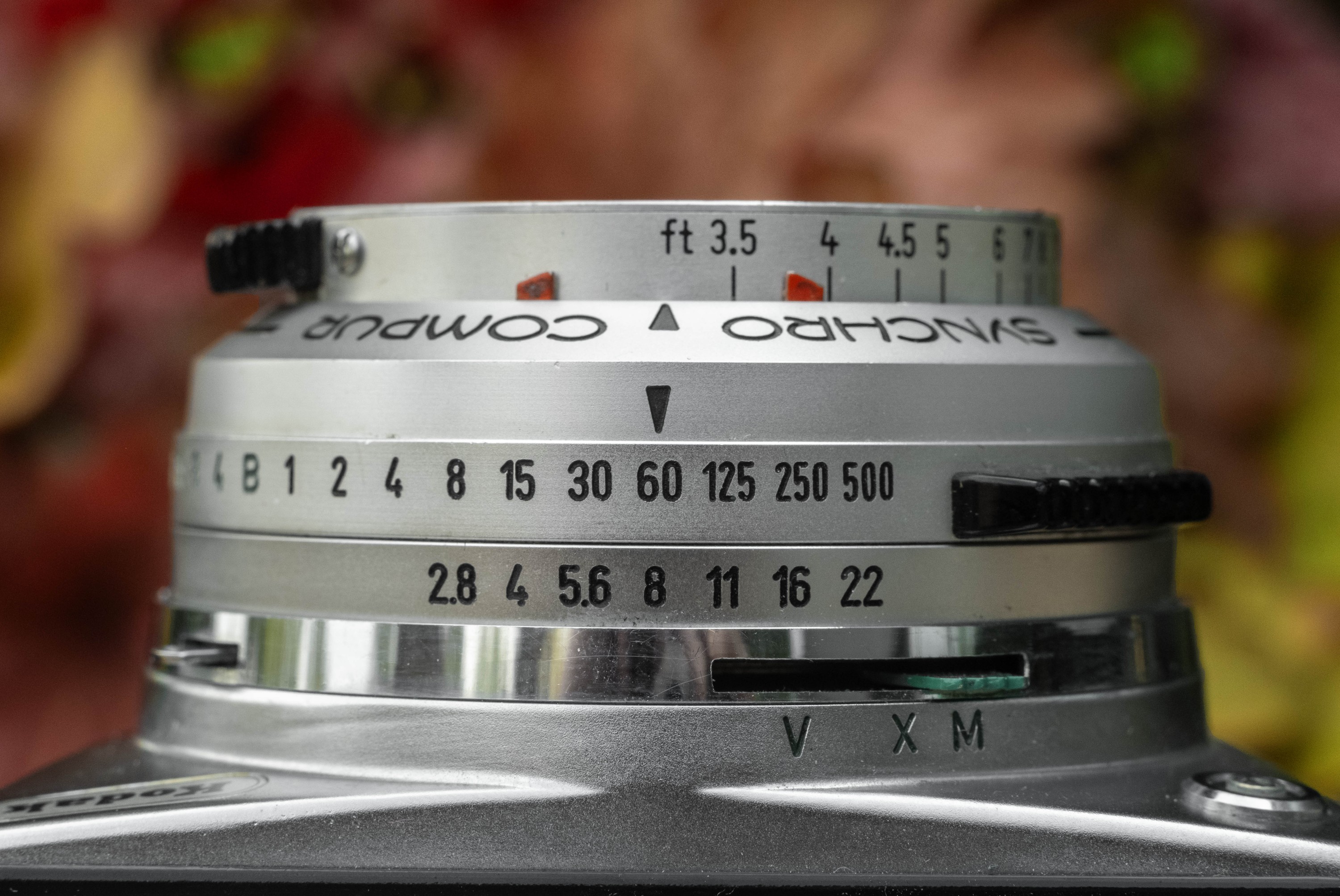
Looking down upon the top of the lens, closest to the body is a green switch with three settings, V, X, and M. The letter V is commonly used on German cameras for “Vorlaufwerk” or the self-timer, and both the X and M settings are for X and M flash sync. As with all mechanical cameras, it is wise not to engage the self-timer unless you are certain the camera has been recently serviced as it can jam up the shutter.
Next is an aperture scale with stops from f/2.8 to f/22 which cannot be directly changed on the lens, but rather require turning of a wheel at the very bottom of the lens mount which I’ll get to in a minute. In front of that is the shutter speed dial which is flanked by two plastic grips which make locating it with the camera to your eye a snap. Closest to the lens filter ring is the focus scale. Unlike some earlier Retinas, the Retina IIS lacks a focus helix, instead, the lens is focused by rotating the front group, this is a lesser design than helixes, but is significantly cheaper and easier to produce and works well enough here.
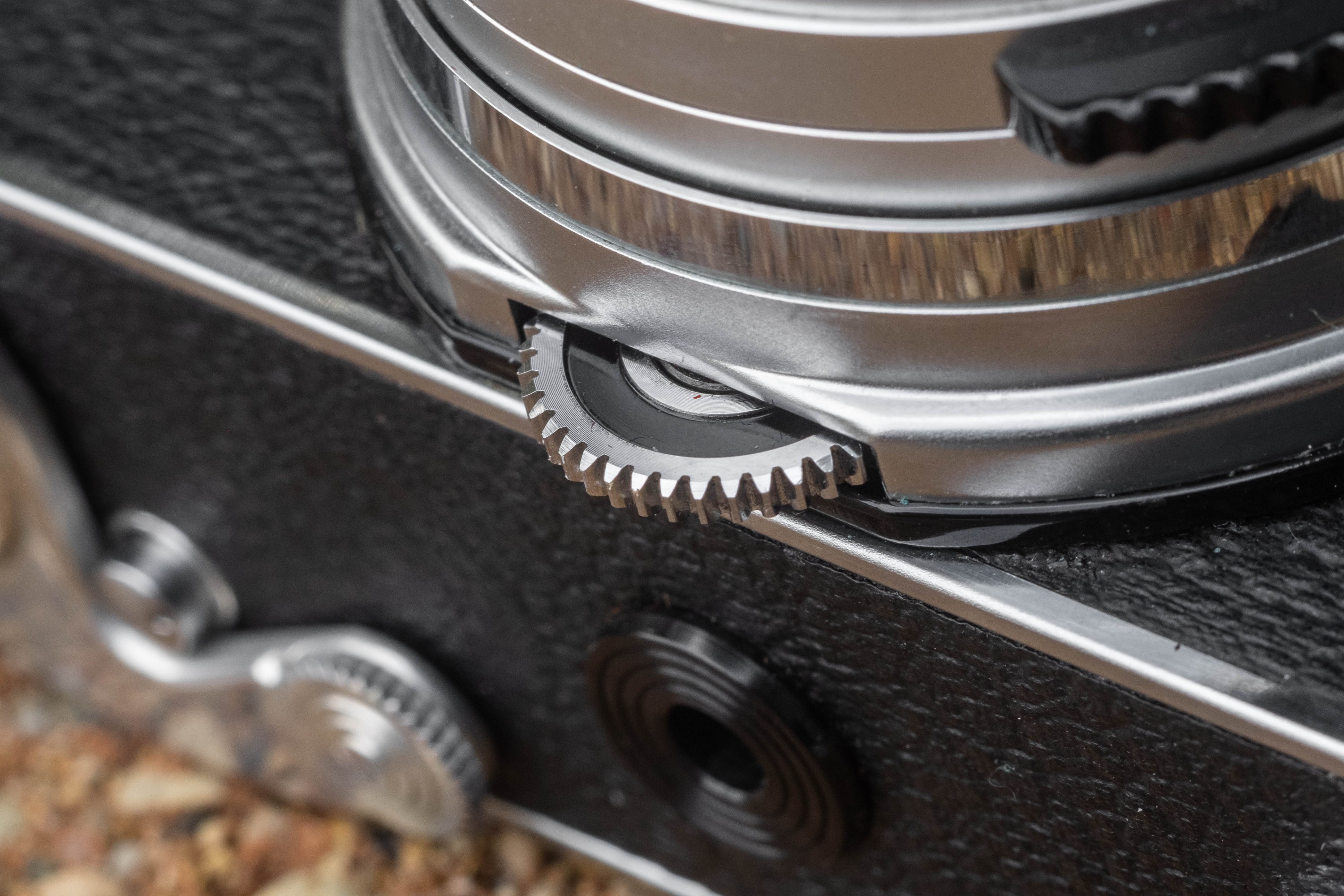
Back to the exposure control wheel on the bottom of the shutter. If you’ve ever used a camera using the Deckel or DKL lens mount, you’re familiar with this type of control which is used to change exposure numbers. The idea is that using either the camera’s built in light meter or a hand held one, the user takes an EV or LV reading and then transfers that to the camera using an exposure meter. With the camera set to a matching light value, proper exposure can be obtained regardless of f/stop or shutter speed. If however, you don’t like using EV numbers or light meters and want to shoot the camera manually, you must use this wheel to choose your desired f/stop and then change the shutter speed directly to whatever you want. The exposure system on the Retina IIS is rather complex and does not allow you to choose every single combination you want, if you try to do that, those choices will be locked out. There actually is a good reason for this, but it is too complicated to explain in the context of this post. The only thing I’ll say farther, is that Deckel’s choice for how their shutters work can often be frustrating and is also one of the reasons that when these shutters require service, they are notoriously difficult to work on.
Moving on, there’s little else to see on the front plate other than the flash sync port near the 10 o’clock position around the lens. Unlike the earlier Retina IIIS which allows for interchangeable lenses, the Retina IIS has a fixed lens, so there is no provision to change it.
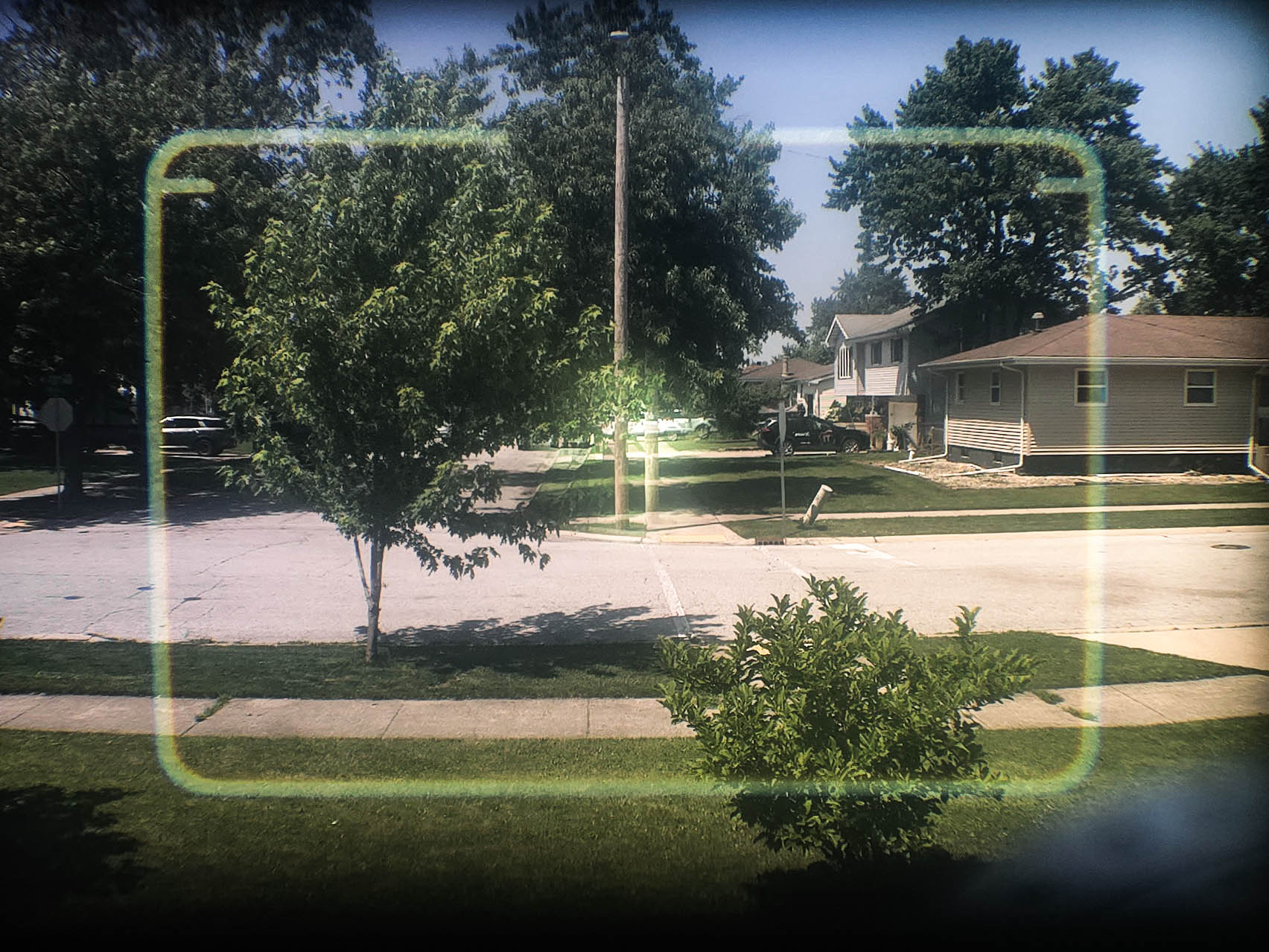
The Retina IIS has a very large and easy to use viewfinder. Compared to the Retina IIIC and IIIS cameras which have multiple frame lines to support those model’s interchangeable lens mount, the fixed lens Retina IIS has a single frame line with manual parallax correction marks and a high contrast circular rangefinder patch. Compared to earlier Retina rangefinder models with very tiny viewfinders, the one on the Retina IIS is a joy to use.
When it came time to shoot the Kodak Retina IIS, I had one roll left over of Santa Color 100, a rebadged version of Kodak Aerocolor 125 color surveillance film. I’ve shot this film before and while it has fine grain and good contrast, the colors are often muted and not as vibrant as Kodak Gold or other comparable “general purpose” color films. Expect some color shifts from these images, but otherwise the film should do a good job of showing off the detail through the four-element Schneider lens.


As promised the Santa Color 100 was ripe with muted colors and pastel blues and greens throughout most images. It is difficult to nail down exactly what type of lighting this film likes as I shot some indoor pics which turned out pretty good, but then others were very unappealing, and some outdoor shots looked good and then others still were blown out and not pleasing to the eye. For a film used for surveillance, I would have expected this to be a daylight balanced film, but that doesn’t seem to be the case. This roll was the last of the Santa Color 100 I had, and I don’t plan on buying any more.
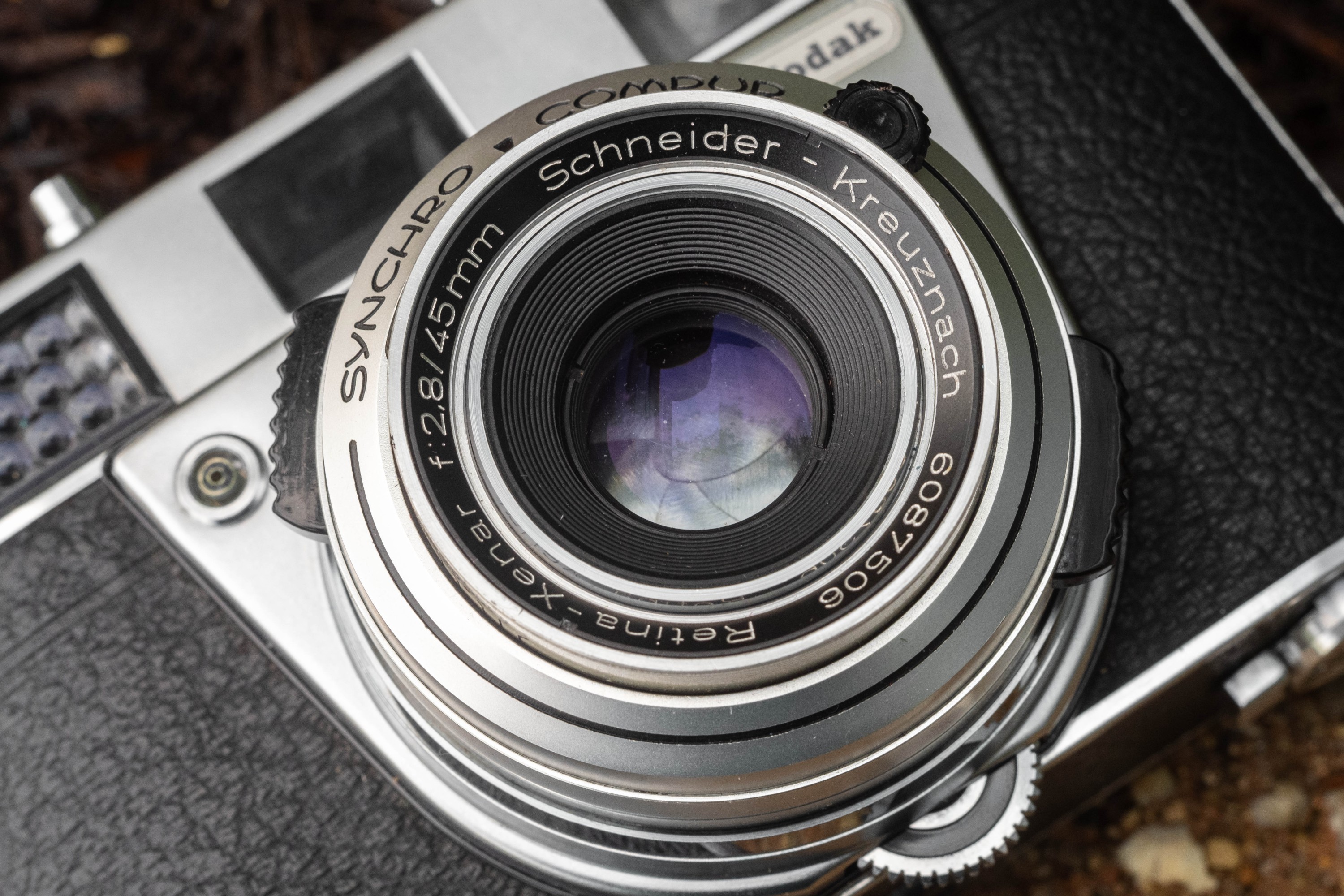
As for the lens, as promised, the four-element Schneider Retina-Xenar delivered the goods in spades. Kodak Retina historian David Jentz once told me that the Retina-Xenar’s formula is used way beyond the capabilities of camera, an assertion I agree with. Simply, the Xenar lens is razor sharp nearly across the frame every time. In fact, that this lens performs so well on this camera, really makes me wonder why people even bothered with more elaborate 6, 7, and even sometime 8-element 50mm prime lenses. Considering this lens is more compact, easier to make, and cheaper to sell, I honestly think that if this lens was used on a majority of cameras, most photographers would never need anything more. I often praise Soviet triplets like the T-43 for their incredible sharpness and high level of detail, making them one of the best bargain lenses, and when it comes to best bang for your buck 4-element lenses, the Schneider Retina-Xenar is the best of the best.
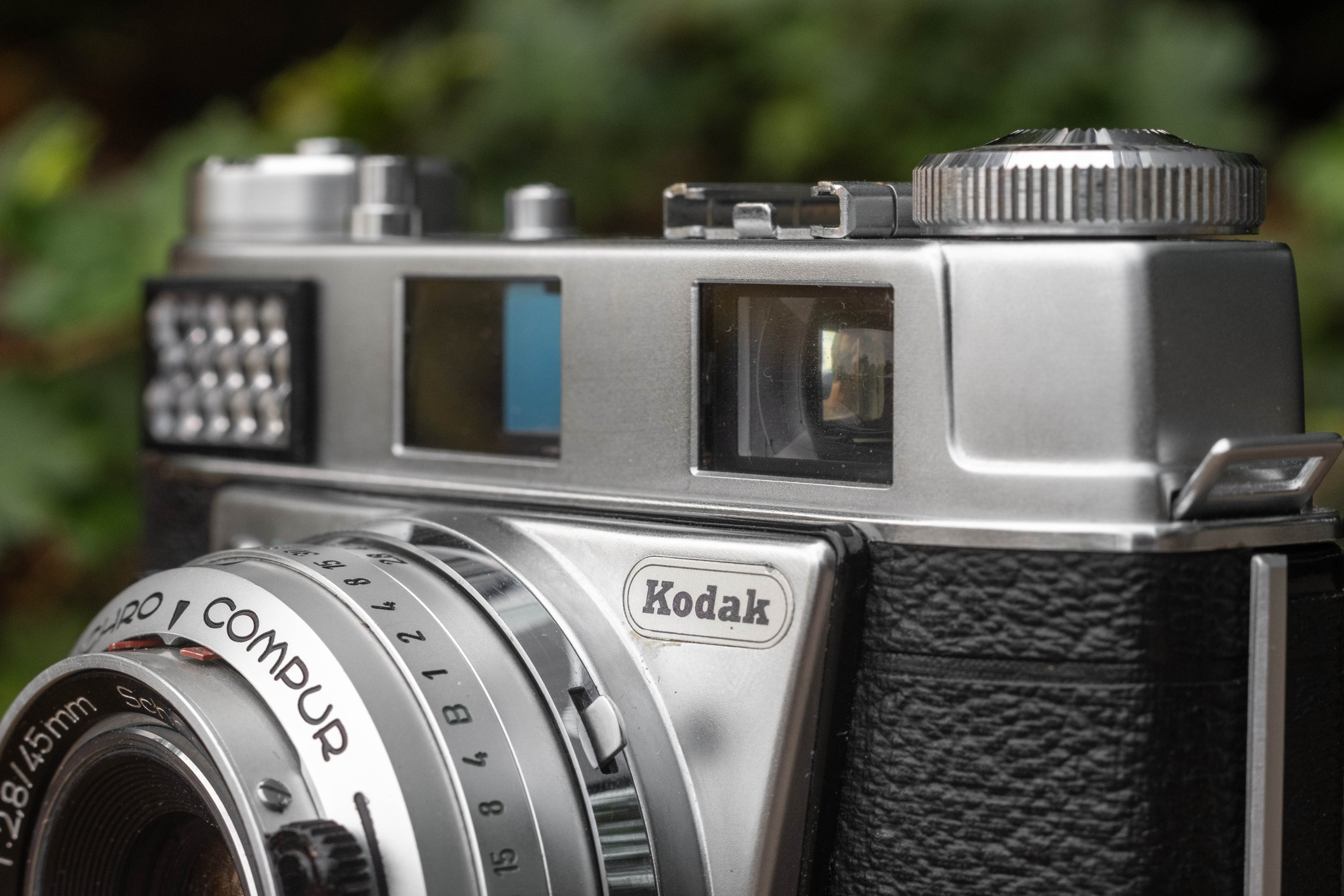
In addition to the excellent lens and quality shutter, one of this era of Retina’s greatest strengths were its large and bright viewfinder and coupled rangefinder windows. Compared to the earliest Retinas with squinty viewfinders with rear eyepieces slightly larger than a piece of rice, this is a tremendous improvement, making the camera a joy to use even for those who wear prescription glasses.
The Kodak Retina IIS has the benefit of over two decades of continuous development and the advancement of its features. A strange coincidence of the Retina lineup is that as they aged, the cameras got bigger, and when compared to its most closest folding sibling, the Retina IIIC, the Retina IIS is slightly larger, but compared to the interchangeable lens Retina IIIS or the Retina Reflex SLRs of the same era, the camera is still reasonably portable.
I will never love the exposure system Kodak put on these cameras. Isolating exposure settings to a wheel below the lens has never made sense to me. Maybe from an engineering standpoint it does, but engineers are usually not photographers…at least they likely won’t have the same priorities. After repeated use, you will get used to the wheel, but it just seems like an unnecessary complication of something other manufacturers already figured out a better way for. Plus, with the Retina’s reputation as being difficult to repair, anything that adds extra complexity just feels like a bad idea.
But who am I kidding, this is a 63 year old camera and it still works quite well so I’ll quit my bellyaching and just say, the Kodak Retina IIS is a fantastic camera with a really nice viewfinder and an amazing lens. Compared to other Retinas of the era, it is still reasonably portable, and the lack of interchangeable lenses was not a bother to me at all. I really enjoyed my time with this camera and the images I got from it are enough to where I’ll likely shoot this camera again, but overall, I just feel like these cameras could have been even better, with an easier to use exposure system.
Related Posts You Might Enjoy
External Links
https://camera-wiki.org/wiki/Kodak_Retina_IIS
Mike, loved this. In hi school I used the IIIC and bought the IIIS for myself. Used it and its array of lenses for Europe trip and home. The shutter-aperture-linked system’s advantage, as you know, let you change aperture or speed and the camera “automatically” changed the other to maintain same exposure. Later I moved on to the reflex Retinas that thankfully used all the same lenses. I even found a Voigtlander Zoomar 36-82mm, constant 2.8, that I had easily modified to fit. Heavy! But I loved that images it delivered.
King Schoenfeld