

The GOMZ Junost (Юность), meaning "juvenile," is a 35mm rangefinder camera made by the Soviet GOMZ factory near Leningrad between 1957 and 1961. It was designed to bridge the gap between GOMZ's simple Smena scale-focus cameras and their ambitious interchangeable-lens Leningrad rangefinder, targeting young amateur photographers with something more advanced than a scale-focus camera but simpler than a full rangefinder system. Despite its ambitions, the Junost was short-lived, with an estimated production of only 51,000 units, suggesting it didn't sell particularly well, and it's now a rare find.
The camera features a fixed 4.5cm f/3.5 T-32 triplet lens, a ZT-12 leaf shutter with speeds from 1/8 to 1/250 plus Bulb, separate viewfinder and rangefinder windows, a film advance lever, and an EV/LV-coupled shutter speed and aperture system readable with the Leningrad-2 exposure meter. The author praises the build quality, comparing its heft and finish favorably to German cameras, and found the rangefinder easy to use despite its small size thanks to a clear, high-contrast patch. Ergonomic quirks included a rewind-lock button placed confusingly close to the shutter release, occasional film advance lever slippage, and the unusual upside-down printing of shutter speeds (intended to be readable when looking down at the camera). Optically, the T-32 triplet impressed the author, delivering sharp results in the center and corners, with only a slight loss of contrast attributed to internal lens haze on this particular sample. The author also found the coupled LV system unexpectedly pleasant and functional, allowing accurate guessed exposures during a test roll of Svema 100 black and white film.
Overall, while the Junost has ergonomic shortcomings—small viewfinder, awkward rewind button placement, no strap lugs, and a fully removable rather than hinged back—the author considers it a genuinely enjoyable and distinctive camera to shoot, with excellent optics and relatively modern features for a Soviet design of its era. Though not a camera most people would think of first among Soviet models, and difficult to find, especially in the United States, the author recommends seeking one out and shooting it if the opportunity arises.
AI-generated summary. May not capture every detail — read the full article below for the complete picture.
This is the GOMZ Junost (Юность), a 35mm rangefinder camera produced by Gosudarstvennyi Optiko-Mekhanicheskii Zavod (GOMZ for short) near Leningrad, Russia between the years 1957 and 1961. The Junost was an unusually styled camera which looked unlike any other Soviet camera of the era, with a strange combination of old and new features such as a coupled rangefinder window separate from the main viewfinder, a leaf shutter with an EV coupling between the shutter speed and aperture rings, a film advance lever, and a helical focus. The Junost was intended to appeal to younger photographers who wanted something more advanced than a scale focus camera, but something less than an interchangeable lens rangefinder. It ended up being a short lived camera, produced for just under four years before being discontinued, and is difficult to find today.

Film Type: 135 (35mm)
Lens: 4.5cm f/3.5 T-32 coated 3-elements in 3-groups
Focus: 1 meter to Infinity
Viewfinder: Separate Viewfinder and Coincident Image Coupled Rangefinder
Shutter: ZT-12 Central Leaf
Speeds: B, 1/8 – 1/250 seconds
Exposure Meter: None
Battery: None
Flash Mount: Cold shoe and M and X Flash Sync
Weight: 580 grams
Manual (in Russian): https://mikeeckman.com/media/GOMZJunostManual.pdf
The earliest Soviet optics factory actually predates the Soviet Union itself. Formed in 1914 in the city of Petrograd (now St. Petersburg) the Russian Joint-Stock Company of Optical and Mechanical Production opened, building early optics products such as rifle scopes during the first World War. Over the next 20 years, this factory would change names several times and experience many changes in leadership. In 1924, Petrograd would be renamed Leningrad, and the factory would go through a series of name changes, from GOZ, TOMP, VTOMP, VOOMP, and eventually Gosularstvennyi Optiko-Mekhanicheskii Zavod, or GOMZ for short.
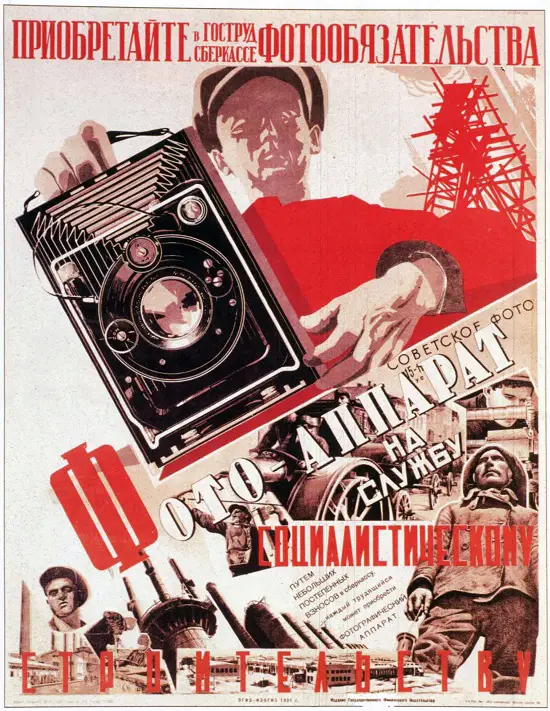
In its earliest years, GOMZ produced various folding sheet and roll film cameras based heavily off German designs. One of its most successful early designs was a 9×12 folding bed camera called the Fotokor-1 which was produced from 1930 through 1941. During the 1930s, GOMZ was the Soviet Union’s primary maker of medium format cameras, but they also dabbled in 35mm cameras such as the Sport, the Soviet Union’s first 35mm SLR.
In later years, GOMZ produced a large number of very successful cameras, perhaps the most well known was the Smena lineup of simple scale focus cameras which debuted in 1953. According to sovietcams.com, more than 20 distinct Smena models with an impossible to count number of variants were made totaling over 20 million units. In addition to the Smena, GOMZ also produced the Moment which was the Soviet Union’s first attempt at an instant film camera, their stereoscopic medium format Sputnik, and the highly ambitious interchangeable lens rangefinder camera, the Leningrad.

With the success of the inexpensive Smena and the complexity of the Leningrad, the GOMZ team was tasked with creating something in between. A 35mm rangefinder camera with a fixed lens that would appeal to young amateur photographers. The first prototype was created with the name “Sport” borrowing from the company’s own 1930s SLR. For reasons I was unable to discover, the name was quickly changed to Junost (Юность), which in English means “juvenile”, perhaps to evoke the intended audience of the camera.
The Junost came in a compact metal body with a fixed T-32 triplet lens, a ZT-12 central leaf shutter with speeds from 1/8 to 1/250 plus Bulb, a combined image coupled rangefinder, and a film advance lever. A clever feature of the Junost was that the shutter speed and aperture dials were coupled together with LV numbers, which could be read by a popular Soviet exposure meter called the Leningrad-2.

During its production, small cosmetic changes were made to the Junost, most significantly were raised edges around the three viewfinder and rangefinder windows up front. A similarly styled prototype camera called the Mayak was made in 1961 but was never put into production. Some accessories including a flash module and macro attachment were made for the camera, but in very small numbers. As was the case with most Soviet cameras, finding prices that it might have sold for was difficult, but with an estimated production of only 51,000 units between 1957 and 1961 suggest it didn’t sell well.
In 1962, GOMZ would merge with several other Soviet factories and become reorganized as Leningradskoye Optiko-Mekhanicheskoye Obyedinenie or LOMO for short. The output of LOMO extended beyond photographic gear, cameras bearing the LOMO name continued to be made, many of which were highly successful such as the Lubitel, Voskhod, Almaz SLR, and the world famous LC-A compact point and shoot.
Sometimes when you look at a certain camera, you can just tell where it came from. Germans tended to over complicate their cameras, Japanese cameras were often more function than form, and American companies really liked Bakelite. Of course there are exceptions to all these, but if you look at enough cameras, you start to see patterns.
When looking at Soviet cameras however, so many were inspired by or direct copies of cameras from other countries, it can be tough to really tell when a camera is truly a Soviet design. The first time I saw a GOMZ Junost, I had no idea what it was. With the exception of the Cyrillic text, GOMZ factory logo, and the GOST film speed scale on top of the camera, there’s little to suggest this wasn’t a German or Japanese design. Even the lens doesn’t really give a strong clue as to the country of origin to those not experienced in identifying Soviet cameras.

The GOMZ Junost is one of a few Soviet cameras with a truly unique design, and one inspired me to seek one out to review. When it first arrived, I was pleasantly surprised at the build quality and feel of the camera. Although I knew where it came from, the camera’s feel is more German than Soviet with a good deal of heft, the chrome plating has a quality matte finish that feels professionally done, the body covering was not peeling, and the camera’s controls all moved with purpose and without any looseness which might suggest a cheaply made camera.

Looking at the top plate, there is a combined rewind knob and film speed reminder scale with both DIN and GOST settings. A rangefinder adjustment port is below the camera’s name and to the left of the accessory shoe. Above and to the right of the shoe is the cable threaded shutter release. Its location near the front edge of the camera is in comfortable reach of your right index finger. Below it is a chrome button for deactivating the film transport when rewinding film. The location of this button is the lone ergonomic snafu on the camera as it is too close to the shutter release and on more than one occasion, I mistook it for the shutter release. Finally, on the far right is the film advance lever with combined exposure counter. The presence of an advance lever on an otherwise simple camera is a nice touch and something that wasn’t yet standard for Soviet cameras of the era.

The base has a centrally located 3/8″ tripod socket which balances the camera on a tripod, but would require an adapter to be used with modern tripods. Next to it is the door release lock which must be rotated between a red Open (O) and black Closed (З) position.

Around back are the two windows for the rangefinder and viewfinder and nothing else. While I gave the camera credit for having a film advance lever, that it still uses separate viewfinder and rangefinder windows in a camera produced in 1957 would have felt a little out of date if it were released in any country other than the Soviet Union. I wonder if the Junost had been more successful and a Junost-2 came out, would it have had a combined image rangefinder? The camera lacks any strap lugs on the side which is unfortunate as the camera would have benefitted from being able to attach a neck strap.

The entire back of the camera comes off for loading film, which again, is a nod to earlier, more primitive cameras, but once you have it off, there’s no surprises inside. Film transports from left to right onto a fixed take up spool. At the very least, having a removable back makes inserting a new roll of film very easy. Simply stretch it across the film case and thread the leader into one of the slits on the take up spool, give it a few turns and then close up the camera. The Junost has very deep door channels, so had no need for light seals of any kind.

Up front, the Junost has a rim set leaf shutter in which six shutter speeds from 1/8 to 1/250 plus Bulb can be chosen. Unlike most cameras however, the shutter speeds are printed upside down. This is done on purpose as it makes it easier to read while holding the camera in a shooting position, looking down at the front of the camera. While this seems like a neat feature, I can’t think of another time in the history of shooting cameras where I couldn’t read the shutter speeds normally oriented. It actually makes the camera look kind of weird, but I suppose it doesn’t hurt anything either. In addition to the shutter speeds being upside down, the shutter also has LV numbers from 7 to 17 plus aperture f/stops from f/3.5 to f/22. The shutter speed and aperture dials are coupled together with a chrome pin, which must be pulled back to change to another LV number. The use of a LV scale was typical of cameras from the 1950s, but only works if you use it with an exposure meter such as the Leningrad-2 which supports LV numbers. For me, I typically find LV scales to be an annoyance.
The Junost’s shutter is coupled to the film transport, so that means there is no need to manually cock the shutter, and with a top plate shutter release, the only two things sticking out of the shutter are a small self-timer lever and flash sync port, both near the bottom of the shutter.

The separate rangefinder and viewfinder windows are tiny, but thankfully are very easy to use. Looking at the back of the camera, the rangefinder window is first, and has a deep purple tint with a clear rangefinder patch. This makes seeing the double image extremely easy. I had no problem focusing this camera even in low light. As long as I could find some kind of vertical line, I was able to see the two images. The main viewfinder is in the center and is just a simple straight through optical window. No exposure information or other focus aides are visible in the window. The viewfinder has a very low magnification ratio, which makes things small, however that has the positive side effect of being able to see all four corners of the viewfinder even while wearing prescription glasses.
At the time I wanted to shoot the Junost, I had a fresh roll of Svema 100, a Ukrainian black and white film which was the closest I had to something that the Junost might have used when it was new. Films with a speed of 100 are my favorite for testing as they work in a wide range of lighting conditions, something I had hoped to put the Junost through.


While shooting the Junost, it was not without its tribulations. When the camera behaved as I expected it to, it was a dream to shoot. By far, the biggest usability issue was the tiny viewfinders, but having shot early Kodak Retina and German Welta rangefinders, I was used to the tiny optics.

Issues I faced with the Junost were the times I confused the rewind button on the top plate of the camera for the shutter release. Pressing the rewind button with the camera to your eye does exactly nothing, and thinking the shutter wasn’t cocked, I would double advance the film, realizing later that I unnecessarily wasted a frame. While the shutter release was in a more logical location, the close proximity to the rewind button fooled me on more than one occasion. That most 35mm cameras have the rewind button on the bottom of the camera further frustrated me, as it simply didn’t need to be there. Beyond that, I suspected the camera had some film advance issues as I could feel the lever noticeably slip on occasion while shooting. I was concerned with frame spacing issues, which was a fear I quickly realized as I took the wet film from my Paterson tank. But ASIDE from that, using the Junost was a pleasurable experience.

More importantly, the results I got from the simple T-32 triplet were outstanding. This is an observation I’ve made on several other Soviet cameras with three element lenses like the LOMO Smena 8, LOMO Voskhod, and Lubitel TLR in which sharpness is outstanding in the center and still very good near the corners. The “lesser” T-32 triplet didn’t disappoint here, with the only optical anomaly being a lack of contrast in most images, especially visible when the sky or a bright light source was present in the image. Upon looking through the lens with the shutter open in Bulb mode, a layer of haze was present in between two of the elements. On a more pristine example, I have complete confidence that the images shot through this camera would rival the best triplets from Zeiss, Schneider, or any other A-list lens maker.

Surprisingly, I actually liked the coupled LV ring around the shutter, which if you’re a frequent reader of this site, I often complain about. Why exactly I got along with the system on this camera better than others, likely has to do with how easy it was to use. Unlike German cameras like the Kodak Retina and Voigtländer Vitessa who have very tiny coupling pins which are difficult to reach, often near a folding door, the system here is larger and much easier to access. In addition to its size, the upside down design just worked for me. I shot most of the roll in bright sunlight to moderate shade, and I kept the exposure numbers between 12 and 15 and after looking at my results, I found the exposure to be pretty close to accurate, even though I literally guessed on every image. As unscientific as this may sound, I actually think this is more typical of how this camera might have been used when it was new as I doubt too many Soviet youths (remember the name of the camera literally means “juvenile”) could afford both this camera along with a Leningrad 2 exposure meter.

Obvious areas of improvement would have been a larger viewfinder, relocating the rewind button to the bottom of the camera, some strap lugs, and a hinged film door, but the lack of each of these did not ruin my enjoyment of shooting this camera. Overall, I quite enjoyed the shooting experience.
The Junost isn’t the first, second, or possibly even 10th Soviet camera someone thinks of when deciding which camera to take out shooting, but combined with excellent optics, decent ergonomics, a workable LV system, and somewhat modern (for Soviet cameras) coupled rangefinder and film advance lever, the Junost is a fun camera. It even looks cool too! These cameras aren’t super common, and are even more difficult to find in the United States, but if you get a chance to shoot one, I definitely recommend it!
Related Posts You Might Enjoy
External Links
http://camera-wiki.org/wiki/Junost
https://www.sovietcams.com/cameras/detail/44wfjyr8wprcx3hh96js2zk5n7
https://sovietcameras.org/junost/
https://ussrphoto.com/wiki/default.asp?WikiCatID=12&ParentID=1&ContentID=124&Item=Yunost
https://web.archive.org/web/20190322073243/https://fotoussr.ru/cameras/yunost/ (Archived, in Russian)
https://www.photohistory.ru/1207248178829660.html (in Russian)
I think I can tell why USSR cameras lacked strap lugs – because, as it was a valued item in a household, cameras were used exclusively covered in their hard leather cases – which had the lugs and strap. Probably they also saved resources on having lugs both on case and camera.