
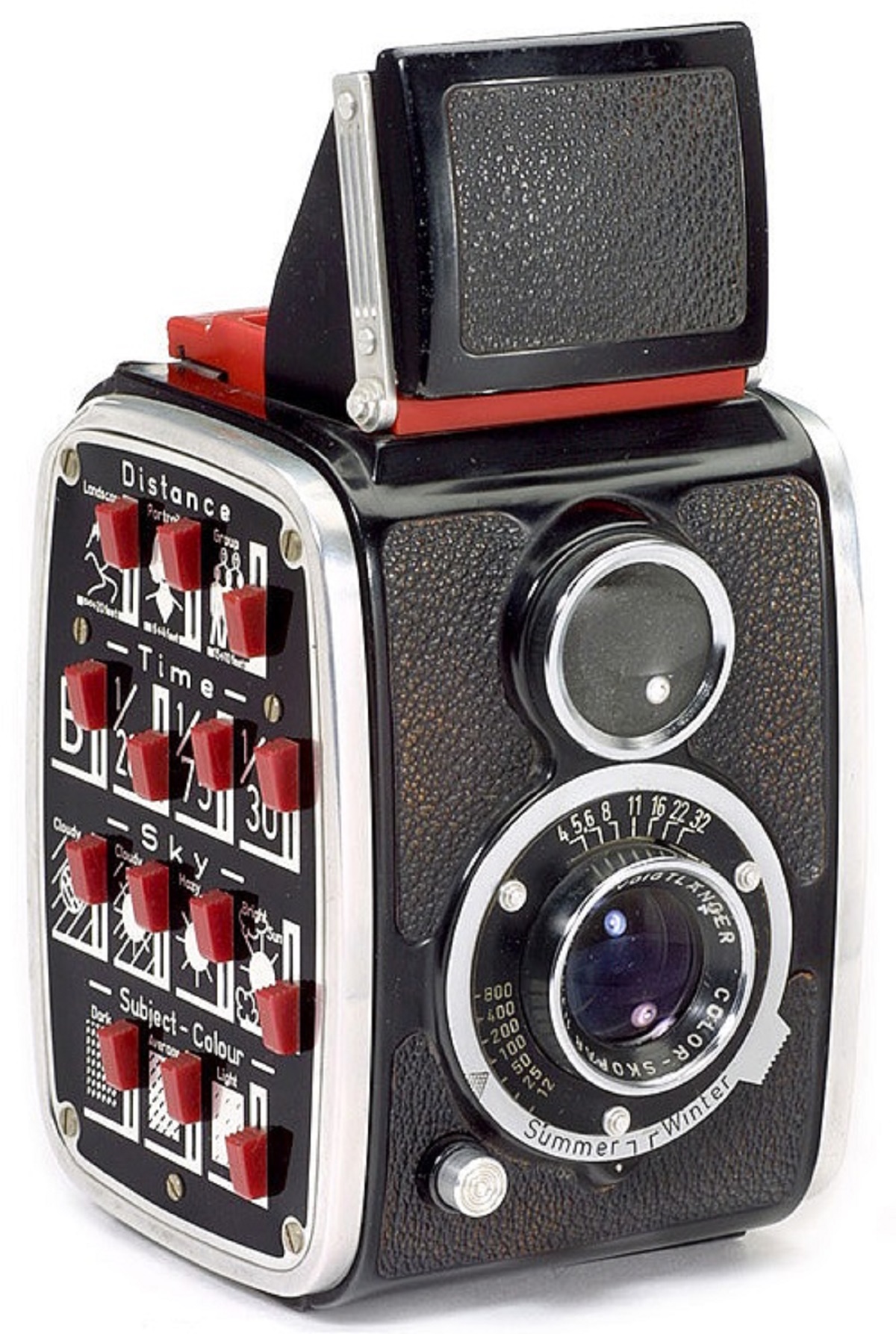
This installment of Keppler's Vault revisits an article originally published in the February 1964 issue of Modern Photography, which itself reprinted material from a German magazine called Inpho along with material credited to Voigtländer AG. The subject is a collection of prototype cameras that Voigtländer developed around 1956 to mark its 100th anniversary. These ranged from rough mockups to designs that appeared nearly ready for production, and the piece preserves rare documentation of concepts that were otherwise kept secret or destroyed, as is common practice with prototypes across industries.
Among the prototypes discussed are variations on existing Voigtländer lines like the Vitessa and Vito series, as well as entirely new concepts such as a new Bessaflex and a new Superb TLR design. One notable prototype featured an interchangeable lens board, which the author notes would have put Voigtländer in direct competition with Mamiya's C-series, also introduced in 1956. The author highlights that Voigtländer's TLR designs stood out because most competitors, both Japanese and otherwise, simply imitated the Rolleiflex/Rolleicord format, while Voigtländer's original Superb had used a distinctive horizontally traveling film mechanism before production ceased pre-war. The author also points out an unnamed compact 6x6 SLR concept, noting that at the time only Hasselblad, Kowa, and Kiev were competing in that particular market segment.
The overall takeaway is one of curiosity and speculation rather than firm conclusion. The author suggests that several of these prototypes, had they been produced, could have competed well against contemporary offerings and broadened Voigtländer's lineup considerably. However, the piece also entertains the possibility that releasing so many different models might have oversaturated the market or stretched the company's resources too thin, potentially causing harm elsewhere. The article notes that some of these prototypes reportedly still exist in a museum, with a Brazilian-language website apparently showing modern photos of surviving examples. Ultimately, the reasons why none of these designs received an official release remain unknown, leaving readers with an intriguing "what if" glimpse into unrealized camera history, with all scans used courtesy of Marc Bergman.
AI-generated summary. May not capture every detail — read the full article below for the complete picture.
What if? Those two words form a question that has been pondered by almost every person in every industry likely since the first humans walked the Earth. Early cave men invented the wheel after wondering what if I could take this rock and put it on a stick and attach it to some branches? Inventions like the microwave oven, Velcro, beer, and many others have all been created by someone who once thought “what if”?
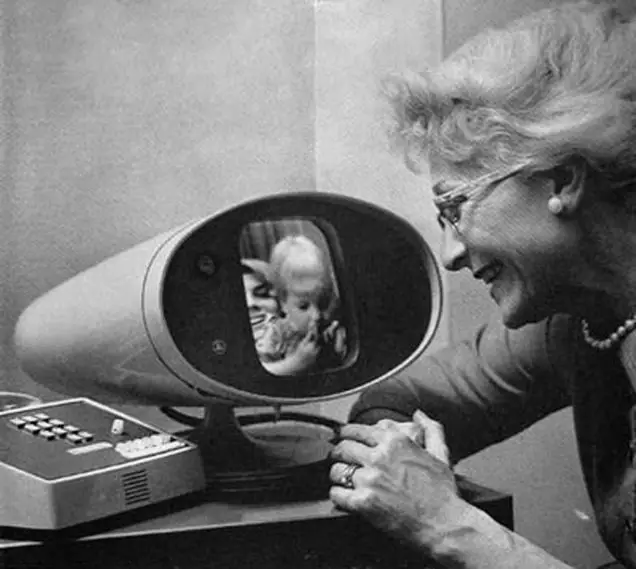
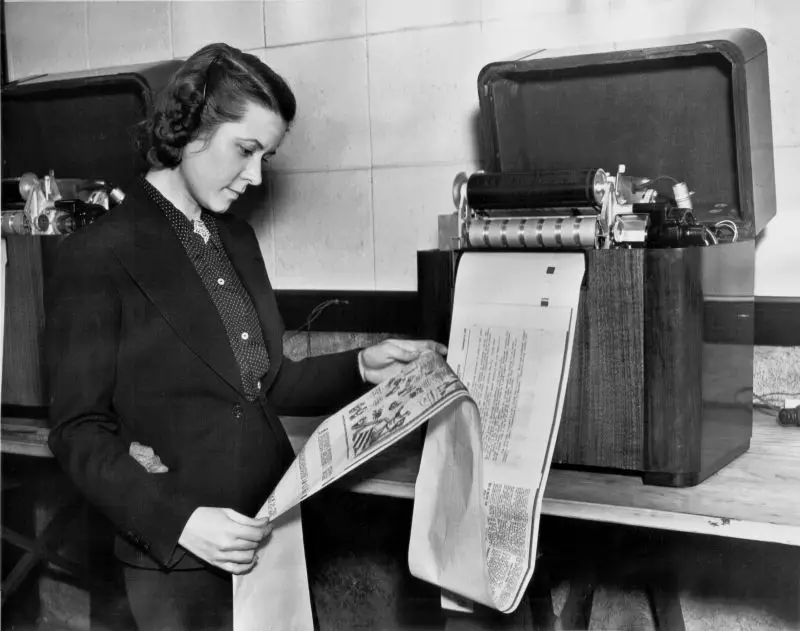
Although most crazy ideas likely never make it out of someone’s creative mind, some do, and every year, in every industry, people get together at trade shows, or in enthusiast magazines and proudly display their creative concepts.
Prototypes range from realistic tweaks of current products to completely outlandish ideas that likely would never make it to completion. The auto, home entertainment, personal hygiene, communications, and even the photo industries have all seen their fair share of creative prototypes over the years.
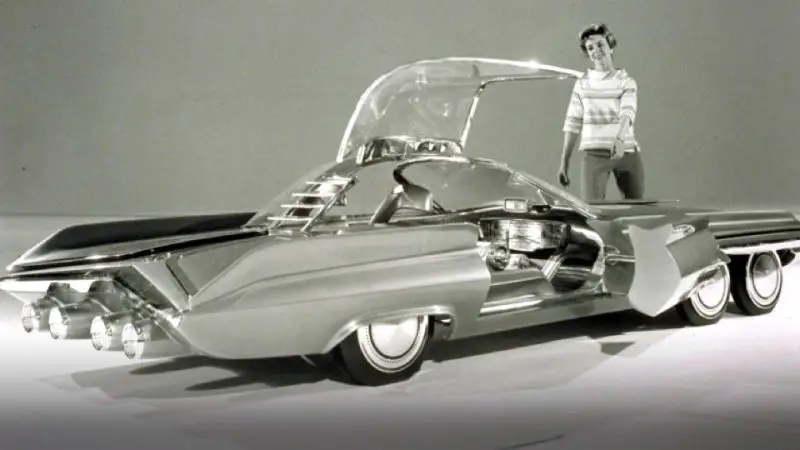
Since prototypes often contain technology or ideas that a parent company might want to explore later on down the road, often times any specific details about how a prototype might work are kept in total secrecy. Also, since a prototype is rarely fully completed and likely can’t accomplish the intended goal of what they propose, many of them are destroyed after their unveiling to prevent someone from actually trying to use something with unproven or unsafe technology. Imagine if someone actually tried to drive the crazy looking car to the right!
On rare occasion, specifics of new ideas are shared with the public and preserved for future generations to see. Such is the case of several prototype cameras that Voigtländer had come up with around 1956, in time for their 100th anniversary to show off what they were working on.
The article below comes from the February 1964 issue of Modern Photography and highlights many of these prototype cameras that Voigtländer had been working on around their 100th anniversary. Some of these were crude mockups, but some look almost ready for production. At the very end of the article, credit is given to both Voigtländer AG and a German magazine called Inpho who had originally published this information.
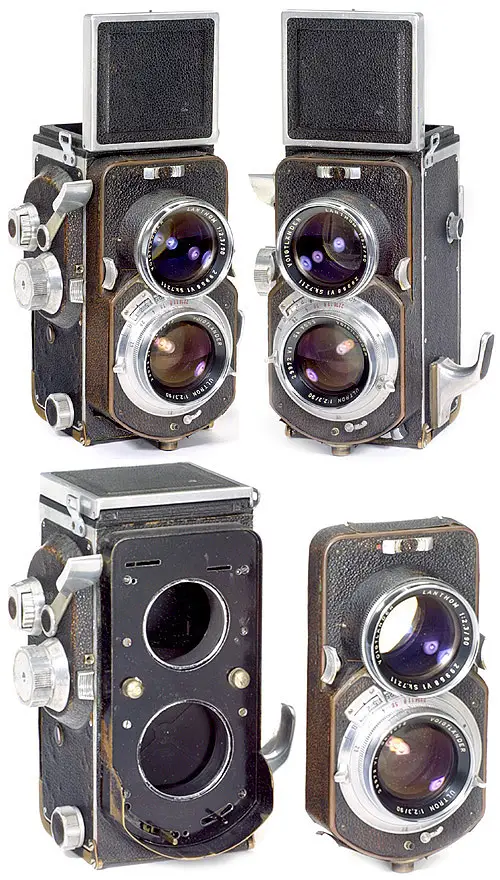
While many of the cameras shown in this article look like slight alterations of existing models like the Vitessa and Vito series, some are significantly new designs like the new Bessaflex and Superb TLRs. The design of these cameras, had they been put into production likely would have seemed very futuristic. One model, shown to the right, had an interchangeable lens board which, if released in 1956, would have competed directly with Mamiya’s new C-series which also debuted that same year.
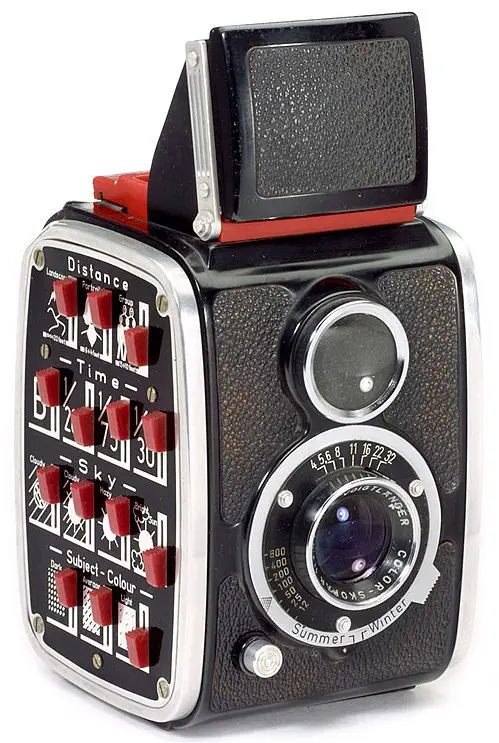
While the Rolleiflex and Rolleicord models were considered the top dog Twin Lens camera of the 1950s, most of their competition from Japan and other countries mimicked their design. There weren’t many other German made TLRs with a unique design like this. Voigtländer certainly was onto something with the original Suberb TLR and it’s horizontally traveling film, but for whatever reason, production of the camera ceased before the war and never continued.
I also found it interesting to see that Voigtländer considered entering the compact 6×6 SLR market with their unnamed single lens reflex concept. By the late 1950s, the only companies competing in this market were Hasselblad, Kowa, and Kiev.
A variety of these cameras, had they been produced, would have matched up favorably to other designs other companies were making at the time and really expanded Voigtländer’s portfolio. Maybe it was for the best though as so many different models likely would have over saturated the market and possibly thinned out the company’s resources to a point where other products might have suffered.
Some of the prototype cameras featured in the article below still exist in a museum somewhere. This Brazilian language website shows some modern photos of some of the prototypes in the article below, suggesting they still exist today. Why each of these never saw an official release is anyone’s guess, but at least we have this glimpse into the world of “What if”.


All scans used with permission by Marc Bergman, 2018.
“If ‘ifs’ and ‘buts’ were candy and nuts, oh, how happy we would be.”
MNF – “Dandy” Don Meredith.