The Neubert Neuca is an extremely rare 35mm rangefinder camera made around 1947 by Franz Robert Neubert's small workshop in Jena, Germany, in what was then the Soviet Occupation Zone. It was conceived as a cheaper alternative to the Leica, built to use leftover Leica Thread Mount lenses from Carl Zeiss Jena's wartime inventory, with production only possible after the war nullified German patents on the Leica design. The article delves deeply into the murky history surrounding the camera, questioning and largely debunking several commonly repeated claims (such as a Soviet FED connection, early rangefinder-less models, and Contax-style influence), while confirming that only around 20-30 examples were likely ever made, each with notable variations suggesting hand-built prototype-stage production rather than true commercial manufacturing.
In hands-on terms, the reviewed Neuca (serial 1018, on loan from collector Norris Liu) is physically larger in every dimension than a contemporary Leica III, with a build quality the author compares more to a Soviet FED or Zorki than a German Leica—inconsistent finishes, uneven engravings, crude shutter curtain stitching, and a rudimentary rigid-finger rangefinder coupling rather than a proper coupling wheel. Still, it retains standard LTM mount compatibility, a 28.8mm flange distance, and familiar control placement. Its combined-image rangefinder viewfinder was notably ahead of its time for 1947, predating the norm by several years, and featured a larger-than-usual eyepiece. The camera came fitted with a 5cm f/1.5 Carl Zeiss Jena Sonnar, which the author believes is original to it. Unfortunately, when tested with a roll of film, the shutter failed to actually expose any frames despite sounding correct, so the author instead mounted the same lens to a working Leica IIIa to demonstrate its excellent sharpness and image quality, attributing the blank Neuca roll to a shutter curtain malfunction rather than any fault of the lens.
Despite the failed test roll, the author found the shooting experience—film advance, shutter operation, and viewfinder feel—to be smooth and comparable to an early Canon rangefinder, with the camera's larger size having little practical effect on handling. The verdict is that the Neuca was a surprisingly capable, well-engineered camera built under difficult postwar circumstances, and that its rarity stems not from poor design but from bad timing and location—if made under different conditions, more units likely would have been produced and appreciated. The author is grateful to have been able to test such a rare piece of camera history, calling it a fascinating relic of a company and design that largely succeeded in its goal despite ultimately fading into obscurity.
AI-generated summary. May not capture every detail — read the full article below for the complete picture.
This is a Neubert Neuca, a 35mm rangefinder camera made by Feinmechanischen Werkstätten Franz Robert Neubert (Neubert for short) in 1946 in Jena, Germany, which was then known as the ‘Soviet Occupation Zone in Germany’. The Neuca was an attempt to build a lower cost Leica style camera with a simpler design, while using left over lenses partially or completely built before and during the war. A very small number of these cameras were made and most of them have unique differences which are not consistently found in others, suggesting these were all hand built cameras which barely made it past the prototype stage. Within a year of the Neuca’s introduction, Franz Neubert revised the design, adding a TTL viewfinder in the style of an SLR, and changing the name of the camera to the Neucaflex. This early camera was the basis for a later camera called the Ucaflex.

Film Type: 135 (35mm)
Lens: 5cm f/1.5 Carl Zeiss Jena Sonnar coated 7-elements in 3-groups
Lens Mount: M39 Leica Thread Mount
Focus: 1 meter to Infinity
Viewfinder: Coincident Image Coupled Rangefinder
Shutter: Cloth Focal Plane
Speeds: Z (Bulb), 1/20 – 1/1000 seconds
Exposure Meter: None
Battery: None
Flash Mount: None
Weight: 542 grams, 404 grams (body only)
Manual: None
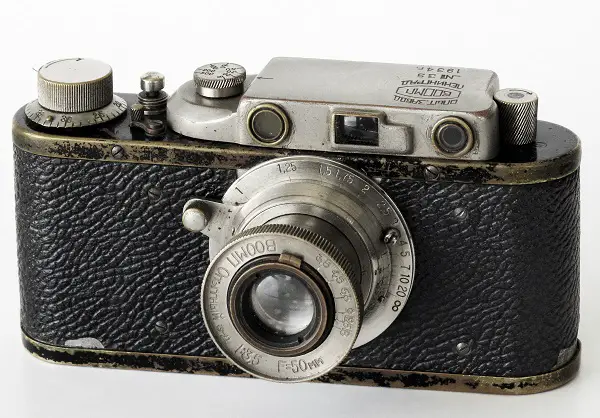
Ever since the first Leica cameras made it into the hands of photographers in the mid 1920s, they attracted attention. By 1932, when the first rangefinder models were introduced, demand greatly outpaced people’s ability to afford them, and when that happens, copies start to be made. The Soviet Union was the first to get on board in 1933 making copies of the Leica II with the VOOMP Pioneer and Foto Apparat Geodeziya, and in 1934 with the FED.
At the same time, a small workshop in Tokyo, Japan called Seiki Kogaku Kenkyujo advertised a camera with a strong resemblance to the Leica II called the Kwanon. Although this camera never made it to production, a revised camera called the Canon was released by the same workshop in October, 1935. From that moment forward, making Leica copies became big business as companies in the United States, England, France, Italy, Austria, and China all produced cameras which varied in design from nearly identical to having several differences.
At the time, Leica copies were limited to just the Canon and Soviet rangefinders. A total of three factories in the Soviet Union would initially produce copies of the Leica rangefinder, but by 1937, that number would be reduced to one, the FED rangefinder produced in Kharkov, Ukraine.
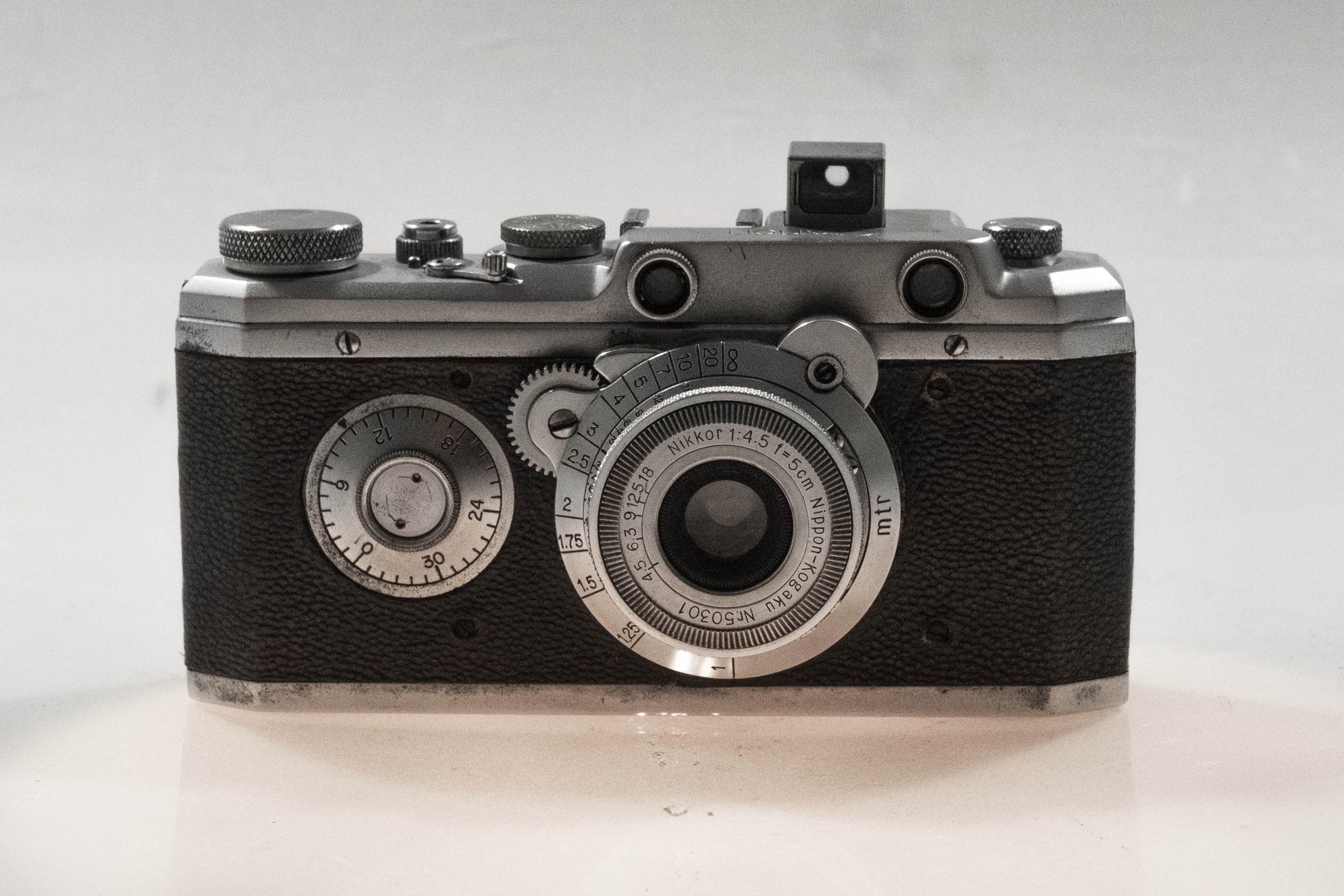
A challenge with producing copies of the Leica were that its design was patented in Germany, and international law at the time prevented other countries from producing something that was a direct copy of a German design. This didn’t deter the Soviet Union as they were very loose with international laws, but Japan respected them, and the only way Seiki Kogaku Kenkyujo was able to get around them was that their Canon rangefinder had enough differences in the lens mount, viewfinder, film advance, and overall shape of the body that it could not be considered a Leica copy.
This all changed after World War II as all pre-war German patents we nullified and anyone could build their versions of German products without any legal issue. This opened the door to a huge number of 35mm rangefinder cameras which looked and worked very similarly to the Leica. Even Seiki Kogaku would abandon the Canon’s unique lens mount in favor of the 39mm Leica Thread Mount. Eventually a huge number of companies would create their own versions of the Leica rangefinder.

One of the first was a small workshop in Jena, Germany where Carl Zeiss Jena was located. Jena was not a primary target of Allied forces during the war, so a large part of the city’s infrastructure survived the war. Carl Zeiss Jena produced a huge number of optical products including camera lenses for a variety of German and other European companies including Leitz. After the war had ended, a huge amount of left over pre and mid-war inventory was sitting idle since most German camera makers needed time to recover from damages ocurred during the war. In an effort to use up some inventory of unused Zeiss lenses, but also to bring some income into a financially ruined area, a man named Franz Robert Neubert would setup a workshop called Feinmechanischen Werkstätten Franz Robert Neubert (Neubert for short) to produce an inexpensive copy of the Leica rangefinder which could use one of many Leica Thread Mount Zeiss lenses laying around.
In my research for this article, I found very little conclusive information about the life of Franz Robert Neubert or what he did before or during the war. I suppose it makes sense that if he had the knowledge and skill to build his own camera, that he must have worked as some kind of precision mechanic at an optics company before the war. Maybe it was Zeiss, maybe it was Leitz, maybe somewhere else. Exactly where or what he did, is not clear and may never be known.
Considering how little information exists for the Neubert Neuca both online and in print, I decided to try something different for this review. Rather than recite the same one or two paragraphs of information that everyone can find online about the Neuca, I thought it would be interesting to include various nuggets of information which has been said either on the Neuca’s camera-wiki page, in the latest version of the McKeown’s Guide, or on a few other websites, and use my best judgement to state whether I think it is true or not. I’ll then state my reasons for each in an effort to try and put together a more cohesive history for this rare camera.

The Neuca was first produced in 1947. This date comes from McKeown’s Guide and is repeated elsewhere. Camera-wiki says ‘about 1946’ and novacon.com.br says ‘Circa 1948’. The war ended in 1945, so it is unlikely any work on the camera would have been done before that. For most companies, it takes about three years for a new camera to go from concept to a finished product, but since the Neuca was based off an existing and well known design, and assuming Neubert had previous experience making cameras, a shorter production time of 1 to 2 years seems likely. I’ll just go with Jim on this one and say that finished copies were most likely available in 1947.
The Neuca has some Soviet FED rangefinder DNA in it. I’ve seen a few sites such as ussrphoto.com and Novacon who give some credit to the Soviet FED rangefinder for the Neuca. Novacon goes a step farther and suggests that the Neuca had a similar combined image rangefinder to the FED-2, but this doesn’t make sense as FED-2 prototypes did not appear until 1950 – 1951, well after the Neuca ceased production, plus the base length (distance between the two windows) is very different between the two cameras.

The assumption that there was a Neuca/Soviet link was likely a result of the fact that by the time the Neuca would have been made, Jena was located in the Soviet Occupation Zone in Germany (the name East Germany did not come into use until 1949) so the Soviet government would have been in charge when the camera was released. It also stands to reason that if both the FED and Neuca are simpler and less expensive copies of the Leica, that they must have shared something in common. Having handled both the Neuca and a large number of Soviet FEDs and Zorkis, I don’t see anything that would suggest that the Soviet Union had any influence on the Neuca. Whatever similarities might exist are only there because both the FED and Neuca are based off the same Leica II design.
Early Neucas lacked a rangefinder and were based off the Leica I and later Neucas were based off the Leica II. This one comes straight from Jim McKeown who specifically says that early models had no rangefinder. I don’t believe this to be true because no version of the Neuca without a rangefinder has ever been found, not even McKeown himself has a picture of one.

Furthermore, there are several prototype cameras which are clearly early Neucas and they all have a rangefinder, or at least a provision for one. If an early Neuca prototype does exist without a rangefinder, the most logical explanation would be that it was either removed, or that it was made before the rangefinder was attached. I do not believe that any “Neuca I” models exist without a rangefinder.
Some Neucas have a Contax-style back and others are bottom loaders. This one also comes from McKeown who suggests that later models have a “Contax-style detachable back”. This is partially true, as early Neuca prototypes are bottom loaders just like the original Leica and later ones have a back and bottom which come off for easier loading through the rear of the camera like a Contax, however that’s where the similarities end. In my opinion, there is little about the later design that can be attributed to the Zeiss-Ikon Contax, unless you consider all 35mm rangefinder cameras with a removable back to be “Contax-style”.

Only 20-30 Neucas were ever made. A number of sources cite this same number, including this Leitz Photographica Auction listing. While an exact total is impossible to determine, that so few have been found makes this number plausible. Supporting this theory is that only five Neucas with serial numbers have been found, with the highest being number 1018 and the other three being 1002, 1008, 1013, and 1015. In addition, at least three unnumbered prototypes have also been found, further increasing the total. If at least 18 models were produced with sequential serial numbers from 1001 to 1018, plus at least three prototypes, the minimum that could have been made would be 21. Most likely a few more were made raising that number slightly, so a total of between 20 to 30 does seem likely.

The Neuca evolved into an SLR called the Neucaflex in 1950. This one seems pretty factual as a camera called the Neucaflex definitely existed and was made by Franz Robert Neubert after the Neuca. Both the Neuca and Neucaflex have a “Leica-esque” shaped body and both use the same 39mm thread mount, however it is not clear if the flange distance was the same. Since most SLRs and rangefinders cannot use the same lenses, a difference was likely. Exactly how much of the Neuca’s design might have been incorporated into the Neucaflex is unclear, however at least a few parts shared between the two seems plausible.
Although I did not have access to a Neucaflex while writing this review as they are just as rare as the Neuca itself, I was able to photograph the Ucaflex, which was a later evolution to the Neucaflex. Side by side, the Neuca and Ucaflex do not look much alike, however that they share the same family lineage and that I had access to both, I couldn’t resist the urge to photograph them together.
The following gallery shows the Neuca and Ucaflex SLR, both from the collection of Norris Liu.


One final observation of my own is that nearly every Neuca I’ve seen has something unique about it. Of course, I haven’t seen every single Neuca ever made, so it is plausible that there are a few which are identical, but of the ones I’ve seen, beyond the differences in back vs bottom loading, I have observed the following differences:
- The base plate is completely different between models. Some have a sliding lock in the center, others have two rotating locks for removing the plate.
- The number of visible screws on the front of the camera changes. Some have seven screws (1008 and 1015), others have three.
- Some have strap lugs (1002 and 1015), some don’t (1018).
- Early prototypes have a shutter with a top 1/500 speed whereas the later ones go to 1/1000.
- The Neuca Jena logo on the top plate changes between Neuca 1015, which has the letters ‘FNRJ’ stylized below the company name and Neuca 1018 which only has the letters ‘FNJ’.
- The piece of trim which is in between the body covering and both the top and bottom plates is painted black on 1002, but is bare metal on all the other others (1008 through 1018)
- I’ve seen models with different textures in the body covering, and variances in the thicknesses of the camera’s various engravings.
- On some, like number 1018, the Advance/Rewind switch is missing the letter “A”, but on others, both an “A” and an “R” are present.

Each of these variances, combined with an extremely low production number suggest a camera that barely made it past the “proof of concept” stage and one that likely never was sold in a retail camera shop. If the Neuca was intended to be a cost effective alternative to a real Leica, how much would it have cost? I think that had this camera been successful, demand for it in Western countries, especially the United States would have been extremely high as Leicas were out of reach of many people at the time.
Of course, every one of these questions has no definitive answer. The best explanation for why so few were made was that perhaps the camera ended up being more difficult to make than originally intended. Perhaps problems with raw materials or resources in Jena were not as plentiful as needed to sustain production. Maybe the Soviet government did not like someone starting up their own company and selling German cameras using prewar lenses for a profit. We may never know the answers to these questions, but it sure is fun to think about!

This particular Neuca came to me as a loan by collector Norris Liu whose keen eye spotted this in a lot of several cameras on an online estate sale auction. The Neuca was sold with a variety of mundane cameras making its inclusion such a surprise. At least a few other collectors spotted the rare camera, but perhaps not realizing exactly how rare it was, the price never reached anywhere close to what these things have sold for in the past. Norris’s risk was worth it as he was the high bidder and upon receiving the package was elated to pick up one of the rarest cameras in his collection. After receiving the camera and admiring it, he sent it off to me and asked me to write a review for it.
The Neubert Neuca was intended to be an economic alternative to a genuine Leica, so it would not be realistic to compare the build quality between the two cameras. It is not obvious unless you place a Neuca and a Leica II or III side by side, but the Neuca is larger in every dimension, taller, wider, and thicker. The most obvious visible difference is in the height where both the Neuca’s lower top plate and upper top plate extend a good 4mm higher than a Leica III. Side to side, the Neuca is about 5mm wider and maybe 2mm thicker.
The gallery below shows the Neuca and a Leica IIIa side by side. This particular Leica’s serial number dates it to 1941/42 which means it was made before the Neuca and would have had the same dimensions as anything that the Neuca designers would have based their camera off.


When I picked up the Neuca, the first thing I noticed were inconsistencies in its finish. The raised portion of the top plate which holds the viewfinder and rangefinder has a completely different finish than the rest of the top plate which has more of a matte silver finish.
On this example, the raised portion has some kind of clear coat which has taken on a slightly yellowish hue, almost as it if was nicotine stained. Looking at other examples of the camera, for example number 1015 sold at the 45th Leitz Auction, these other cameras do not have the yellow coating, however the finish is clearly different from that of the rest of the top plate. It is not clear if someone intentionally coated this portion of this camera or if it was like this way since new, but whatever reason they might have had to do this, it seems odd they wouldn’t coat the entire thing.
Surveying the entire camera, fit and finish is more consistent with that of a Soviet FED or Zorki than a German Leica or even one of many premium Japanese Leica copies such as those made by Canon or Minolta. A small gap exists around the perimeter of the front viewfinder frame, encouraging dust to get inside, the various engravings on the top and bottom plates, along with the shutter speed dial and exposure counter are of inconsistent thickness compared to each other, the stitching on the shutter curtains looks crude and prone to failure, and the lack of a rangefinder coupling wheel suggests a more rudimentary design.
Still, the camera is still firmly in the category of a Leica copy. It uses the same 39mm Leica Thread Mount, has a 28.8mm flange distance, shoots double perforated 35mm film, and has all of its critical controls in the same locations. Despite a long list of differences, the two cameras should be able to deliver consistently good results using the same lenses.

Up top, a rewind knob is on the left with an alternating knurled and scalloped design which is actually quite nice and offers good grip. Next to it is the previously mentioned top plate with the strange yellowed coating. This portion of the top plate is slightly taller than that of a Leica III from the same era and has more squared off edges giving it an even larger appearance than it really is. To the right is the shutter speed dial with marked settings from 1/20 to 1/1000 plus Z (Bulb). On the lower portion of the top plate is the Advance / Rewind lever, a domed shutter release which has an externally threaded collar for use with Leica style cable releases and the combination film advance knob and exposure counter. The film advance knob is larger than that of a Leica and has the same alternating knurled and scalloped design as the rewind knob. The exposure counter is additive and must be manually reset after loading in a new roll of film. Strangely, although the exposure counter does have engraved exposure numbers from 0 – 39, they are almost completely covered by the top portion of the knob, making them very difficult to read.

The sides and back have little to see other than the single round eyepiece for the combined image rangefinder and a large swath of body covering on the back. This Neuca lacks strap lugs anywhere on the camera so the only way to support it with a strap would have been with the original case or perhaps one that can mount to the tripod socket. It is worth noting that I have seen other Neuca cameras which do have strap lugs, so this is a feature which is inconsistent from sample to sample.

The base of the camera has two rotating keys on each side, marked “auf” for Open, and “zu” for Closed. Each of these locks work similarly to how they do on many other cameras of the era which support the use of reloadable metal cassettes. The center has a 3/8″ tripod socket which means it is designed for older tripods and to use it on something more modern would require a 1/4″ adapter. There are two curiosities which I noticed on the bottom plate, the first of which are three perfectly round and evenly spaced holes which when removing the plate, allow light to leak into the film compartment. I cannot come up with any reason for these holes to be here as their presence certainly would cause light leaks on the film if you loaded film into the camera without covering them.

The second oddity only becomes apparent when you compare this camera to other Neucas and that’s because this part of the camera changes between serial numbers. On serial number 1015, the base plate lacks the two rotating keys and has feet in their plate with integrated tripod sockets. In the center is a sliding “auf/zu” lock seemingly used to remove the back and bottom of the camera. With only 3 numbers between 1015 and 1018, you’d assume they’d use the same parts, but apparently large variances in design and specifications were made to the production of this camera. We know that prototype Neucas were bottom loaders which would have needed a different design to the back plate, but this doesn’t explain why some removable back cameras also have a different bottom plate. Unfortunately, while researching this camera, most photos of other Neucas do not show the base plate so I cannot tell which version of the base plate is more common.

With the back removed, you can see the inside of the film compartment. Film transports from left to right onto a removable take up spool or cassette. Film loads the same as you’d expect any back loading 35mm rangefinder of the day. The quality of the film compartment is good, but not great. There aren’t any major machining marks like you’d expect to see on a cheaper camera, but it also doesn’t have the fit and finish of a Leica or good Japanese copy.
The inside of the film back has a smooth metal pressure plate and there are no light seals anywhere on the camera, which means you don’t have to worry about replacing them, however “seal-less” cameras like this can be prone to light leaks if there are any dents or other imperfections to the door seal, so you’ll want to pay attention to that.


An interesting detail about both the film back and compartment is that the number ’18’ is stamped into several locations including the base plate, the indentation for the tripod socket, the underside of the cassette fork, on the underside of the top plate between the film gate, and on the edge of the film gate (not shown). The presence of the number ’18’ matching that of the camera’s ‘1018’ serial number, suggests this camera has all (or most) of its original parts, including the back as when it was built. Matching backs to bodies was a common practice of other removable back cameras from this era. If anyone reading this article has access to another Neuca and can confirm whether these numbers are present on yours, please let me know in the comments below.

The Neuca was designed to use ‘parts bin’ Zeiss lenses available in Jena after the war, so while any LTM lens will mount to the camera, the two most commonly found on it were the 5cm f/1.5 and f/2 Sonnars. This example has the f/1.5 lens with a serial number which dates it to around 1945-1946 which suggests this is the one that originally came on the camera. The design of the Zeiss Sonnar is typical of lenses of the era. Looking down on top of the lens, the index mark and focus scale is off to the left a bit. An engraved depth of field scale is closest to the body and in front of it is the focus scale with distances marked in meters from 1 meter to infinity. Closest to the front of the lens is the aperture ring with engraved markings from f/1.5 to f/22. The Neuca does not have an infinity lock like the Leica and most Leica copies, so while infinity lock lenses can be used on this camera, the notch to keep them at infinity is not here.

Up front, there’s little to see other than the lens mount, which works like every other LTM lens mount ever made, turn counterclockwise to remove the lens and clockwise to mount it. The Neuca lacks any sort of flash sync port or a self-timer.

Unlike genuine Leicas and most Japanese LTM copies, this camera has a rudimentary rangefinder coupling which resembles that of those found on Soviet FED and Zorki cameras. Instead of a spinning wheel, a rigid finger presses up against the lens, moving the rangefinder as you focus it. While this works ok, it does increase friction as it presses again the lens flange and makes mounting the lens a bit more difficult. There is no margin of error with the location of the coupling arm to the lens when mounting the lens and it is very easy for it to become misaligned, preventing you from screwing on the lens. I struggled with this every single time I removed the lens and tried to put it back on.

The viewfinder is the single biggest departure from an LTM Leica because it uses a combined image rangefinder instead of separate windows. This change is unusual for a camera released in 1947 as this style of combined viewfinder and rangefinder wouldn’t become common until the early 1950s, making this one of the first of its kind to find its way into a camera. Another advantage to the Neuca’s combined image viewfinder is that the rear eyepiece is slightly larger than that of the standard ones found on Leicas and true Leica copies. Its size certainly isn’t big, but is more than adequate to be used while wearing prescription glasses. The main viewfinder image has a slightly green tint to it with the circular rangefinder patch a pinkish color which when new, likely had great contrast, but on this example is very faint. No other information is visible through the viewfinder.
With my initial assessment complete, I was eager to shoot a roll of film through the Neuca before its time with me came to an end as this was a loaner and it had to get back to its owner. I loaded in a roll of bulk Kodak TMax 100 and took it out shooting.


After shooting an entire test roll without any obvious hiccups, I developed the roll of film only to discover an entirely blank roll of film. After further analysis, I determined that although the shutter seemed to be making all the right noises, the curtains were never separating at any speed and nothing I thought I was taking photos of was being exposed. On the bright side, I suppose I can say that both shutter curtains had no pinholes!
Not wanting to completely abandon the experience, I figured I could mimic the results by putting the 7-element Carl Zeiss Sonnar f/1.5 lens on another camera, so for that, I chose my (confirmed working) Leica IIIa. I mounted the Zeiss glass to it, loaded in a roll of bulk Ilford 100 and shot another roll which you can see in the gallery above.
Image quality was great, but that should be no surprise to you as the highly regarded Zeiss Sonnar should make great images. Sharpness was excellent in the center and to the corners. I only shot a single roll of black and white as I didn’t think there was much more I could say about the Zeiss lens that can’t be read about in a zillion other places online. Now having shot an entire roll of film through the Neuca to which nothing came out, and then shooting the Neuca’s lens on another camera which produced great images, I pieced together the two experiences, and although I cannot show you anything actually shot with the Neuca, I feel as though I can speak about the experience.

The Neubert Neuca may be one of the rarest LTM cameras I’ve ever used, but its operation is very familiar to anyone who has shot this style of camera. With the combined image coupled rangefinder, the experience is slightly more Japanese than German, but with a slightly lower build quality than a typical German rangefinder, maybe it has more in common with a Soviet camera than I originally gave it credit for.
Regardless of which country of origin the camera most closely resembles, the shooting experience was pretty good. This camera may have never made it past the ‘proof of concept’ stage, but it is clear that whoever Franz Neubert had working for him, knew what they were doing. The film advance felt smooth, the shutter operated how it was supposed to, and the viewfinder and rangefinder felt like an early Canon rangefinder (before their rotating prism). Earlier in this article I noted how the Neuca was physically larger than a Leica in every dimension but I could never tell while shooting it. The larger size didn’t have a positive or negative effect on the shooting experience.

Aside from the inoperable shutter, it is hard to find any faults with the camera, especially considering the circumstances of which it was made. An inexperienced factory, built in a time when the country’s manufacturing capabilities were still in ruins, and without the support of a proven brand, the Neubert Neuca was a surprisingly capable camera.
The most unfortunate thing about the Neuca is how good of camera it was with seemingly so little support. While researching this article, I wasn’t able to find too much new information about Franz Neubert or his workers, but I believe it is clear that they knew what they were doing. Their mission of making an alternative to a genuine Leica largely succeeded. Had this camera gone into widespread production, they would have needed to change very little from what I’ve seen here to make something that many people would have wanted. This is a good camera that in my opinion came out at the right time, but the wrong place. Had Jena been under Allied control or perhaps if this camera was developed elsewhere, I predict a lot more would have been made, and who knows, maybe today there’d be whole legions of “Neuca Collectors”.
As it is, this is a fascinating relic of the past and I am extremely thankful to Norris Liu for trusting me with his camera so that I could play with it for a while and share my experience with you.
Related Posts You Might Enjoy
External Links
https://camera-wiki.org/wiki/Neuca
http://www.novacon.com.br/odditycameras/glc.htm
https://www.leitz-auction.com/en/Neubert-Neuca-Jena/A02844 (Neuca 1002)
https://www.liveauctioneers.com/item/158015925_franz-robert-neubert-neuca-wetzlar-hessen (Neuca 1008)
https://www.liveauctioneers.com/item/88394402_franz-robert-neubert-neuca-wetzlar (Neuca 1013)
https://www.leitz-auction.com/en/Neubert-Neuca-Jena/A01173 (Neuca 1015)
This may be one of the first LTM cameras with a combined rangefinder/viewfinder, but the Contax II had this in 1936.